

Mustard (Sarson) Farming: A Practical Guide to Better Oil Yield
Mustard is one of the most reliable rabi oilseed crops a farmer can grow, but two things quietly decide whether you get an average harvest or a genuinely good one: whether irrigation lands at the two moments the crop can't do without it, and whether aphids get caught early or late.
Quick answer
Mustard rewards precision rather than heavy inputs. Sow inside your region's rabi window, keep a moderate and even plant population rather than a crowded one, and save limited irrigation for flowering and pod development — the two stages that decide oil yield. Sulphur matters more here than on most crops, because oil formation depends on it.
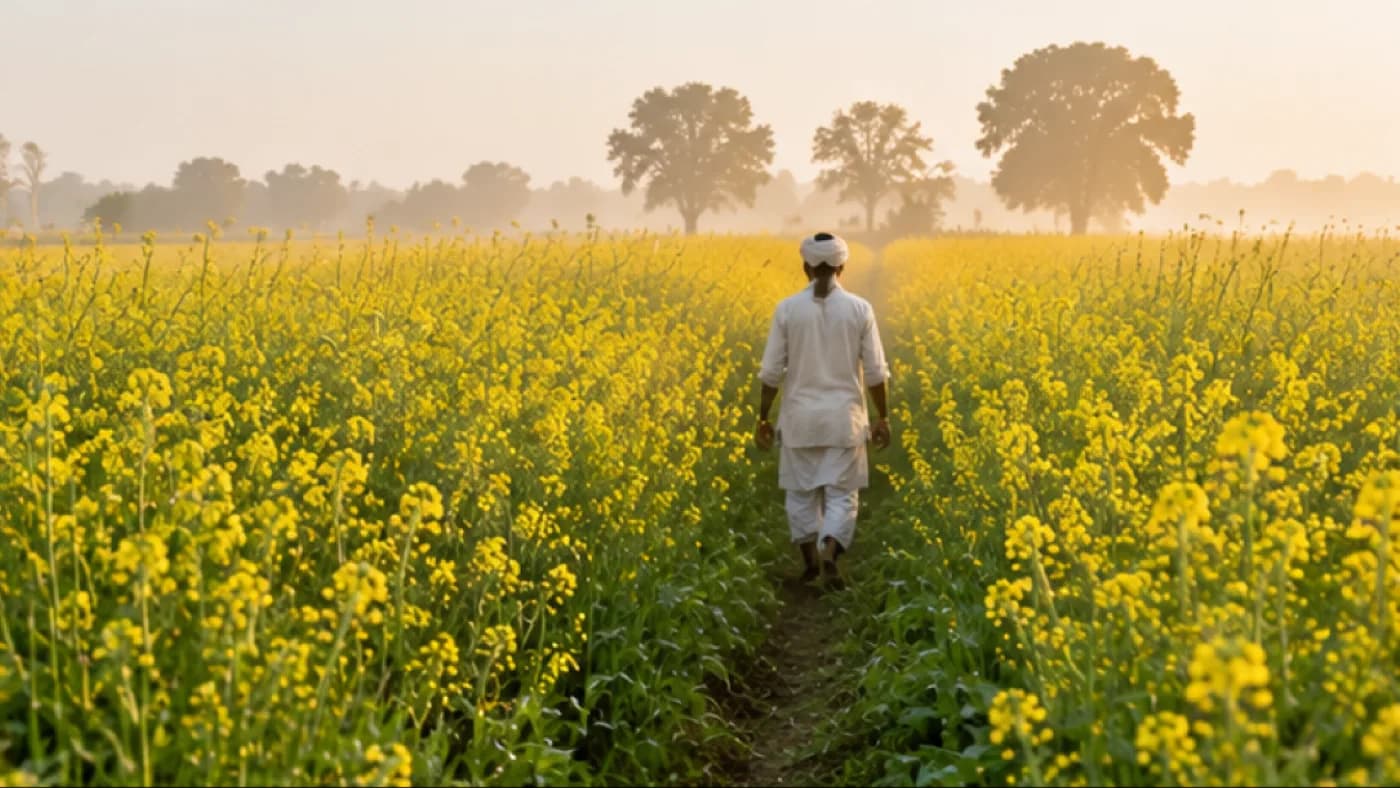
Mustard is grown across a huge swathe of India's rabi season, valued both as an oilseed crop in its own right and as a reliable, relatively low-input crop for farmers who need something dependable in the winter season. Good mustard yield and good oil content both come down to a similar handful of decisions: sowing at the right time, giving the crop water exactly when it needs it, watching closely for aphids, and harvesting before pods start to shatter.
The rabi sowing window
Mustard is sown as the monsoon retreats and the rabi season begins, timed so the crop germinates into cooling but still workable soil temperatures and completes its life cycle — vegetative growth, flowering, and pod fill — during the cooler months of winter, since mustard genuinely dislikes heat during flowering and pod development. Sowing too early into still-warm soil can hurt germination and encourage excessive early vegetative growth at the cost of later reproductive development; sowing too late compresses the growing season and risks pushing flowering into a warmer, less favourable period as spring approaches.
Seed rate and spacing
Mustard seed is small, so the seed rate per acre is comparatively low, and getting an even, moderate plant population matters more than raw seed quantity — thin, uneven germination from too little care at sowing, or overcrowding from too much seed, both cost yield. As a practical guide, line sowing typically needs only around 1.5-2 kg of seed per acre, since precise placement wastes far less seed than scattering it; broadcast sowing needs somewhat more, around 2-2.5 kg per acre, to compensate for uneven distribution and patchier germination. A common row spacing is around 30 cm between rows, with plant-to-plant spacing thinned to a sensible density after emergence if germination comes in thicker than intended, since overcrowded mustard competes hard for light and produces smaller, less productive plants.
Irrigation at the two stages that matter most
Mustard is often grown with limited irrigation, and understanding exactly when water matters most lets you get the biggest benefit from every irrigation you can give. The crop is most sensitive to moisture stress at two points: flowering, when water stress can reduce the number of flowers that successfully set pods, and pod formation/development, when the developing seeds need a steady moisture supply to fill properly. A single well-timed irrigation at each of these two stages, even where water is limited, typically delivers a far bigger yield return than the same water applied at a less critical time.
Outside these two windows, mustard tolerates moisture stress reasonably well compared to many other rabi crops, which is part of why it remains a popular choice in areas with limited irrigation access.
Watching for aphids
Aphids are the most common and often most damaging pest of mustard, clustering densely on tender new growth, flowering stalks, and developing pods, where they suck sap and can meaningfully reduce both yield and oil content if left unchecked. Infestations can build up very quickly in favourable weather, so check plants — especially the growing tips and flower stalks — at least twice a week from early flowering onward, since catching an aphid buildup in its first week or two is far easier to manage than dealing with a heavy infestation later.
A strong jet of water can knock down light infestations, and natural predators like ladybird beetles and lacewings often arrive on their own if the field hasn't been sprayed recently; reach for a targeted treatment only once numbers keep climbing after monitoring, rather than spraying on a fixed schedule regardless of actual aphid pressure. (See our full identification guide, Good Insects vs Bad Insects, for a photo and detailed description of this pest, alongside the ladybird beetles and lacewings that help control it.)
What actually affects oil content
Oil content in mustard seed is influenced by variety choice, but also genuinely by how well the crop is managed: adequate but not excessive nitrogen (too much nitrogen tends to favour vegetative growth and protein content over oil content), timely irrigation at flowering and pod development, and harvesting at the correct maturity all support better oil yield, not just better seed yield. A crop that is water-stressed during pod fill or harvested too early or too late typically shows measurably lower oil content even if total seed weight looks reasonable.
Harvest and threshing
Mustard is ready to harvest when the majority of pods have turned yellowish-brown and the seeds inside have hardened, typically indicated by a light rattling sound when a pod is shaken — harvesting too early gives immature seed with poor oil development, while waiting too long risks pod shattering, which can cost a significant share of yield, especially in windy conditions or if harvest is delayed after the crop is fully ready.
Thresh promptly after harvest and dry the seed properly before storage; oil quality, like yield, is genuinely sensitive to poor post-harvest handling, so treating this last stage with the same care as the growing season pays off in both quantity and quality.
Terms explained in this guide
Frequently asked
When is the best time to sow mustard?+
As the monsoon retreats and the rabi season begins, timed so the crop grows through the cooler winter months. Sowing too early into warm soil or too late into a compressed season both hurt yield.
At which growth stages does mustard need irrigation most?+
Flowering and pod formation/development are the two most water-sensitive stages. A single well-timed irrigation at each, even with limited water overall, typically gives a much bigger yield return than watering at a less critical time.
How do I control aphids in mustard?+
Check plants, especially growing tips and flower stalks, at least twice a week from early flowering onward. A strong water jet can knock down light infestations, and natural predators often help; use targeted treatment only if numbers keep climbing.
What affects the oil content of mustard seed, not just the yield?+
Adequate but not excessive nitrogen, timely irrigation at flowering and pod development, and harvesting at correct maturity all support better oil content. Excess nitrogen or poorly timed water/harvest can lower oil content even if seed weight looks fine.
How do I know when mustard is ready to harvest?+
When most pods have turned yellowish-brown and seeds inside have hardened, often indicated by a light rattling sound when shaken. Waiting too long risks pod shattering and real yield loss.
Where to go next
Want this as daily tasks for your farm?
Khetiyaar turns guides like this into a day-by-day plan — in your language, free to start.

Related guides
Cumin Farming: Growing Jeera When the Weather Decides Everything
Cumin is among the highest-value crops a Gujarat farmer can grow and among the easiest to lose. Two cloudy weeks at flowering can take the whole field. Here is how to give it the best odds.
Isabgol Farming: Growing Psyllium for the Husk, Not the Seed
North Gujarat supplies much of the world's psyllium husk from light land and almost no water. The crop is easy until harvest — and at harvest one shower can take the value out of it.
Castor Farming in Gujarat: Erandi from Sowing to the Last Picking
Gujarat grows most of India's castor, and India supplies most of the world's. A deep-rooted crop for light land that pays across several pickings — and one you must never treat as food or fodder.