

Mango Orchard Management Calendar: Flowering to Harvest
Mango rewards patience and timing more than almost any other fruit crop — a season-by-season calendar for pruning, flowering, pest watch and post-harvest handling.
Quick answer
A mango tree doesn't respond well to being managed on a fixed calendar date — it responds to being managed at the right stage: prune right after harvest while it rests, protect the flower panicles from hopper damage as flowering approaches, watch for fruit fly as fruit matures, and handle the harvested fruit carefully to keep sap burn and bruising from eating into your grade and price. Get the stage-by-stage timing right, and the alternate-bearing problem that frustrates so many mango growers becomes far less of an issue.
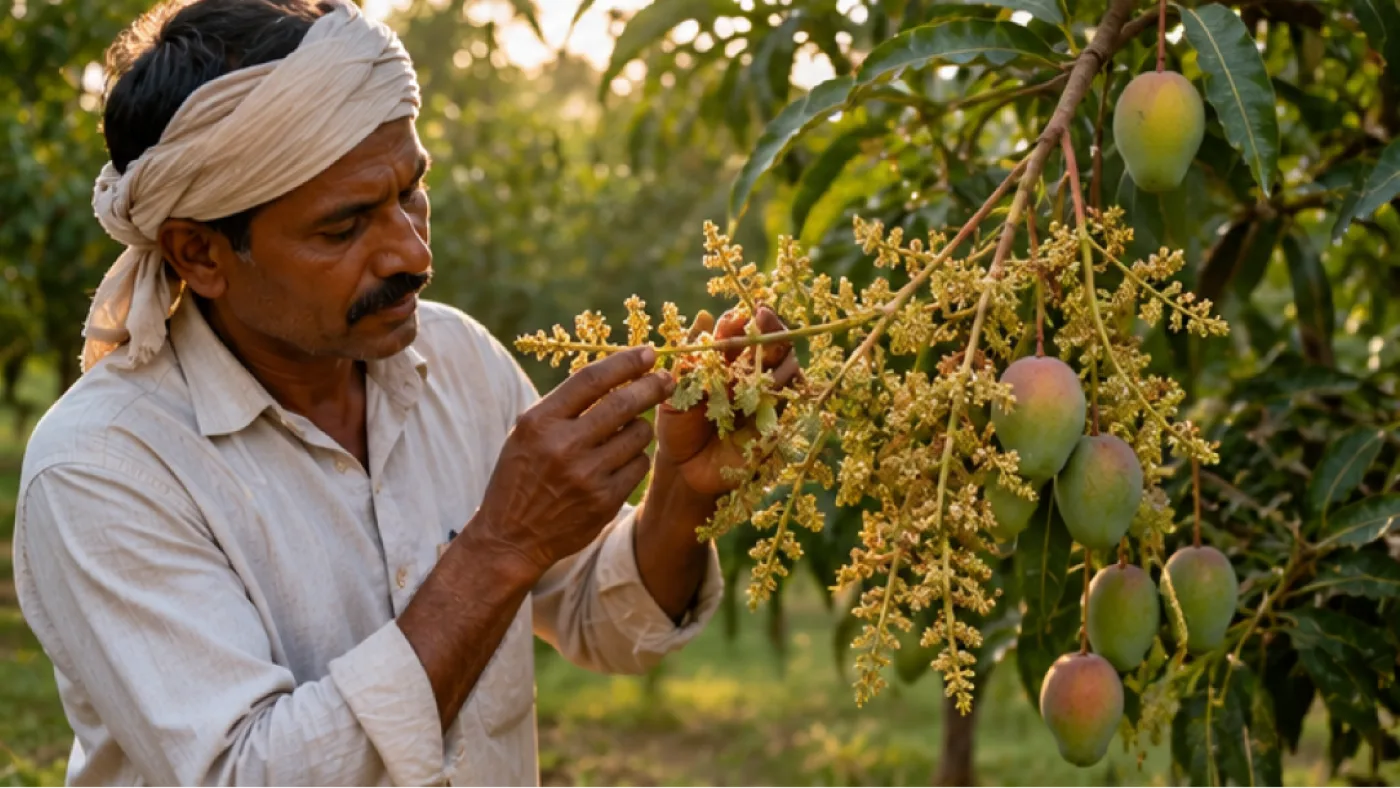
Mango is a once-a-year crop with a long memory — what you do to the tree right after this year's harvest quietly decides how well it flowers next season. Unlike an annual crop where mistakes are forgotten at the next sowing, a mismanaged mango tree can carry a poor-flowering habit forward for a year or more. A clear calendar built around the tree's actual stages, rather than a fixed date on paper, is the difference between a reliable annual crop and the alternate-bearing (heavy one year, bare the next) pattern that frustrates so many growers.
The mango year, stage by stage
Right after harvest, the tree enters a rest/dormancy period — this is the single most important pruning window of the year, discussed in detail below. As dormancy breaks, the tree pushes new vegetative growth (flush), and this new growth needs to mature and harden before it can produce flowers — a tree that keeps pushing soft new flush right up to flowering time often flowers poorly, since the buds that flower are on hardened, mature shoots, not tender new ones.
Flower induction follows — typically triggered by a combination of cool nights and a dry spell, discussed separately below. Flowering itself takes several weeks, and the tree moves through a large number of tiny flowers before fruit set, when pollinated flowers begin developing into young fruit. A very large share of flowers never set fruit at all, which is entirely normal for mango — the tree self-thins heavily.
Fruit development runs several weeks to a few months depending on variety and local climate, ending in fruit maturity — the harvest window — followed immediately by the post-harvest handling period and then straight back into the rest/dormancy stage that starts the cycle again.
Post-harvest pruning: the most consequential job of the year
Pruning done immediately after harvest — while the tree is still in its natural rest period — removes dead, diseased, and crossing branches, opens the canopy to light and air, and controls tree height for easier spraying and harvesting. Because this pruning happens before the tree pushes its next flush of vegetative growth, it directly shapes which branches carry next season's flowering wood.
Pruning late (after the tree has already pushed significant new growth, or worse, close to flowering time) disrupts the flowering cycle and is one of the most common, avoidable causes of a poor-flowering year. If you do only one pruning pass all year, this is the one that matters most.
Flowering induction: working with the tree's natural trigger, not against it
Mango flowers in response to a period of relative stress after a mature, hardened flush — commonly a cool, dry spell in the local winter. Withholding irrigation during this window (allowing the soil to dry down, rather than keeping it consistently moist) is a widely used practical technique to help trigger and synchronise flowering, especially in regions or seasons where the natural cool-dry period is inconsistent.
Paclobutrazol, a plant growth regulator, is also commonly used in commercial mango cultivation to help induce and synchronise flowering, particularly in areas with unreliable natural triggers or in off-season/early flowering programs. Its use requires attention to correct timing, dose, and application method specific to tree age, variety, and local practice — this is worth getting guidance from your local horticulture department or an experienced local grower on, rather than treating any single dose figure as universal, since incorrect use can affect tree vigour.
Mango hopper and fruit fly: the two pests worth watching closely
Mango hopper is the pest most associated with mango flowering failure — it feeds on inflorescences (flower panicles) and young shoots, and heavy infestations during flowering can directly reduce fruit set. Watch for hoppers on the flower panicles in the weeks around flowering, since this is the window where damage most directly costs you fruit.
Fruit fly is the other major concern, affecting the crop later, at fruit maturity — this is the same fruit fly already covered in our identification guide, and the same principles apply: pheromone traps for monitoring and mass-trapping, timely harvest at proper maturity rather than letting fruit over-ripen on the tree, and prompt removal of fallen or infested fruit from the orchard floor, since it's a breeding source for the next generation of flies.
Post-harvest handling: where a lot of avoidable loss happens
Mango sap (the milky latex that oozes from the stalk when the fruit is picked) can burn and blemish the fruit skin on contact, causing a visible dark stain that downgrades the fruit's market grade even though the flesh underneath is unaffected. Harvesting with a short stalk left attached, and picking in a stalk-down orientation so sap drains away from the fruit surface rather than running down it, meaningfully reduces this damage.
After harvest, proper grading by size and maturity, careful handling to avoid bruising (mango bruises easily and bruised fruit ripens unevenly and spoils faster), and correct packing for transport all reduce the transit losses that otherwise eat into a grower's margin between the orchard and the market.
Terms explained in this guide
Frequently asked
When should I prune my mango tree?+
Immediately after harvest, while the tree is in its natural rest period and before it pushes new vegetative growth. This is the single most important pruning window — pruning late, closer to flowering time, disrupts the flowering cycle and often causes a poor-flowering year.
How does mango flowering get triggered?+
Mango flowers after a period of relative stress following a mature, hardened flush — typically a cool, dry spell in winter. Withholding irrigation during this window is a common technique to help trigger and synchronise flowering.
What is paclobutrazol used for in mango?+
It's a plant growth regulator commonly used to help induce and synchronise mango flowering, especially where the natural cool-dry trigger is unreliable. Correct timing, dose, and method depend on tree age, variety, and local practice — get guidance from your local horticulture department rather than using a generic dose.
What causes the dark stain on mango skin after harvest?+
Mango sap, the milky latex that oozes from the cut stalk, burns and blemishes the skin on contact. Harvesting with a short stalk attached and picking stalk-down so sap drains away from the fruit reduces this damage.
Which pests should I watch for on mango?+
Mango hopper around flowering time, since heavy infestations on flower panicles can reduce fruit set, and fruit fly as fruit approaches maturity — the same fruit fly covered in our identification guide, managed with pheromone traps, timely harvest, and prompt removal of fallen fruit.
Where to go next
Want this as daily tasks for your farm?
Khetiyaar turns guides like this into a day-by-day plan — in your language, free to start.

Related guides
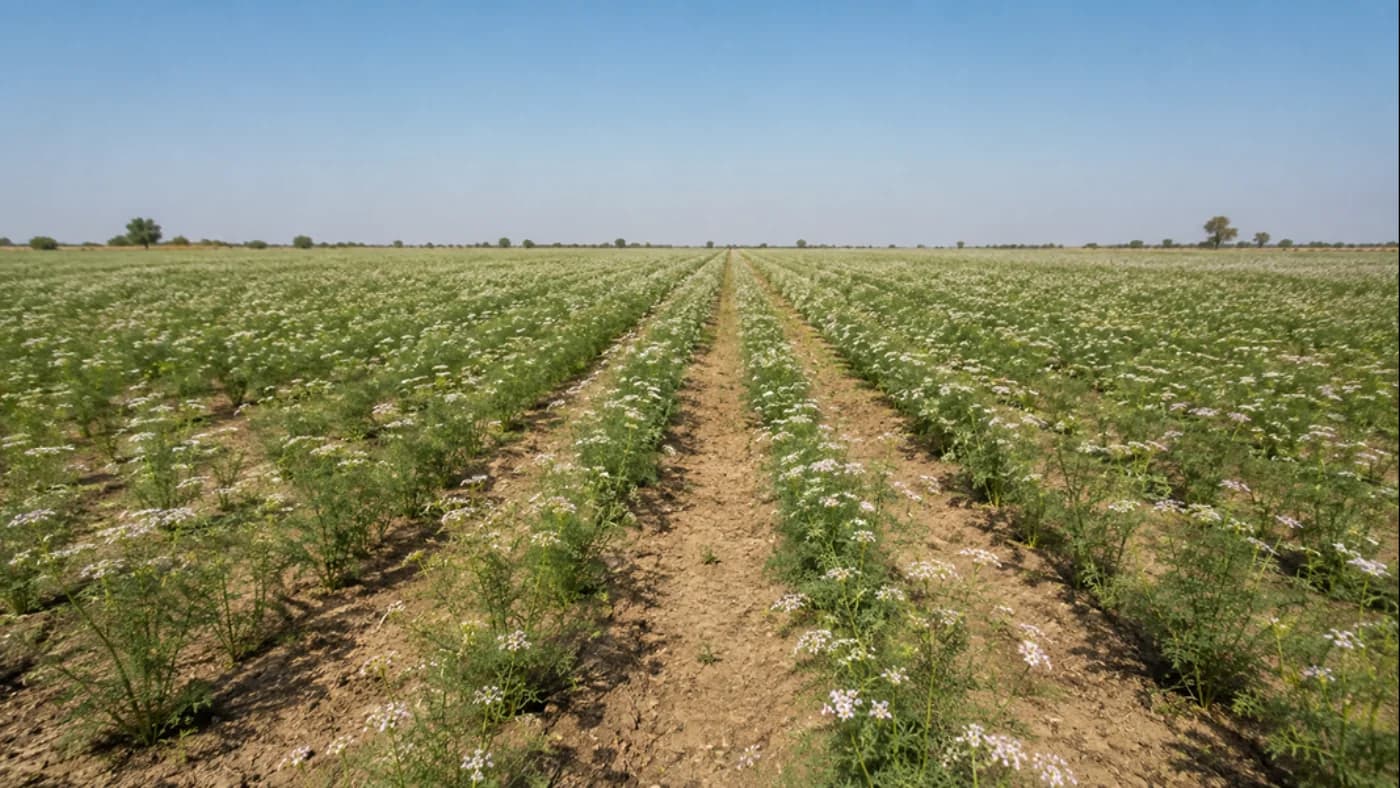
Cumin Farming: Growing Jeera When the Weather Decides Everything
Cumin is among the highest-value crops a Gujarat farmer can grow and among the easiest to lose. Two cloudy weeks at flowering can take the whole field. Here is how to give it the best odds.
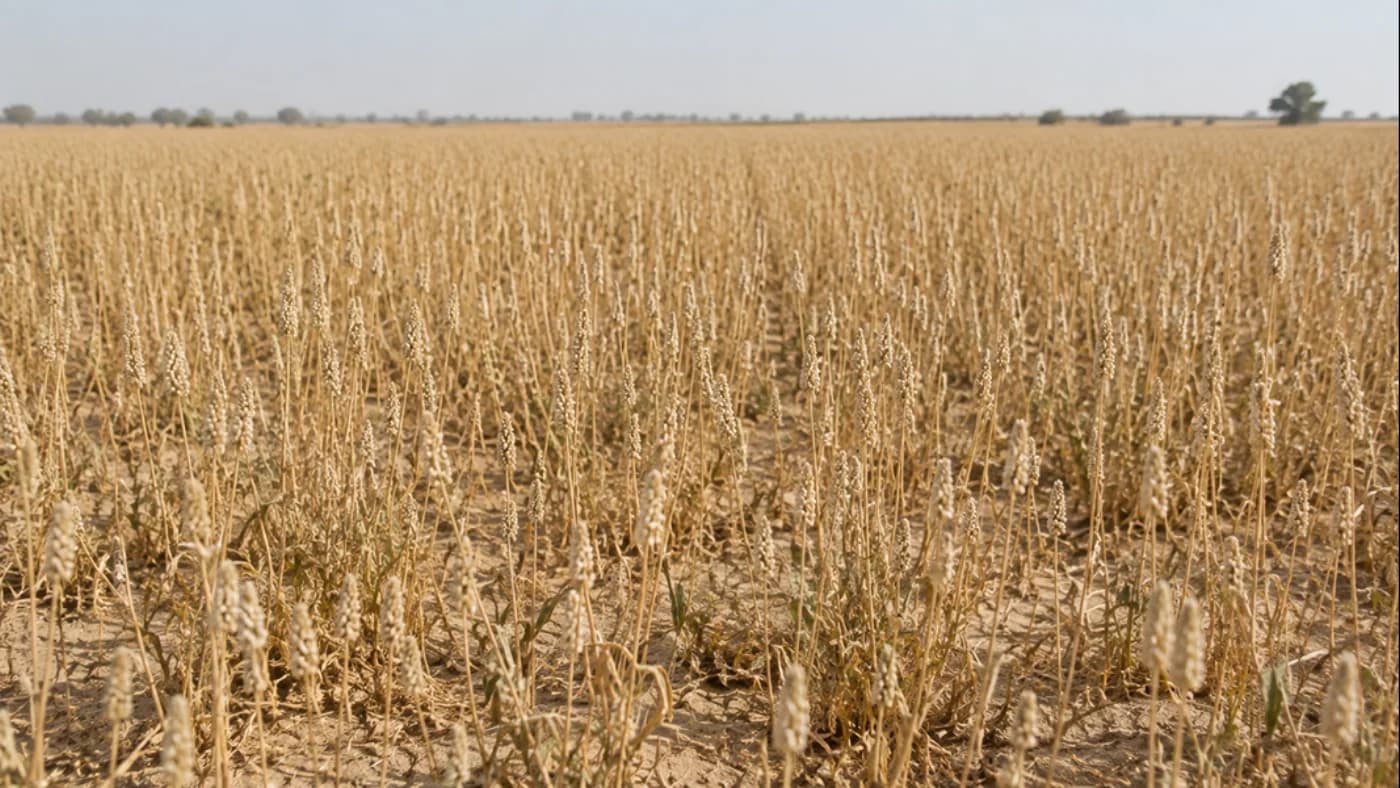
Isabgol Farming: Growing Psyllium for the Husk, Not the Seed
North Gujarat supplies much of the world's psyllium husk from light land and almost no water. The crop is easy until harvest — and at harvest one shower can take the value out of it.
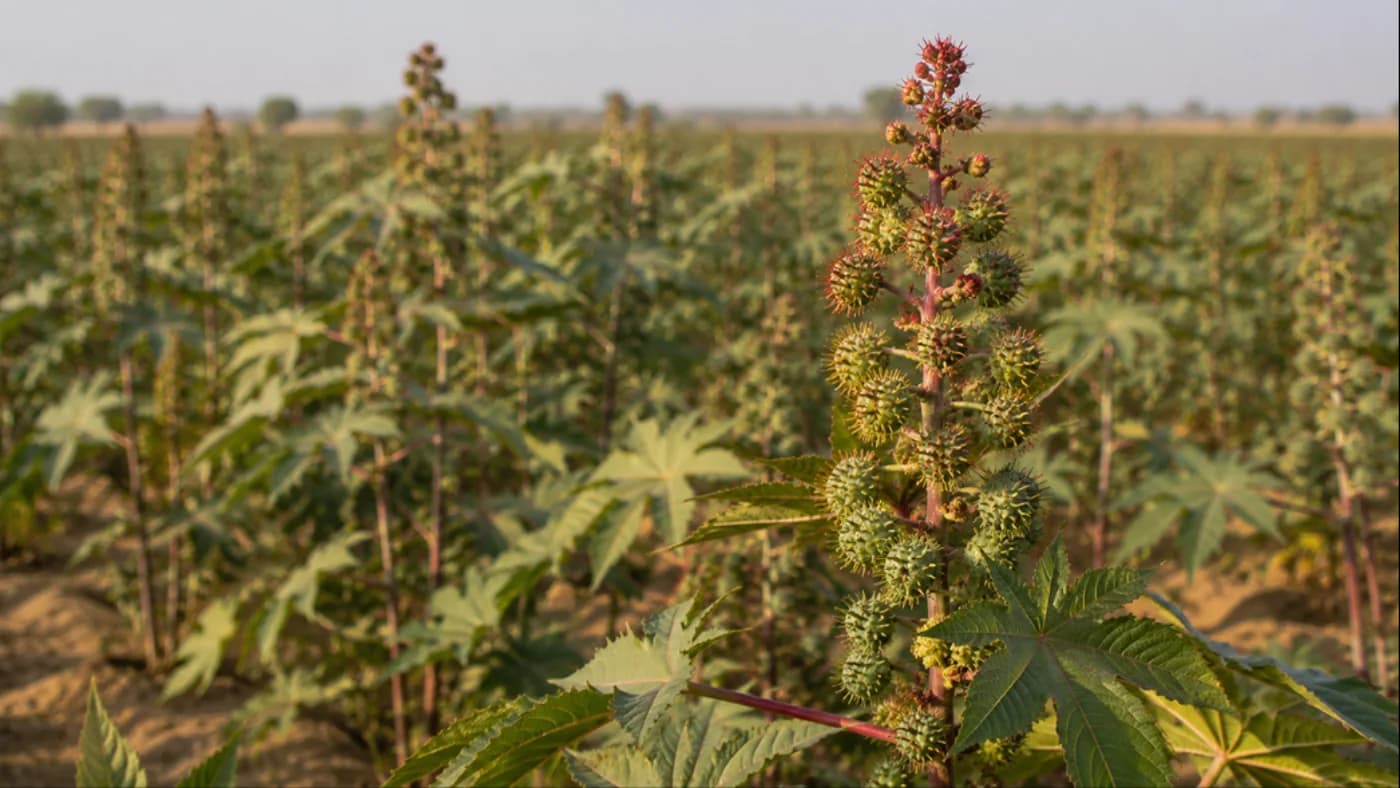
Castor Farming in Gujarat: Erandi from Sowing to the Last Picking
Gujarat grows most of India's castor, and India supplies most of the world's. A deep-rooted crop for light land that pays across several pickings — and one you must never treat as food or fodder.