

PM-KUSUM Solar Pump Subsidy: The Three Components Explained
Diesel pumps are expensive to run and getting more expensive every season. PM-KUSUM subsidizes solar irrigation in three different ways depending on your situation — here's which component applies to you and how to apply.
Quick answer
PM-KUSUM isn't one single scheme — it's three distinct paths (income from solar power generation on barren land, a standalone solar pump where there's no grid, or solarizing a pump you already have) and figuring out which one actually matches your situation is the real first step. The subsidy structure is a mix of central support, state support (which varies meaningfully by state) and your own contribution, often partly financeable through a bank loan — always confirm the current percentages and process for your specific state and component with your state's renewable energy nodal agency or DISCOM rather than assuming a figure from elsewhere applies to you.
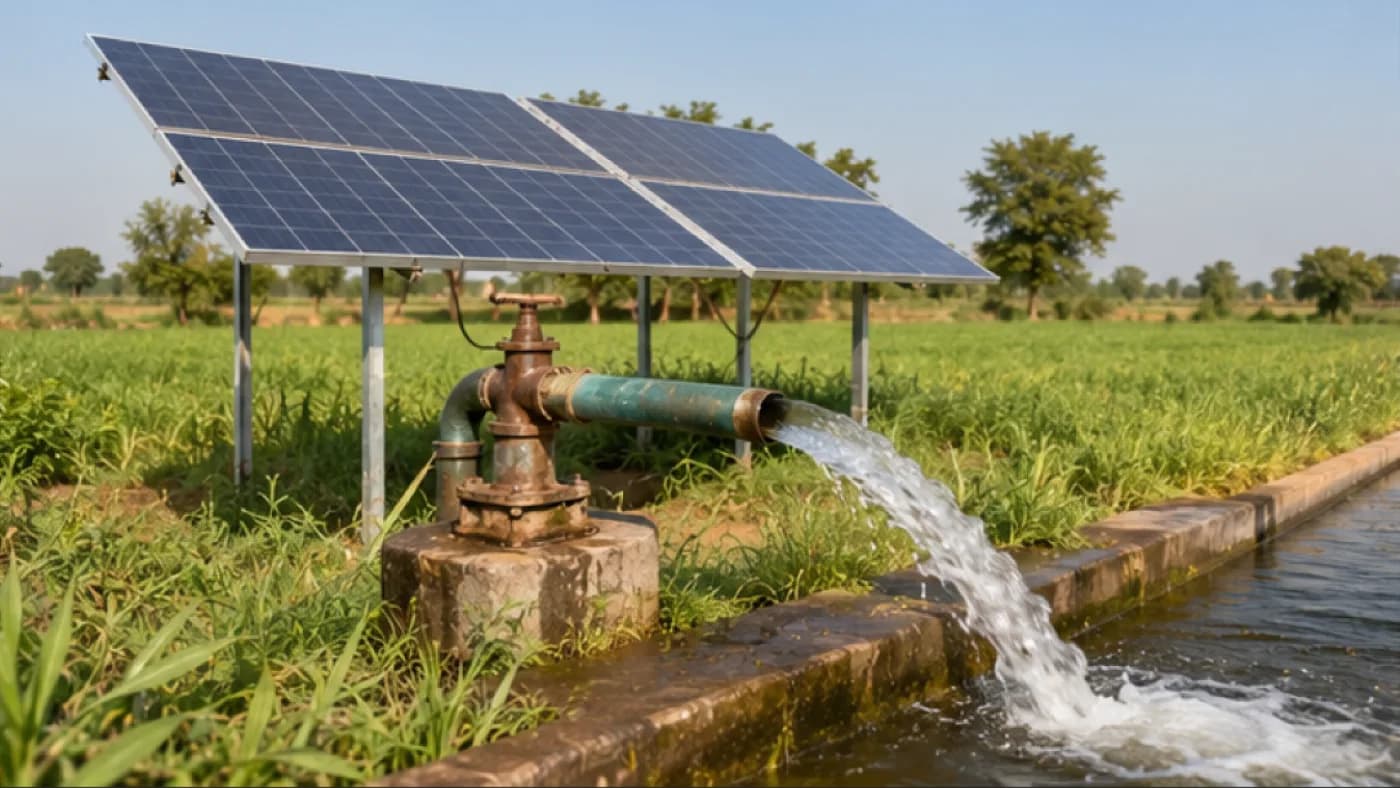
Every diesel-pump season costs a little more than the last, and every grid outage during a critical irrigation window costs a farmer yield they can't get back. PM-KUSUM — the Pradhan Mantri Kisan Urja Suraksha evam Utthaan Mahabhiyan — was built to move irrigation toward solar power with government subsidy support, and it does this through three genuinely different components aimed at different situations: a farmer with barren land near the grid, a farmer with no grid connection at all, and a farmer who already has a grid-connected pump. Knowing which component actually fits your situation is the first real step, since the application route and the benefit differ across all three.
The three components, at a glance
Component A supports small, grid-connected solar power plants — typically in a modest capacity range — set up on a farmer's or a group of farmers'/panchayat's barren or under-utilized land, with the electricity generated sold to the local DISCOM (electricity distribution company) under a power purchase agreement, giving the landowner a new income stream from land that wasn't earning much otherwise.
Component B supports standalone solar-powered agricultural pumps for farmers who don't have a grid electricity connection at all — a genuinely useful option in areas where grid connectivity for irrigation is unreliable, distant, or simply unavailable, since the solar pump operates independently of the grid.
Component C supports solarizing existing grid-connected agricultural pumps — adding solar capacity to a pump you already run on grid power, letting you use solar energy for your own irrigation and, in many cases, sell any surplus power you generate back to the grid, turning your existing pump connection into an additional income source rather than only an expense.
How the subsidy is typically structured
Across the components, the general design is a mix of central government subsidy, state government subsidy, and a farmer contribution, with the farmer's remaining share sometimes available through a bank loan rather than needing to be paid entirely upfront. The exact split between central share, state share and farmer contribution varies by component and, significantly, by state — some states add a larger top-up subsidy on their own, which can meaningfully change what you actually pay.
Because this structure is set by policy and can be revised, and because the state component genuinely differs from state to state, never assume a percentage you heard about a neighboring state's scheme applies to yours — confirm the current farmer-contribution share for your specific state and component with your state's renewable energy nodal agency or your electricity distribution company (DISCOM).
Who should look at which component
If you (or a group of neighboring farmers, or your panchayat) have barren or low-yield land near an existing grid connection point and you're interested in a power-generation income stream rather than irrigation itself, Component A is the relevant one to ask about.
If you farm land with no grid electricity connection, or where getting one would be costly or take a long time, and you currently rely on diesel for irrigation, Component B (a standalone solar pump) is usually the more directly relevant option, since it solves the irrigation problem without needing grid access at all.
If you already have a working grid-connected agricultural pump and grid power is reasonably reliable where you farm, Component C lets you add solar capacity to that existing setup — reducing your grid/diesel dependence for irrigation while potentially creating income from surplus power, without replacing infrastructure you already have.
How to apply
Applications are generally routed through your state's designated renewable energy nodal agency (the specific department or agency name varies by state) or through your electricity distribution company (DISCOM), depending on the component and how your state has structured the scheme's rollout. Contacting either directly, or your local agriculture department office, is a reasonable starting point if you're not sure which body handles it in your state.
Because implementation details — the application window, the documentation required, and the current subsidy percentages — are set and administered at the state level within the central scheme's framework, the practical first step is genuinely a phone call or visit to your state nodal agency or DISCOM office rather than trying to apply from a generic checklist that may not match your state's current process.
The real benefits, honestly stated
The most immediate benefit for most farmers is reduced dependence on diesel for irrigation — a real, ongoing cost saving on fuel that compounds every season, plus freedom from diesel price volatility and availability issues during peak demand periods. For Component A and C in particular, the additional benefit of selling surplus solar power back to the grid can turn what was previously pure expense (irrigation power) into a partial income source.
The honest caveat is that the farmer's upfront contribution, even after subsidy, is a real cost, and while a bank loan can often cover part of it, that still means committing to a repayment obligation — so it's worth working out the real numbers for your specific state's subsidy structure and your own irrigation/land situation before applying, rather than assuming the subsidy alone makes it cost-free.
Terms explained in this guide
Frequently asked
What are the three components of PM-KUSUM?+
Component A supports small grid-connected solar power plants on farmers'/panchayat land with power sold to the DISCOM; Component B supports standalone solar pumps for farmers without a grid connection; Component C supports solarizing an existing grid-connected agricultural pump.
How much does a farmer have to pay under PM-KUSUM?+
The subsidy structure is a mix of central subsidy, state subsidy and a farmer contribution, with the farmer's share sometimes financeable through a bank loan. The exact split varies by component and by state — confirm the current figures with your state's renewable energy nodal agency or DISCOM.
Which component should I apply for if I have no grid electricity connection?+
Component B, a standalone solar-powered agricultural pump, is generally the relevant option since it operates independently of grid electricity.
Can I sell surplus solar power back to the grid?+
Under Component A and Component C, selling surplus generated power back to the grid is generally part of the model, giving farmers an additional income stream beyond irrigation, subject to the arrangement with your DISCOM.
Where do I apply for PM-KUSUM?+
Applications are generally routed through your state's renewable energy nodal agency or your electricity distribution company (DISCOM), depending on the component and your state's specific process — contact either, or your local agriculture department office, to start.
Where to go next
- Farming cost & profit calculatorWork out cost per acre, break-even yield and expected profit before you sow.
- Today's mandi bhavOfficial AGMARKNET rates for your crop, nearby mandis compared, and the net price after travel.
- Agri Bazar marketplaceBuy and sell animals, crops, equipment and dairy near you — and see what buyers want today.
Want this as daily tasks for your farm?
Khetiyaar turns guides like this into a day-by-day plan — in your language, free to start.

Related guides
PMKSY Drip Irrigation Subsidy Guide: How the Micro-Irrigation Scheme Actually Works
Drip irrigation pays for itself over time, but the upfront cost of pipes, emitters and a filtration unit stops many smallholders before they start. This guide focuses on the subsidy and application side — the part that decides whether you can actually afford to install it.
Government Schemes Every Indian Farmer Should Know
Income support, cheap credit, crop insurance, free soil testing and irrigation subsidies — real value that often goes unused simply for lack of awareness.
iKhedut Portal 2026: Yojana List, Documents and How to Apply Without Getting Rejected
Gujarat's iKhedut portal carries subsidies for tractors, drip irrigation, godowns, tar fencing and well over a hundred other schemes. Most rejections are avoidable paperwork mistakes. Here is the full 2026 process, the documents that actually matter, and how to check your status.