

Using Dry Leaf Litter as Free Livestock Bedding
Every dry season, trees drop a free, carbon-rich bedding material while many farmers keep buying shavings, straw or sawdust. Here's how to harvest, store and use dry leaves safely in a coop, pigsty or goat shed.
Quick answer
Dry leaf litter is one of the cheapest, most effective bedding materials a livestock keeper in India has access to — provided it's properly dried, stored, and used with the right tree species. Harvest only crinkle-dry leaves, shred them where you can, build a deep-litter pack that composts in place through the season, and steer clear of walnut, and be cautious with fresh stone-fruit leaves. Do that, and a seasonal nuisance turns into free bedding, free insulation, and a spring harvest of the best compost on the homestead.
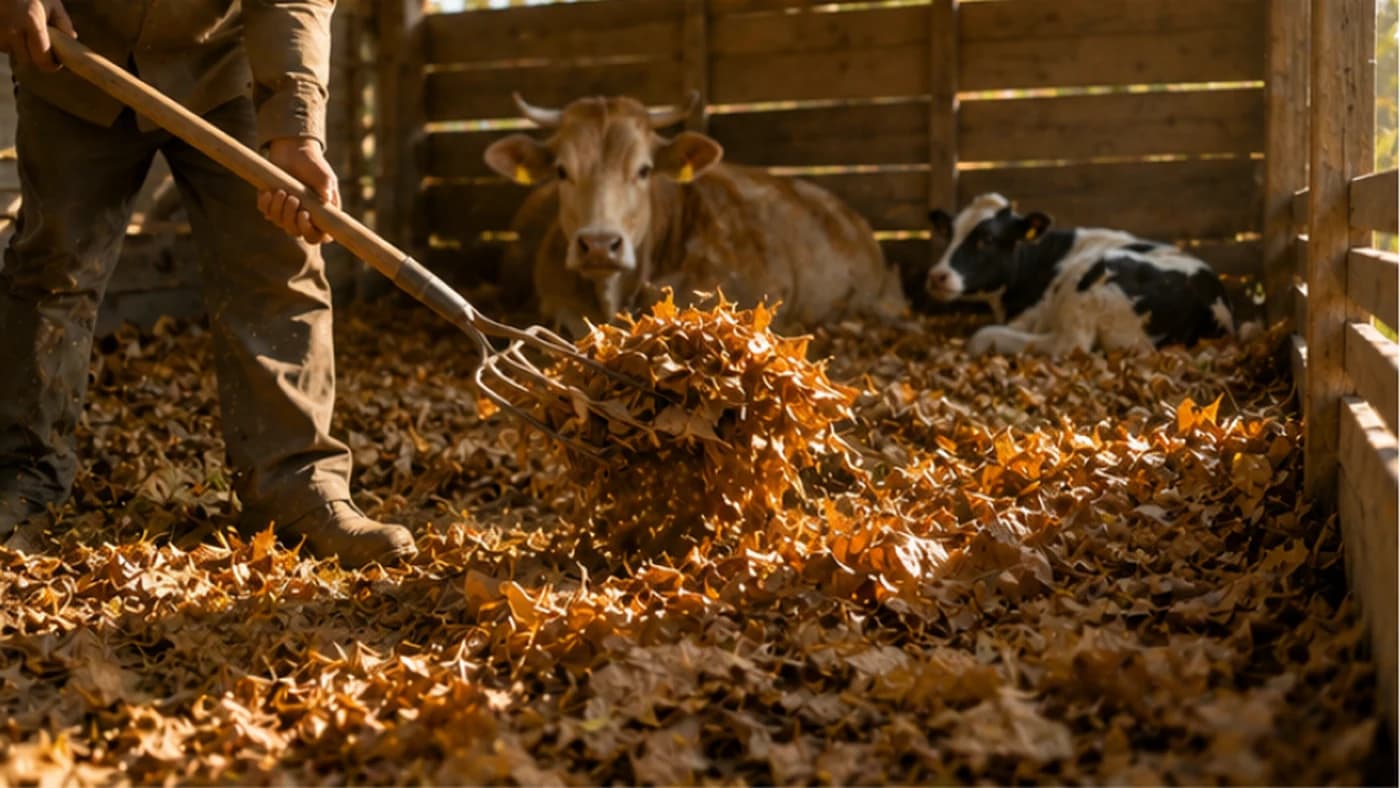
In much of India, the hot, dry weeks before the monsoon are when many deciduous trees — mango, neem, teak, sal and others — shed a thick carpet of old leaves. Most people rake it up as waste. But that dry, carbon-rich litter is one of the best bedding materials a livestock keeper can ask for, and it costs nothing but a bit of labour. Mixed with the nitrogen-rich manure of chickens, goats, pigs or cattle, dried leaves create exactly the environment beneficial microbes need to break waste down cleanly instead of letting it rot and smell. This guide covers how to harvest and store leaves properly, the simple science of why the mix works, which trees are safe and which to avoid, and how to run a full deep-litter system through a season.
What this is, and why a thick leaf-litter pack works
Using dry leaves for bedding means gathering, drying and spreading fallen leaves as the floor covering in an animal shelter — a direct, no-cost substitute for bought shavings, straw or sand. It works because leaves are high in carbon, and when layered with nitrogen-rich manure they create the same balance a good compost pile needs. Instead of a sterile, static material like shavings that simply sits until it's soaked through and has to be hauled out, a leaf-litter bed is alive: it hosts a working population of microbes that bind nitrogen, suppress odour and generate a small amount of warmth as it slowly composts.
The best way to use it is a deep-litter system: rather than cleaning the floor every week, you keep adding fresh dry leaves on top of the old layer. Over a season this builds into a thick, insulating pack 30–45 cm deep that generates its own gentle heat as it composts — a real advantage on cold winter nights in the hills or on the northern plains.
Harvesting and storing leaves the right way
Success depends entirely on collecting and storing dry material — wet leaves in a shed are an invitation to mould and bad bacteria. The rule to remember: only collect leaves that are crinkle-dry. If a handful doesn't crackle and shatter when you squeeze it, it's still too damp to store; wait for a run of a few clear, sunny, dry days before you begin.
For collection, raking is gentlest on the land but slow; for a larger operation, running a mower with a bagging attachment or a leaf blower/vacuum over dry leaves is far quicker, and shredding them this way also increases their surface area, making them noticeably more absorbent. If any of your leaves feel slightly damp, spread them out on a tarp in full sun for a few hours before storing — even leaves that feel dry on top can hide moisture in the middle of a pile.
For storage, you need a dry, ventilated place that will hold enough leaves to last until the next season's fall. Old feed or grain sacks work well because they breathe, though they're slow to fill one at a time. A better option on a homestead is a simple leaf crib: four wooden pallets wired together into a box, lined with chicken wire to hold the leaves in while letting air move through. If you must store leaves outdoors, cover only the top with a tarp and leave the sides open to the air.
The science: why the carbon-nitrogen mix works
Every organic material has a carbon-to-nitrogen (C:N) ratio, and good composting — which is exactly what a deep-litter floor is — needs a ratio near 30:1. Dry leaves are very high in carbon, typically 40:1 to 80:1 depending on the tree, while animal manure (poultry manure especially) is very high in nitrogen. Combine the two and the carbon in the leaves locks up the nitrogen in the manure before it can escape as ammonia gas — which is exactly why a well-managed leaf-litter floor smells like a forest floor instead of a dirty shed.
Leaves also absorb moisture differently from wood shavings. A shaving is like a small sponge that holds water inside its own structure. A leaf relies more on surface area and layering, so whole, unshredded leaves can mat together and form a barrier that lets moisture sit on top instead of soaking through. Shredded leaves avoid this — they behave more like a loose mulch that lets moisture percolate down to where the microbes can process it.
Why it's worth the effort
The most obvious benefit is cost: shavings, straw and sawdust all have to be bought fresh, season after season, while a single mature tree can provide sackfuls of bedding for free. Leaves also break down far faster than wood shavings — by the time you clean out the shed, you're left with dark, crumbly, nutrient-dense compost ready for the vegetable patch or field, rather than half-rotted shavings that can rob nitrogen from garden soil while they finish breaking down.
There's an animal-welfare benefit too. Chickens and pigs are natural foragers, and a fresh layer of leaves gives them hours of scratching and rooting to look for seeds or the occasional insect, which reduces boredom and behaviour problems like feather-picking. A thick leaf pack with lots of trapped air also insulates far better than most bought bedding, keeping animals off cold ground through winter nights. And clean, dry leaves are naturally dust-free, unlike some commercial shavings that are dusty or chemically treated — better for both the animals' lungs and yours.
Mistakes that turn this from free to dangerous
Damp leaves are the single biggest risk: wet leaves mat down and grow mould within days, and that mould can produce toxins that sicken or even kill small animals, alongside a sharp rise in respiratory disease and foot infections in poultry. If your leaves are not properly crinkle-dry, don't use them as bedding — full stop.
Whole, broad leaves that aren't shredded (from large-leaved trees especially) can pack down into a solid, airless mat, creating the same smelly, anaerobic conditions you were trying to avoid. Shred leaves before use where you can, or simply toss a handful of grain into the bedding each morning — your birds will do the turning for you as they scratch for it.
Not every tree's leaves are safe. Using the wrong species can range from mild irritation to genuine poisoning, so it pays to know what you're raking before you fill the shed — covered in the next section.
Trees to avoid and trees that are safe
If you have walnut trees — common in Kashmir, Himachal Pradesh and parts of Uttarakhand — treat them with real caution. Walnut leaves contain juglone, a compound toxic to many animals, especially horses (it can trigger laminitis) and some sensitive poultry; the highest concentration is in the roots and hulls, but leaves carry enough to matter. It's safest to avoid walnut leaves as bedding entirely.
Leaves from stone-fruit trees — peach, plum, apricot, cherry (all grown across the Himalayan and hill states) — contain compounds that are genuinely toxic while the leaves are fresh and wilted, though the risk drops sharply once they are fully dead-dry and brown in the dry season. Many homesteaders still choose to avoid them out of caution.
Oak leaves (common in the Himalayan foothills) are high in tannins. In a compost pile this is mostly useful, since tannins slow decomposition slightly and prevent the pile from overheating — but goats and sheep that eat large quantities of oak leaves can suffer tannin poisoning, so keep an eye on it, especially if hay or other forage is in short supply. Strongly scented leaves such as eucalyptus can also irritate animals in an enclosed shed, so it's best avoided in a coop even though it's common as a plantation tree in India.
For safe, easy options across most of India, leaves from neem, mango, banyan, peepal, tamarind and jackfruit are all good, low-risk choices with no known bedding toxicity, and neem's natural antibacterial and insect-repelling properties are a genuine bonus in a livestock shelter.
When leaf bedding isn't the right fit
In very humid or high-rainfall regions — coastal belts, the Northeast, or the monsoon months anywhere — getting a real run of crinkle-dry days can be difficult, and leaves stored in a damp area will rot before they ever reach the shed. If your storage space isn't reliably dry, this system will disappoint you.
Leaves also hold less total liquid than premium materials like peat moss or hemp bedding, so in a very high-density setup where animals are confined to a small area around the clock, leaves alone may saturate too quickly. In that case, use leaves as a carbon-rich top layer over a more absorbent base rather than the sole bedding material.
Leaves versus other common bedding
Bought shavings or straw: real, recurring cost every season; very high absorbency; slow to compost (often 12–24 months); good insulation; low labour (easy to spread straight from the bag). Dry leaves: free; moderate absorbency, better once shredded; fast to compost (roughly 4–6 months); excellent insulation from trapped air; higher labour, since you have to harvest, dry and store them yourself.
Practical tips for a season of use
You don't have to choose one material exclusively — many farmers use a base layer of husk, shavings or straw for high absorbency, then add a 10 cm layer of dry leaves on top for carbon and enrichment. Before adding any batch, do the crinkle test: grab a handful and squeeze — if it doesn't shatter into small pieces, it isn't dry enough yet.
Stick to leaves from oak, mango, neem, jackfruit, banyan and similar, and avoid strongly scented species like eucalyptus in enclosed sheds. When you bring in leaves, you're also bringing in whatever was living in them — usually harmless, often beneficial microbes, but check for ticks or larger insects if that's a concern in your area. Finally, always keep a few extra sacks of dry leaves in reserve beyond what you think you'll need — an unexpected leak or a spell of damp weather can ruin a section of bedding, and you'll be glad of the dry backup.
A season in practice: a small poultry coop
Take a flock of 12 hens in a 2.5 m × 2.5 m coop. During the dry-season leaf fall, you harvest and shred about 20 large sacks of mango and neem leaves. You start the season with 15 cm of dry leaves on the coop floor. Every couple of weeks, once the bedding starts looking flat and soiled, you add another 5 cm of fresh leaves from storage, and each morning you toss in a handful of grain so the hens spend an hour or two scratching through it — mixing manure down and bringing fresh carbon to the surface.
By the height of winter the pack has built up to about 30 cm, and pushing a gloved hand into the bottom layer, you can feel it's noticeably warm from microbial activity — free underfloor heating for your birds' feet. By the time the next hot season arrives, you fork the whole pack out, and what was a season's worth of leaves and droppings has become dark, crumbly, earthy-smelling near-finished compost, ready for the vegetable patch or field ahead of the next sowing.
Frequently asked
Can I use any tree's leaves as livestock bedding?+
No. Avoid walnut leaves entirely (they contain juglone, which is toxic, especially to horses), be cautious with fresh or wilted stone-fruit leaves (peach, plum, apricot, cherry), and watch tannin intake if goats or sheep eat large amounts of oak leaves. Neem, mango, banyan, peepal, tamarind and jackfruit leaves are all safe, common choices.
How do I know if my leaves are dry enough to store?+
Use the crinkle test: grab a handful and squeeze. If the leaves crackle and shatter into small pieces, they're dry enough. If they feel soft, bendy or cool to the touch, they still have moisture and will mould in storage.
Do leaves work as well as bought shavings?+
They absorb moisture a little differently — best when shredded — but they cost nothing, compost far faster (about 4-6 months versus 12-24 months for shavings), and insulate at least as well. Many farmers use a base of shavings or husk with a top layer of leaves for the best of both.
How deep should a deep-litter leaf pack be?+
Aim for 30-45 cm over a full season, built up gradually by adding 5-10 cm of fresh dry leaves every couple of weeks as the layer below compacts and soils.
Is it safe to use leaf litter in humid or high-rainfall areas?+
It's harder, not impossible. If you can't reliably get a run of dry, sunny days to cure your leaves, or your storage space isn't properly dry and ventilated, the leaves will rot before use. In these regions, use leaves as a thin top layer over a more absorbent base material instead of your main bedding.
Where to go next
- AI farming chatbotAsk any farming question in Gujarati, Hindi or English and get an answer in seconds.
- Kheti app for Indian farmersCrop plans, disease diagnosis, weather and mandi rates in one app.
- Agri Bazar marketplaceBuy and sell animals, crops, equipment and dairy near you — and see what buyers want today.
Want this as daily tasks for your farm?
Khetiyaar turns guides like this into a day-by-day plan — in your language, free to start.

Related guides
Living Fences for Livestock: Grow a Boundary That Never Needs Replacing
A wire fence rusts and sags within 20–30 years. A well-managed living fence of thorny trees and shrubs gets stronger every winter, blocks wind, feeds your animals, and can outlast the farm itself.
The Medieval Folding Technique: Using Sheep and Goats to Fertilise Your Field Overnight
One night of penned sheep on a patch of land delivers more usable nitrogen than months of hauled, stored manure. Here's how the old European folding system works — and why Indian farmers already know a version of it.
DIY Livestock Grooming Stations: Let Your Animals Scratch Themselves Instead of Your Fence
Cattle, goats and buffaloes will find something to scratch against — usually your fence or shed wall. Give them a sturdy, purpose-built scratching post instead, and you save your infrastructure while improving their skin health and even milk yield.