

Forest-Finishing Pigs: Raising Pork at Almost No Feed Cost
The single biggest cost in raising pigs is the feed bill. Timing your pigs' final growth to your land's natural mast and fruit season can finish them on almost no bought feed at all — and produce noticeably better pork.
Quick answer
Forest-finishing isn't about abandoning pigs in the woods — it's about timing their last two to three months of growth to whatever your land already produces for free, whether that's oak mast in the hills or mahua, mulberry and orchard windfalls elsewhere. Get the timing right, keep the fencing solid, protect young pigs with a balanced diet before they're ready to forage seriously, and the biggest recurring cost in raising a pig quietly disappears for the final stretch.
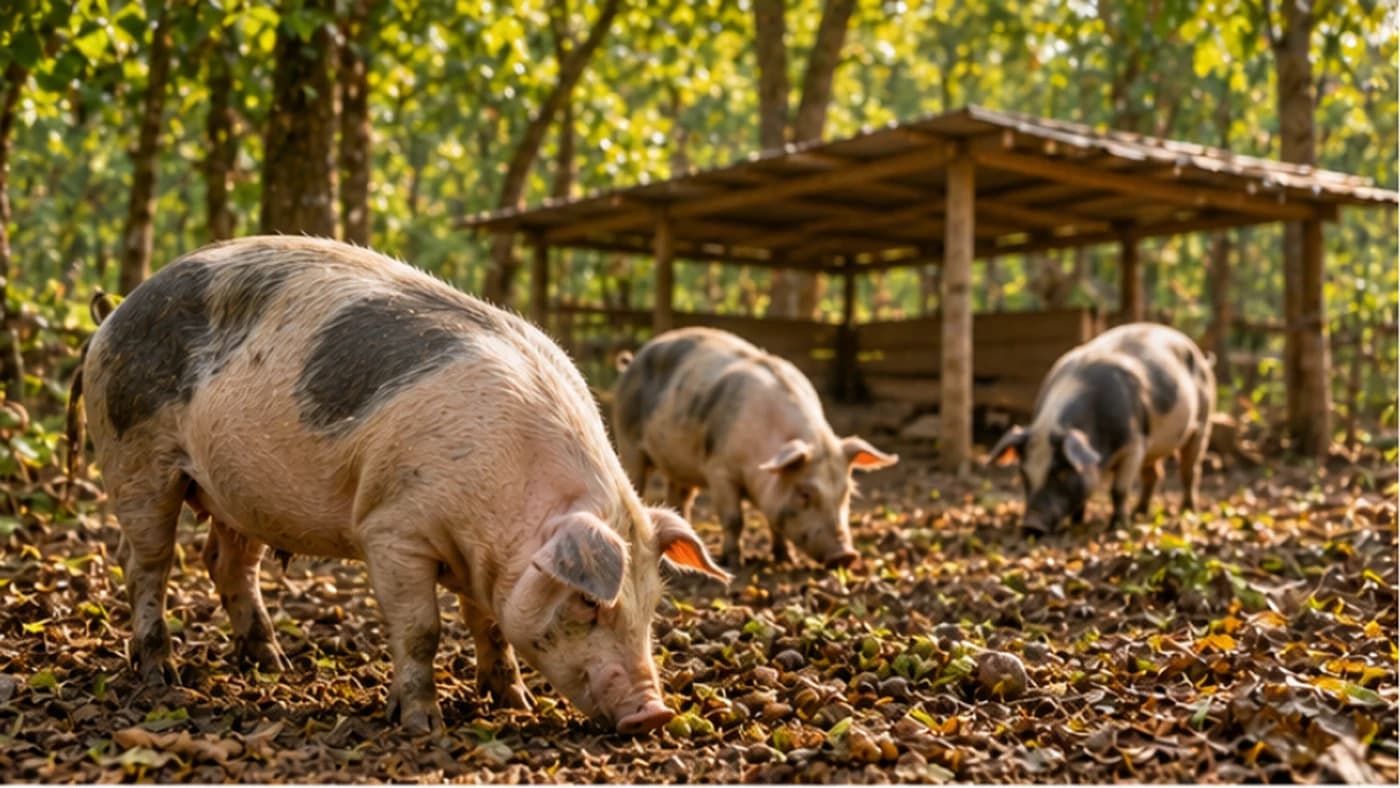
For generations, pig-keepers didn't rely only on a feed store — they timed their pigs' final growth stage to land on the season when trees drop their heaviest calorie load: nuts, seeds and fallen fruit. This is the same idea behind the famous Iberian acorn-finished ham of Spain, and it works on a home scale too, using your own trees to offset the single biggest cost of raising pigs.
What forest-finishing actually means
Forest finishing, or mast feeding, means timing a pig's final growth stage so it lands during your land's natural nut, seed or fruit drop, replacing an expensive, feed-store ration with what the land is already producing. Pigs are natural foragers — unlike grass-eating ruminants such as cattle, they thrive on energy-dense foods like acorns, nuts and fallen fruit.
A single mature oak can drop thousands of acorns in a good year; ten such trees represent a serious caloric reserve that otherwise goes to waste. Moving pigs into that area at the right time turns that free energy into high-quality meat and fat without a single extra feed purchase.
Understanding the mast cycle
"Mast" is the general term for tree fruit — hard mast like acorns, walnuts and hickory nuts, and soft mast like wild berries and fallen fruit — and each type serves the pig differently at different growth stages. Hard mast, especially acorns, is high in fat and carbohydrate but relatively low in protein, which makes it ideal specifically for finishing (the last stage of growth), because the fat a pig absorbs from acorns is soft and creamy, giving forest-finished pork its distinctive texture.
Timing matters: you want pigs to already be growers — roughly 35–45 kg — by the time mast starts falling, then let them spend 60–90 days foraging and putting on that final, flavourful weight before winter. You can't simply release very young piglets into the woods and expect results; the protein gap in acorns means young pigs still need a balanced, protein-rich diet to build their frame first.
Choosing the right pigs and setting up fencing
Hardy, foraging-inclined breeds do far better at this than pigs bred purely for confinement systems — animals that retain a strong natural drive to root and forage, and a constitution suited to being outdoors, will find far more of the available mast and put it to better use.
Containment is the real cost here, since the feed itself is free. A robust, portable electric fencing system (polywire or electrified netting) is essential — pigs are intelligent, and once they learn a fence delivers a small shock, they respect even a lightweight temporary line. Rotate the paddock every few days so pigs don't destroy tree roots or turn the ground into mud, and always provide a mobile water source, since pigs digesting a heavy, fatty mast diet need plenty of fresh water.
What forest-finishing gives you
The most obvious benefit is cost: the final finishing period needs little to no purchased feed, cutting out the single largest recurring expense in raising a pig. The meat itself is genuinely different too — a varied forest diet of roots, nuts and fallen fruit produces fat and meat that's darker, richer and more complex-flavoured than grain-only pork, a quality that specialty and heritage-breed pork buyers pay a premium for.
There's a land-management benefit as well: pigs root up and eat invasive weeds and help break up leaf litter so new seeds can reach the soil, while their manure fertilises the very trees that fed them. And because they're expressing their natural rooting and foraging behaviour, welfare is generally better than in a confined system, which in turn tends to mean less stress and disease.
Mistakes and challenges to watch for
Treating "forest-finished" as "unsupervised" is the most common mistake — pigs left entirely to themselves become a liability, not an asset, so daily oversight and fence checks are still essential. Watch for the protein gap: acorns and similar mast are calorie-dense but relatively low in protein and key amino acids, so this method works best for the final 60–90 days of a pig's life, on animals that already have a solid frame from a balanced earlier diet.
Parasite pressure rises with constant soil contact, so rotate paddocks to break parasite cycles and consider natural dewormers alongside monitoring for internal parasites. Never let pigs eat large quantities of green, unripe acorns — high tannin levels at that stage can be toxic — wait until they've browned and dropped naturally, and move pigs on once roughly 70% of visible mast in an area is consumed rather than waiting for it to be completely gone, both to protect tree roots from over-rooting and to leave a little behind for other wildlife and next year's soil.
Where this works, and where it doesn't
This method depends entirely on what's growing on your land. A mature hardwood woodlot with a good density of oak, chestnut or similar mast-bearing trees can genuinely finish pigs on very little bought feed; a plot of pine or plantation timber simply won't produce enough calories. Mast years are also not guaranteed every season — many oaks run on a 3–5 year cycle of heavy and light production — so a serious practitioner keeps a backup plan, such as surplus garden produce or local food-processing waste, for a light year.
Always check local rules on keeping livestock before setting up a woodlot paddock, and keep fencing secure — a loose pig on someone else's land is a fast way to sour a good neighbour relationship.
Applying this in India
True acorn-mast forests are mostly a Himalayan and hill-region feature — banj oak (Quercus leucotrichophora) forests in parts of Uttarakhand and Himachal Pradesh do produce a genuine acorn drop, and pig-keeping communities in these regions and across the Northeast, where forest-based pig rearing is already a long-standing practice, can apply the mast-feeding principle quite directly.
Across the rest of the country, the same underlying idea — timing a pig's finishing stage to a local, free calorie source — still works with different trees: mahua flowers and seed in central and eastern India, mulberry fruit in the early monsoon, fallen jackfruit and mango in season, tamarind pods, and surplus or cull vegetables from a kitchen garden or nearby market can all serve the same finishing role that acorns play in a temperate forest. The principle — match the pig's growth stage to whatever your land or region drops in abundance for free — travels even where the exact tree species doesn't.
Store feed vs. forest/orchard finishing
- Commercial feed finishing: ongoing feed cost throughout growth; reaches market weight faster; firmer, more uniform fat; low daily management once feeders are set; consistent but plain flavour.
- Forest or orchard finishing: little to no feed cost in the final 60–90 days; slower overall growth to market weight; softer, richer fat with more complex flavour; higher daily management (fencing, rotation, monitoring); distinctive, sought-after meat quality.
A worked example
Picture roughly 1.2 hectares of hardwood woodlot with good oak cover. Five weaner pigs are raised through summer on garden scraps, local dairy waste and a balanced ration until they reach about 35–45 kg by the time the acorn drop begins. They're then moved into rotating quarter-acre paddocks within the woodlot, shifting every few days as each area's visible mast is mostly consumed.
Over roughly 75 days of foraging, the pigs gain steadily on mast alone, reaching market weight with little to no additional feed cost for that final stretch — the result being meat with a noticeably richer, nuttier flavour than a purely grain-fed pig, at a fraction of the usual finishing feed bill.
Frequently asked
What is forest-finishing or mast feeding for pigs?+
It's timing a pig's final growth stage — usually the last 60–90 days before market weight — to coincide with a natural, local drop of nuts, seeds or fruit, so the pig finishes on largely free feed instead of purchased rations.
Can this be done anywhere in India?+
True oak-acorn forests exist mainly in Himalayan and hill regions. Elsewhere, the same principle works with locally abundant free feed — mahua, mulberry, fallen jackfruit or mango, tamarind, and surplus garden produce — timed to the pig's finishing stage.
Why can't young piglets be forest-finished from the start?+
Mast like acorns is calorie-dense but low in protein and key amino acids. Piglets need a balanced, protein-rich diet to build their frame first; forest finishing works best in the final growth stage of an already well-grown pig.
What's the biggest risk with forest-finishing pigs?+
Escapes and parasites. Pigs are intelligent and test fences daily, so reliable, trained-in electric fencing is essential, and constant ground contact raises parasite risk, which rotational paddock moves help control.
Does forest-finished pork actually taste different?+
Yes — a varied diet of nuts, roots and fallen fruit tends to produce softer, richer fat and a deeper flavour compared to pork finished purely on grain, which is why specialty and heritage-breed pork often commands a higher price.
Where to go next
- AI farming chatbotAsk any farming question in Gujarati, Hindi or English and get an answer in seconds.
- Kheti app for Indian farmersCrop plans, disease diagnosis, weather and mandi rates in one app.
- Agri Bazar marketplaceBuy and sell animals, crops, equipment and dairy near you — and see what buyers want today.
Want this as daily tasks for your farm?
Khetiyaar turns guides like this into a day-by-day plan — in your language, free to start.

Related guides
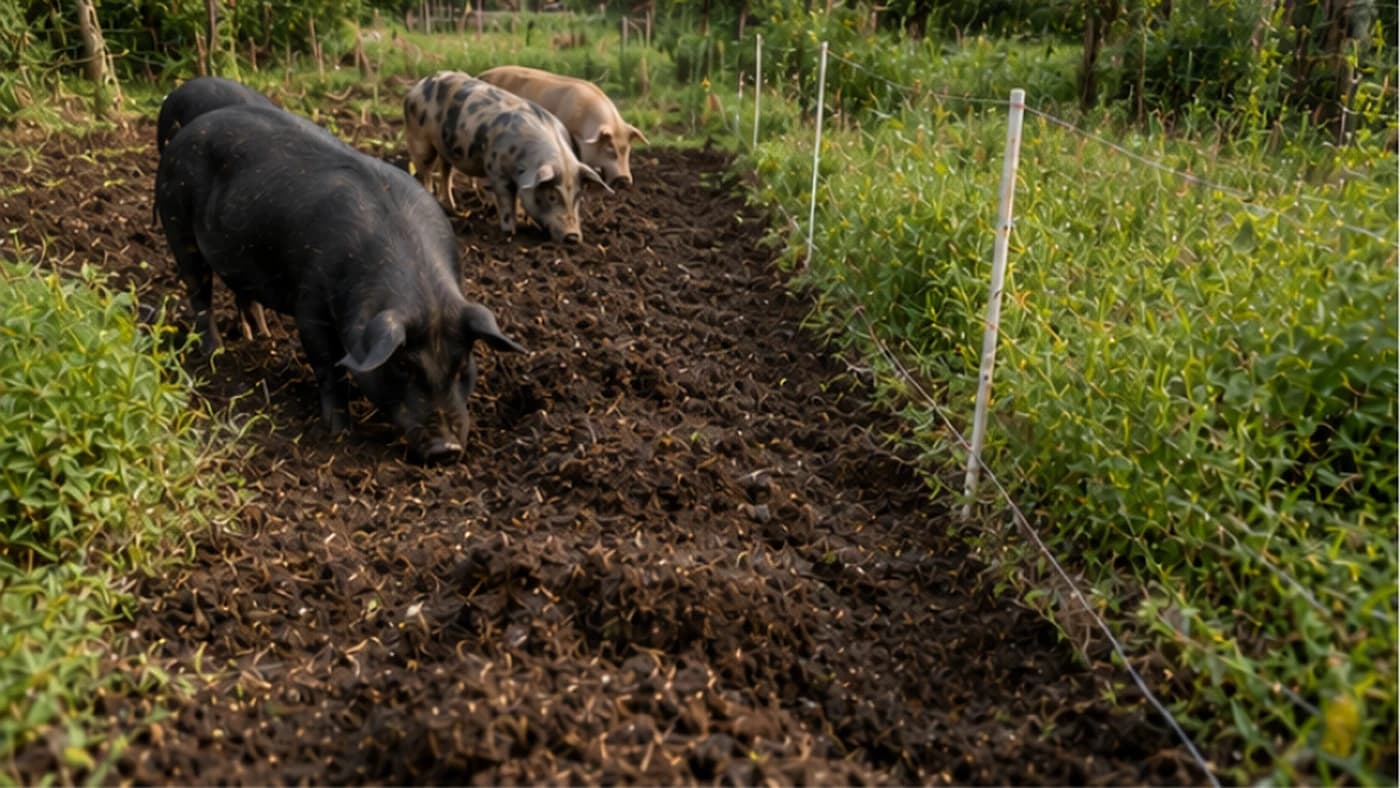
How to Use Pigs to Till Your Garden Soil for Free
A pig's instinct to root and dig looks destructive — until you point it at the right patch of ground. Move the fence to your next vegetable plot and let your pigs clear weeds, break up hardpan, and fertilise for you.
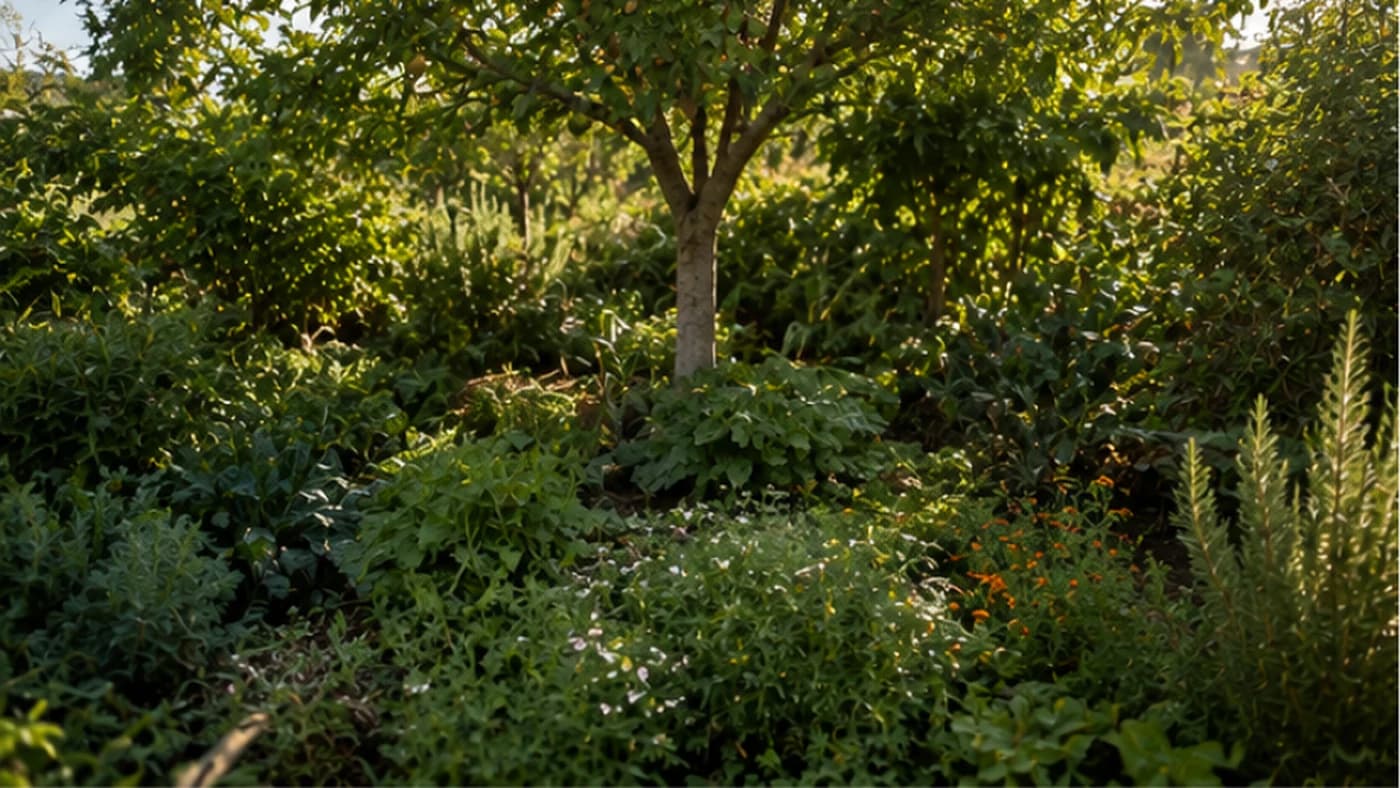
Multi-Layer Food Forest Design: Growing Seven Crops in the Space of One
A natural forest needs no fertiliser or hose, because every layer of it — from tall trees to root crops — fills a different niche. Stacking those same layers in your backyard or farm boundary can multiply what one plot of land produces.
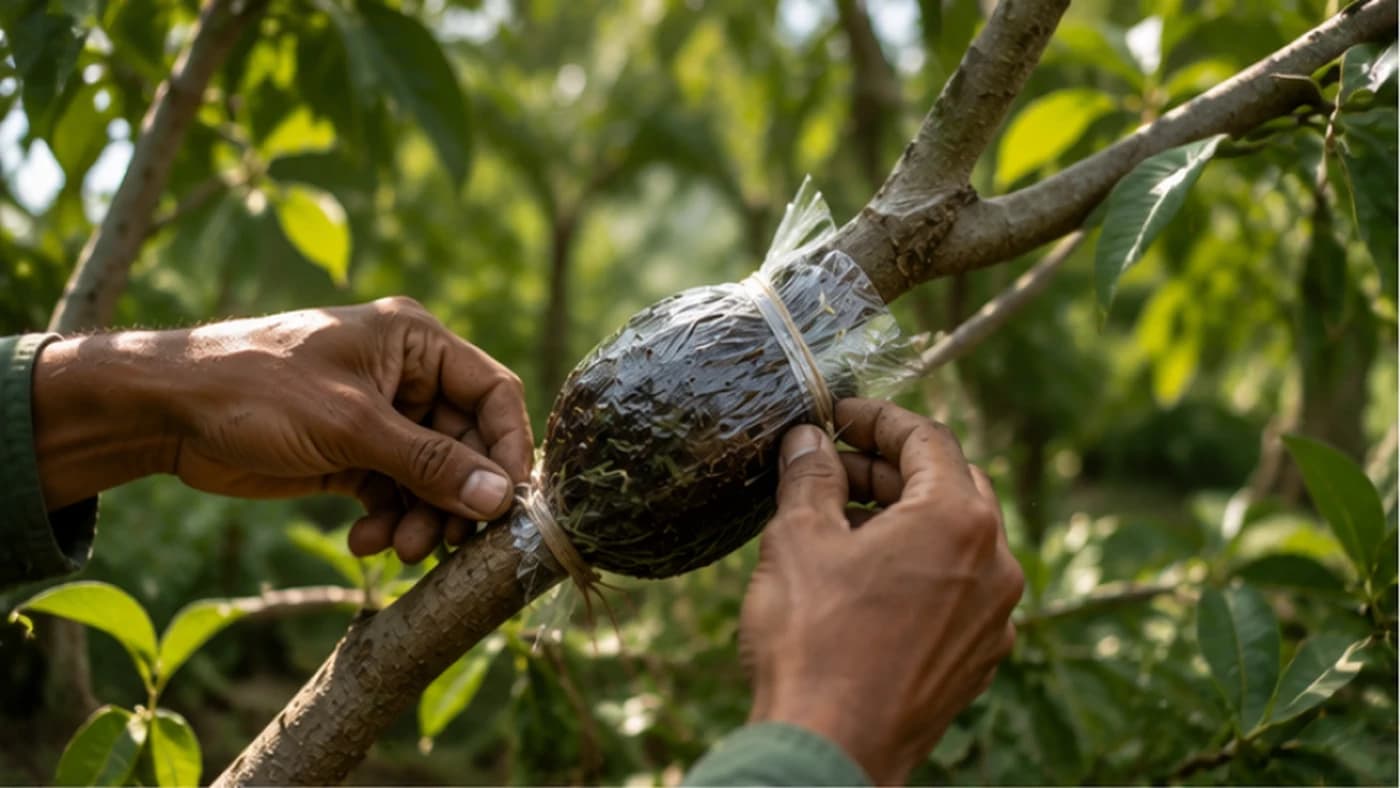
How to Multiply Fruit Trees for Free: Cuttings, Gootee and Grafting
One healthy branch and a bit of soil is often all it takes to turn a single fig, pomegranate or guava tree into an entire orchard — no nursery bill required. Here's how cuttings, air-layering (gootee) and grafting actually work.