

Build an Herb Spiral: A Perpetual Spice Bank Right Outside Your Kitchen
A stone spiral packs sun-loving and shade-loving, wet and dry herbs into one small footprint by stacking microclimates vertically — so you stop buying dried spice jars and start harvesting fresh, year after year.
Quick answer
An herb spiral trades a bit of upfront labour — hauling stone, building the base correctly, getting the orientation right — for years of near-zero-cost fresh herbs at your back door. Keep mint contained, top up settling soil each season, water from the top and let gravity do the rest, and a single small structure can realistically supply most of a household's culinary herbs.
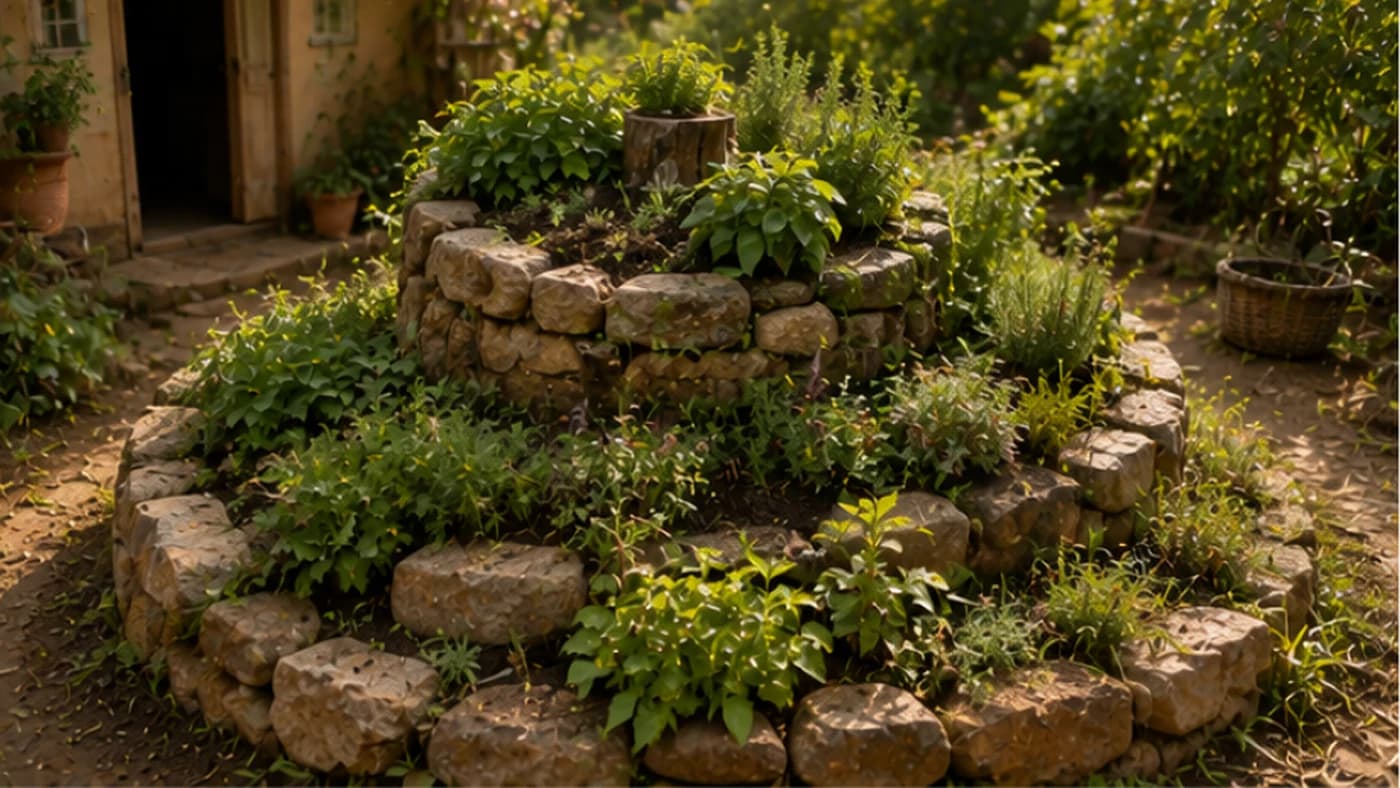
Fresh herbs bought in small packets or dried in plastic jars are some of the most marked-up items in any kitchen budget, and most home gardens waste space growing them in flat rows that need constant watering and bending. An herb spiral solves both problems at once: it's a three-dimensional bed that winds upward like a shell, packing sun-baked heights for rosemary and thyme right next to cool, damp hollows for mint and coriander, all within reach of the back door. Once built and planted, it needs very little from you and keeps producing for years — the closest thing to a permanent spice bank a home garden can offer.
Why a spiral works better than a flat bed
An herb spiral is a compact structure, typically about 1.5-1.8 metres across and roughly a metre high at the peak, that creates several distinct microclimates in one small footprint. Because it's vertical, one side always faces more sun while the other stays shaded — so you can grow shade-loving coriander just centimetres from sun-loving lavender. Gravity does the watering for you: water poured at the top trickles down and settles at the base, creating a natural gradient from dry at the crown to consistently moist at the bottom. The stone or brick walls also act as a thermal battery, soaking up afternoon heat and slowly releasing it overnight — this buffers tender herbs against sudden cold snaps and keeps roots active longer into a cool spell.
Building the base
Start by smothering the grass or weeds where the spiral will sit with a thick layer of wet cardboard or newspaper — this creates a clean base and stops the structure from sinking unevenly over time. Cover this with a layer of coarse gravel so the lowest point doesn't turn into a stagnant, waterlogged mud pit. Then begin laying stones, bricks, or salvaged concrete chunks in a circle, winding them gradually inward and upward as you build, filling the centre as you go with a roughly 50:50 mix of good topsoil and well-rotted compost — a balance that gives both drainage and fertility.
Getting the orientation right
If you're in the Northern Hemisphere (which covers all of India), the lowest, shadiest part of the spiral should generally face north or northeast to create the coolest, dampest zone — so spend a few days watching how the sun actually moves across your specific spot before you commit to a final layout, since a tree or wall nearby can shift the ideal orientation.
What you actually gain
The most immediate benefit is a real cut in your grocery bill — herbs bought fresh are expensive because they spoil fast, but a living spiral stays productive for years, so you harvest only what a single meal needs and waste almost nothing. Space efficiency is significant too: a spiral roughly 1.8 metres across unrolls into something like 9 metres of usable planting edge, letting a small footprint grow enough herbs for a family of four. Water use drops as well — because the design channels water exactly where it's needed rather than losing it to evaporation and runoff across a flat bed, well-built spirals can use meaningfully less water than the same herbs grown in flat rows. And maintenance shrinks to picking and light pruning, since the raised, dense planting naturally shades out most weeds once established.
Mistakes that ruin a spiral
Never plant mint directly into the open soil of the spiral — it spreads aggressively through underground runners and will choke out every other herb within a season or two, so always keep it in a buried pot or a separate container at the base. Fresh soil naturally settles as it compresses over the first few months, so pack it firmly during construction and top up with fresh compost each year, or your plants will end up sitting well below the rim. And avoid treated lumber or old railway sleepers as building material — the preservative chemicals can leach into soil you're about to eat from; stick to natural stone, clean bricks, or untreated wood.
Where a spiral isn't the right tool
This design is built for home kitchens, not commercial production — if you plan to grow and sell large volumes of dried herbs, you'll need dedicated field space rather than a single spiral. Most culinary herbs need at least six hours of direct sun to develop the oils that give them real flavour, so a spot shaded most of the day by a wall or large tree will underperform no matter how well you build it. And moving the stone and soil for a full-size spiral is genuine physical labour — plan for help if mobility is a concern, though the finished structure is easy to maintain.
Practical care
Always water from the top of the spiral and let gravity distribute it — if the base ever becomes too soggy, work in a bit more coarse sand or gravel there to improve drainage. Mulch with straw or dry leaves between the plants, especially near the sun-baked crown where the soil dries fastest. Pinch back the growing tips of herbs like basil regularly to force bushier, denser growth rather than tall, leggy stems, and give woody perennials like sage a hard prune in early spring, cutting back about a third of the previous year's growth to keep them productive.
Going further
A small pond or buried bucket at the very base of the spiral attracts frogs and toads that help with natural pest control, while creating a humid pocket that suits moisture-loving herbs like coriander. Companion planting adds another layer of benefit — marigolds near the base can help deter root-feeding nematodes, while a borage plant nearby draws in pollinating bees. You can also tune the soil mix zone by zone: more sand at the sun-baked crown for Mediterranean herbs that hate wet feet, and a bit more compost or moisture-holding material at the damp base for herbs like coriander and mint (kept contained).
A realistic layout
Picture a 1.5-metre spiral built just a few steps from the kitchen door. At the driest, sunniest peak sits a rosemary bush alongside thyme, both thriving in the heat radiating off the stones. Just below, sage and a curry-leaf plant get full sun with slightly more soil depth. Around the sunnier mid-section, basil grows thick and bushy, while the cooler eastern face — protected from harsh afternoon sun but still getting a morning glow — suits chillies and a small bay plant. At the very base on the shaded side, a carpet of coriander thrives in the residual dampness, with mint kept strictly contained in a buried pot nearby. One watering at the top every few days keeps the whole system going, and by the end of the first season, the kitchen rarely needs to buy fresh herbs at all.
Terms explained in this guide
Frequently asked
How big should an herb spiral be?+
Roughly 1.5-1.8 metres across and about a metre high at the peak is a practical size for a home kitchen — large enough to create several microclimates, but small enough to reach every plant from the outside.
Can I plant mint in an herb spiral?+
Only in a buried pot or separate container at the base — planted directly, mint's underground runners will spread aggressively and choke out the other herbs.
Which way should an herb spiral face in India?+
The lowest, shadiest section should generally face north or northeast to create the coolest, dampest zone, but observe how the sun actually moves across your specific site before finalising the layout.
What materials should I use to build the spiral walls?+
Natural stone, clean salvaged bricks, or untreated wood. Avoid chemically treated lumber or old railway sleepers, since preservatives can leach into the soil.
How much sun does an herb spiral need?+
At least six hours of direct sun a day for most culinary herbs to develop good flavour — a heavily shaded spot will underperform regardless of how well it's built.
Where to go next
Want this as daily tasks for your farm?
Khetiyaar turns guides like this into a day-by-day plan — in your language, free to start.

Related guides
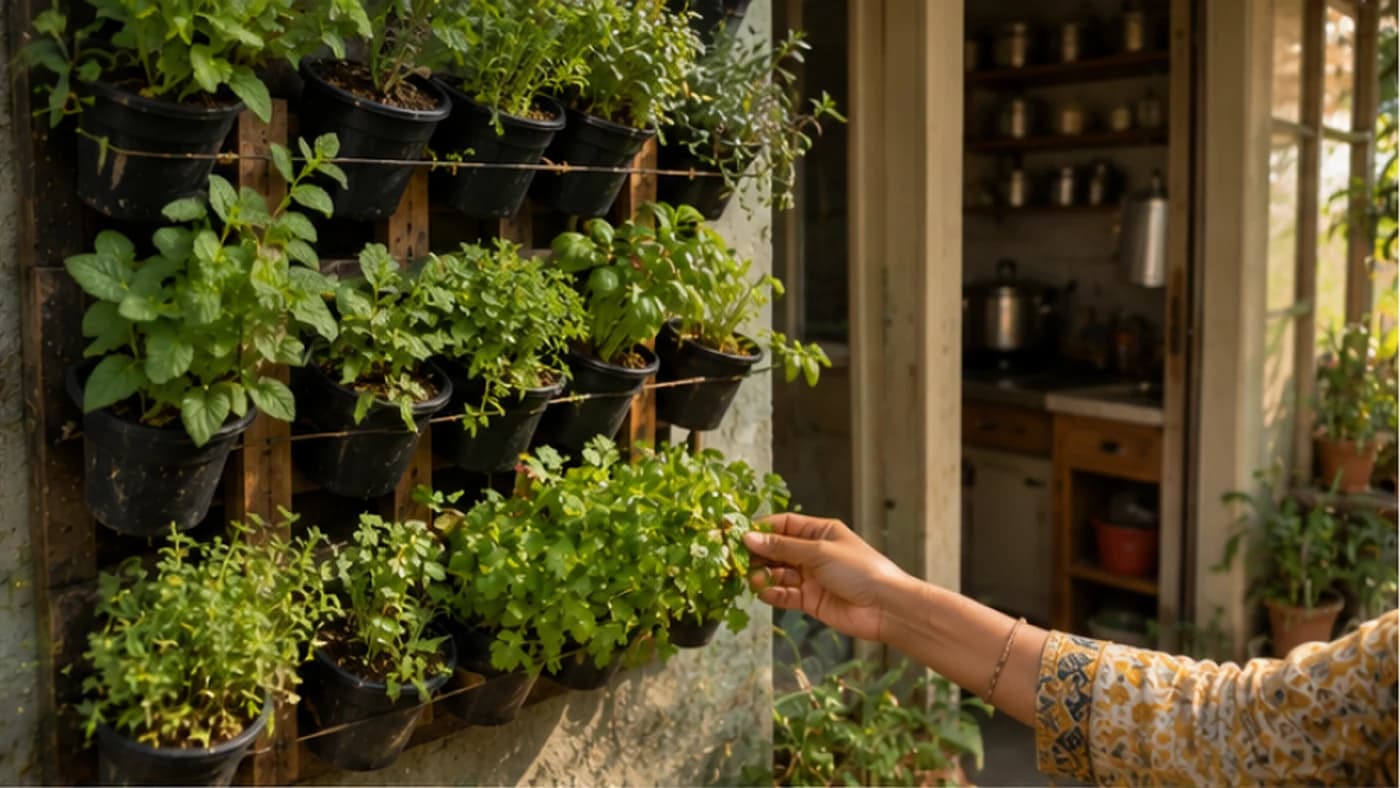
Build a Kitchen Herb Wall: A Living System That Beats Lonely Pots
A row of herbs in separate plastic pots on a windowsill usually struggles and dies within weeks. A connected vertical herb wall — sharing humidity, water, and light — keeps coriander, mint, tulsi, and curry leaf thriving in far less space, with far less daily effort.

How to Calculate Farming Cost and Profit
Many farmers know their yield but not their profit — a costly blind spot. Track costs, find your break-even price, and farming becomes a business.
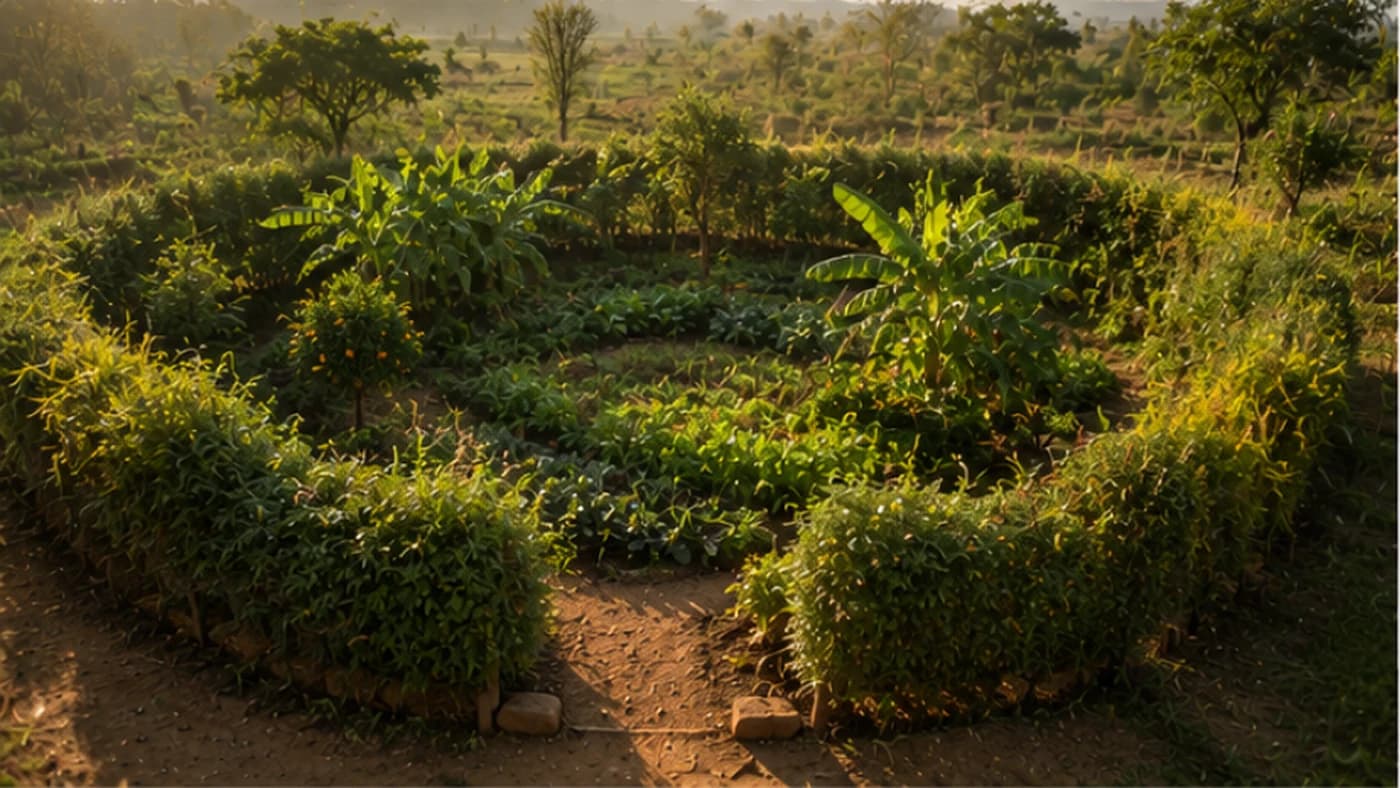
How to Build a Sun Trap: Grow Warm-Season Crops Through a Cold Snap
A U-shaped wall of stone, brick or hedge can make a patch of ground 5-10°C warmer than the open field beside it — enough to grow chillies, tomatoes and marigolds weeks earlier in the hills, or push a crop safely past an unseasonal cold spell.