

Attract Barn Swallows to Your Farm for Free, Natural Fly Control
A single pair of swallows can eat close to a thousand flies and mosquitoes a day. A few rough wooden ledges under your shed roof can turn your barn into a self-running pest-control unit that never needs refilling.
Quick answer
A pair of swallows working your shed and fields costs you almost nothing and quietly does the job of an expensive fogging system, every day of the season, for free. Put up two or three rough wooden ledges high under a covered eave, keep a patch of mud damp nearby during nesting season, and manage the droppings with a simple catch-board — then let the birds do the rest.
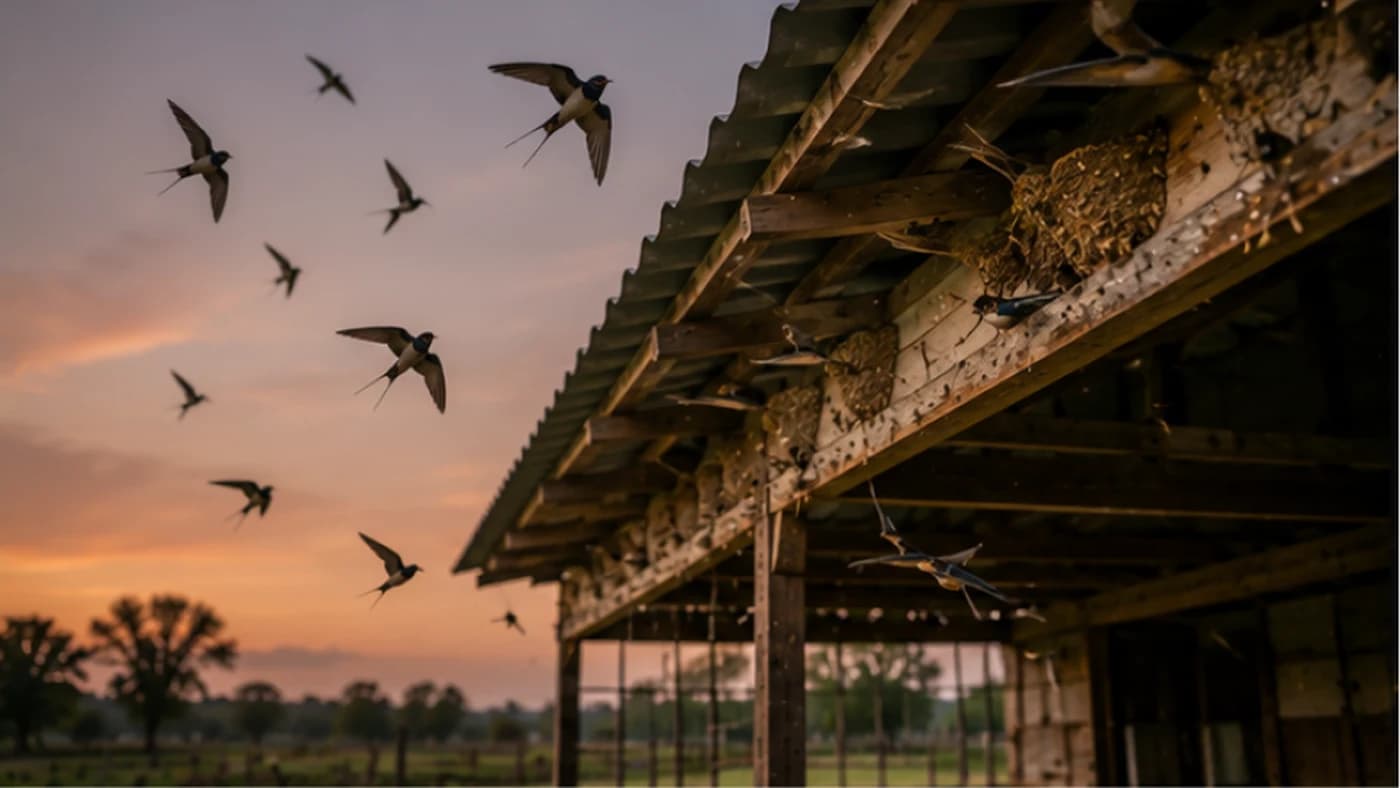
Every livestock keeper knows the fly problem: flies around the cattle shed, around the feed, around the milking area, biting animals and spreading disease. Most farmers reach for a spray or a smoke coil. But there is an older, freer solution that has worked on farms for centuries — swallows. A single swallow pair can catch several hundred flies, mosquitoes and small insects a day, hunting from dawn to dusk over the very areas where flies breed: sheds, manure piles, ponds and fields. Barn swallows and their Indian cousins (wire-tailed swallows, striated swallows, and swifts) are aerial hunters that have shifted, over centuries, from nesting on cliffs to nesting on human buildings — which makes them one of the easiest wild allies a farmer can invite in. All it takes is the right ledge in the right place.
Why swallows are such effective pest control
Swallows catch almost all their food in flight, snatching flies, mosquitoes, gnats and winged ants out of the air. A single adult can eat 40-60 insects an hour, which adds up to several hundred insects a day — and when a pair is feeding four or five hungry chicks, that number climbs sharply, since the whole family is now hunting non-stop through daylight hours. Research on swallow colonies has found that their presence alone can cut fly activity around a shed by more than half. Unlike a spray that only works where and when you apply it, a swallow family patrols continuously — over the shed, over the manure heap, over the pond, over the field — for free, every single day of the season.
What swallows need to move in
Barn swallows build their nests from mud pellets mixed with grass, essentially a small mud hut, with each nest needing roughly a thousand beak-loads of mud. On a bare wall this heavy mud nest tends to fall, especially once the chicks grow — so what draws swallows to stay is a rough horizontal ledge for the nest to rest on, easy year-round access into the shed, and a nearby patch of wet mud to build with. Give them these three things and a colony will often return to the same rafters year after year, arriving around the same week each season.
How to build and place a nesting ledge
You don't need a complicated birdhouse — a simple, sturdy ledge does the job. Use rough-cut, untreated wood (not smooth or painted) about 10-15cm square; the rough surface gives the mud something to grip. Fix the ledge high, close to the roof — leaving a gap of roughly 12-15cm between the ledge and the ceiling — so the birds feel safe from cats, owls and other predators reaching in from above, but can still perch comfortably on the rim of the nest. Mount it at least 2-2.5 metres above the ground, inside a shed, barn or under a deep, covered eave that stays dry in rain, screwed directly into a rafter or beam with a small wooden support underneath. If you are putting up more than one ledge, space them at least 1.2-1.5 metres apart, since swallows are social but still hold a bit of territory. Finally, keep a small patch of bare earth near the shed damp during the nesting season (usually just before and during the monsoon) — a shallow puddle refreshed by hand or hose gives the birds the mud they need; a pinch of natural clay makes it stickier and more useful.
The real benefits
The most immediate gain is fewer chemicals around your animals — sprays don't just kill flies, they also kill the useful insects that pollinate your crops, and can irritate the airways of sensitive livestock. The second gain is cost: once the ledges are up, your pest control team works for free, with no recurring spend on spray refills or fogging. The third and most underrated benefit is reach — a spray only protects the spot you apply it to, while a hunting swallow covers the shed, the manure pile, the pond and the surrounding fields in the same evening, cutting the general fly and mosquito load across the whole farm rather than one room of it.
Common mistakes to avoid
The most common complaint is droppings — swallows that eat this much also produce a fair bit of waste, so never place a ledge directly above a feed bin, a vehicle or your milking area; move the ledge a few feet over instead, and this stops being a problem. Second, don't shut every opening at night: swallows are active only from dawn to dusk, and if you seal the shed completely you can trap parents outside (unable to feed chicks) or inside (unable to hunt), which can cause a nest to fail. Third, keep an eye out for sparrows or mynas trying to take over an empty ledge or an unfinished nest before the swallows return each season — discourage this early so the swallows have a clear spot when they arrive.
Where this does and doesn't work well
Swallows are open-country hunters — they need clear airspace over fields, sheds or water to chase insects at speed, so a farm boxed in tightly by dense forest or tall buildings on all sides may struggle to attract a colony. Heat is also a factor: a metal-roofed shed with poor airflow can get dangerously hot near the ceiling in peak summer, so a ridge vent or an open gable end near the ledge keeps chicks from overheating. And remember: in India, as in most countries, wild birds and their active nests are protected by law (the Wildlife Protection Act, 1972) — so once swallows have settled in with eggs or chicks, leave the nest undisturbed until the young have fledged, and simply manage the droppings with a small catch-board underneath rather than removing the nest.
Sprays versus swallows — the real cost picture
Chemical fogging or spray systems carry a real, recurring cost: an initial setup expense, then a monthly spend on refills, plus the labour of applying them regularly, all for an effect that fades within hours and only covers the treated area. A swallow ledge costs little more than some scrap wood and a few screws, needs almost no ongoing spend, and asks only for an annual clean-up of old nesting material — in exchange for round-the-clock protection across the whole farm, not just the shed.
Getting the best results
Fix a simple catch-board (a strip of wood or old tin) about 60cm below the nest to catch droppings — scrape this into your compost pile weekly and you've turned a nuisance into fertiliser. Avoid painting the rafter glossy or oily where you want a nest, since mud won't stick to a slick surface; a strip of rough wood or wire mesh fixed to the rafter solves this. Keep the ledge in a shaded, slightly dark corner, since swallows feel safer away from open, bright spots where hawks can spot them. If there's a pond or tank nearby, make sure there's a clear flight path to it, since swallows drink by skimming the surface while flying. And take down any bird-spikes or reflective deterrent tape in the area you want them to nest — those tools don't distinguish a useful bird from a problem one.
Frequently asked
Will barn swallows actually come to an Indian farm?+
Yes — barn swallows are common winter visitors across much of India, and close relatives like the wire-tailed swallow are resident species that nest on buildings the same way. The same ledge design works for either.
How many flies can one swallow family really control?+
A single adult can eat 40-60 insects an hour; a family feeding chicks can clear several thousand insects a day between them, and studies have recorded a 50%+ drop in fly activity around sheds with an active colony.
Is it legal to remove a swallow nest I don't want?+
Wild birds and active nests are protected under India's Wildlife Protection Act, 1972. It's best to discourage nesting before eggs are laid (by not putting up a ledge in an unwanted spot) rather than disturbing an active nest afterwards.
What if swallows don't show up after I put up a ledge?+
Check the three essentials: a rough (not smooth) horizontal ledge, a dry sheltered spot high off the ground, and nearby mud during nesting season. Dry weather is the most common reason swallows skip a site — keep a mud patch damp by hand if needed.
Do I need to clean the nests every year?+
Once the birds have migrated or the season ends, brushing out old, mite-ridden nests encourages cleaner, healthier nests the following year — do this only after the birds have left, never while eggs or chicks are present.
Where to go next
- Kheti app for Indian farmersCrop plans, disease diagnosis, weather and mandi rates in one app.
- AI farming chatbotAsk any farming question in Gujarati, Hindi or English and get an answer in seconds.
- Agri Bazar marketplaceBuy and sell animals, crops, equipment and dairy near you — and see what buyers want today.
Want this as daily tasks for your farm?
Khetiyaar turns guides like this into a day-by-day plan — in your language, free to start.

Related guides
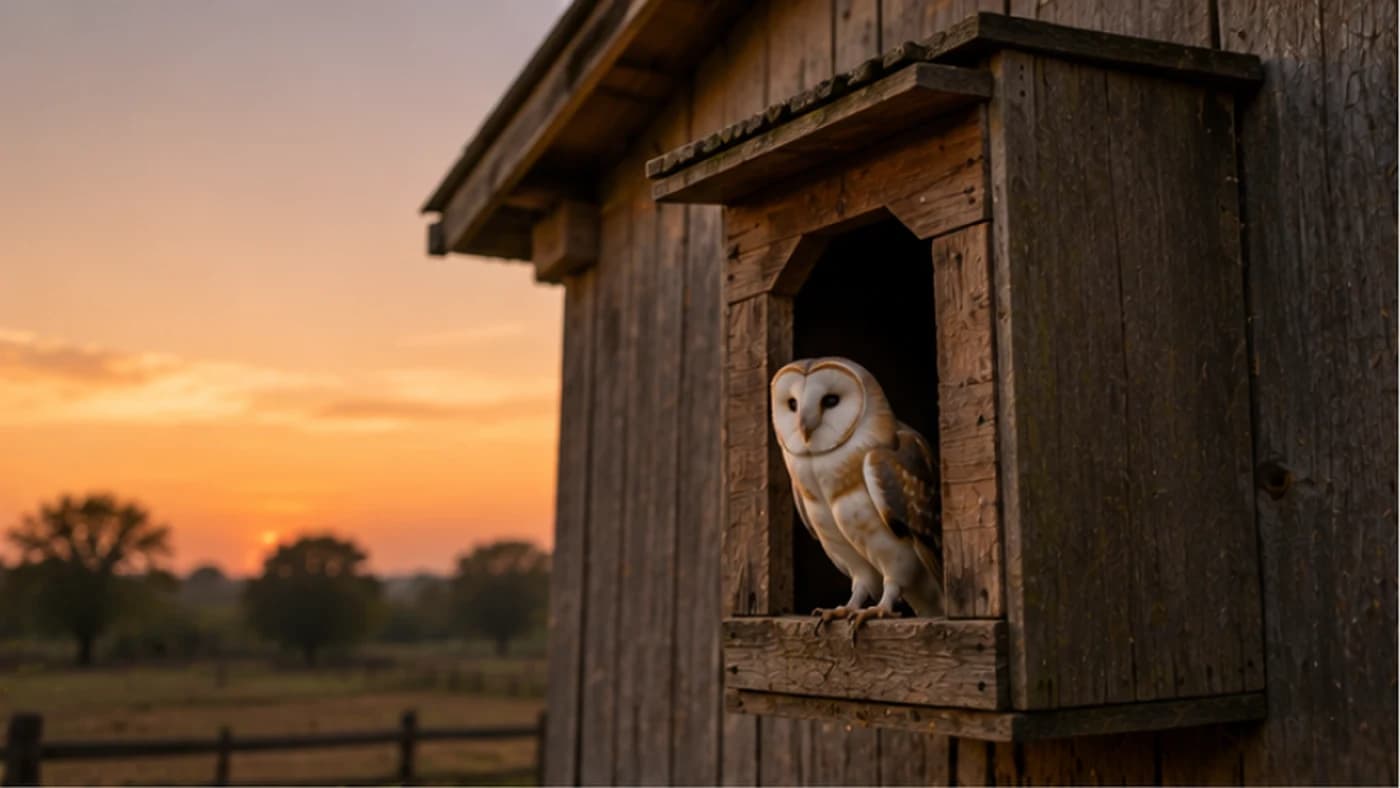
How to Attract Barn Owls to Your Farm for Free Rodent Control
One pair of barn owls can hunt over a thousand rodents in a single season — but only if you give them a properly designed, dark, predator-proof box. Barn owls (Tyto alba) already live across most of India; here's how to bring them onto your farm.
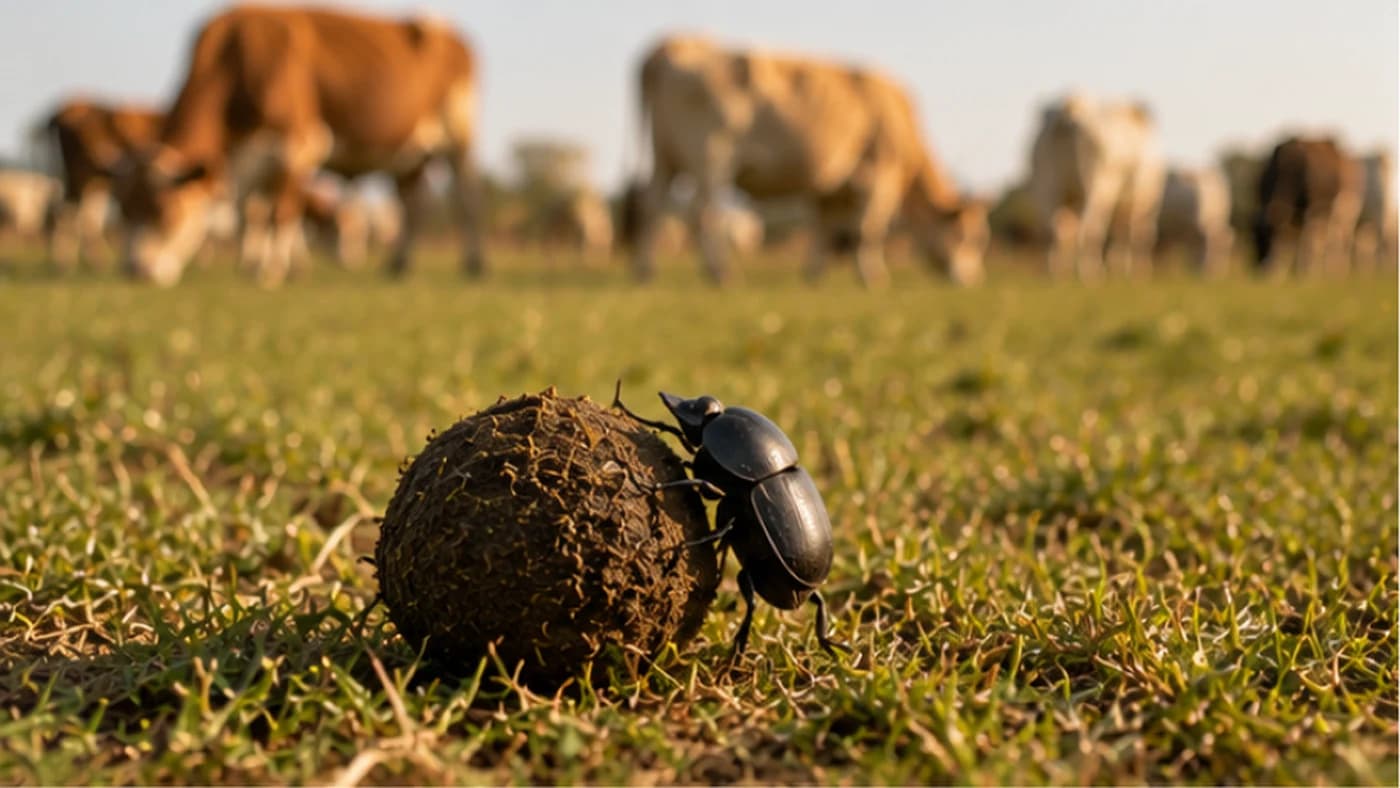
How to Attract Dung Beetles to Your Pasture (and Why Your Dewormer Might Be Killing Them)
Most farmers see a manure pat as a chore. The smart ones see a biological engine — dung beetles that bury parasites, aerate the soil, and cut fly populations, for free, if you stop poisoning them with routine deworming.
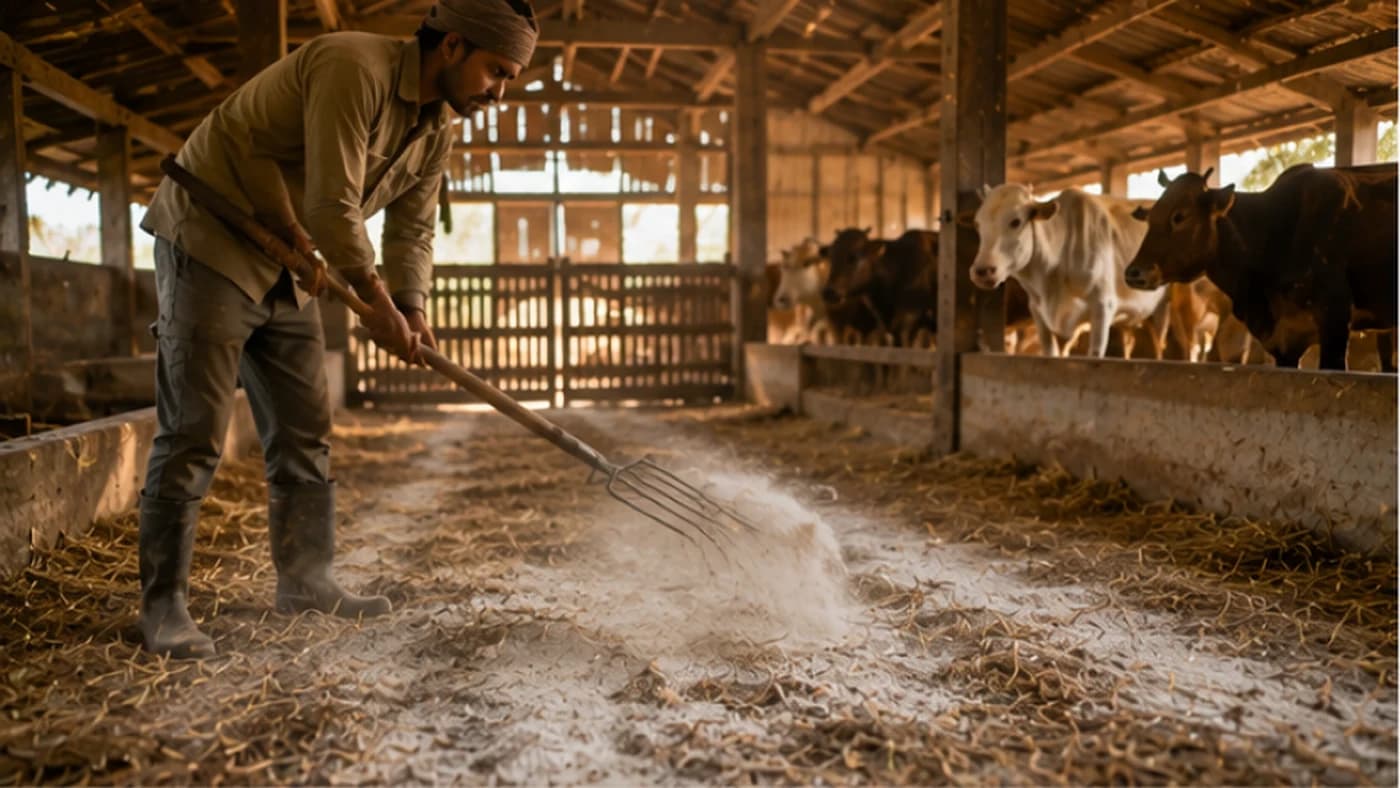
Natural Barn Sanitation and Odour Control With Effective Microorganisms
A barn that smells like bleach has killed the good bacteria that actually keep disease away. Effective Microorganisms (EM) digest ammonia at the source instead of masking it — here's how to use them safely.