

Turn Poultry Feathers into High-Nitrogen Liquid Fertiliser (For Free)
Feathers are nearly pure nitrogen, but they take years to break down in a normal compost heap. Ferment them instead, and in a matter of weeks you get a high-nitrogen liquid fertiliser stronger than most store-bought organic feeds.
Quick answer
Feathers hold one of the densest, cheapest nitrogen sources on any poultry farm — fermenting them in a bucket of water and forest-floor microbes turns a waste product into a strong, complex liquid feed within weeks, at essentially no cost. Get the water ratio, dilution, and timing right, and it's a genuinely useful input for leafy greens, brassicas and heavy feeders like maize, though it's the wrong tool once a plant is already flowering or fruiting.
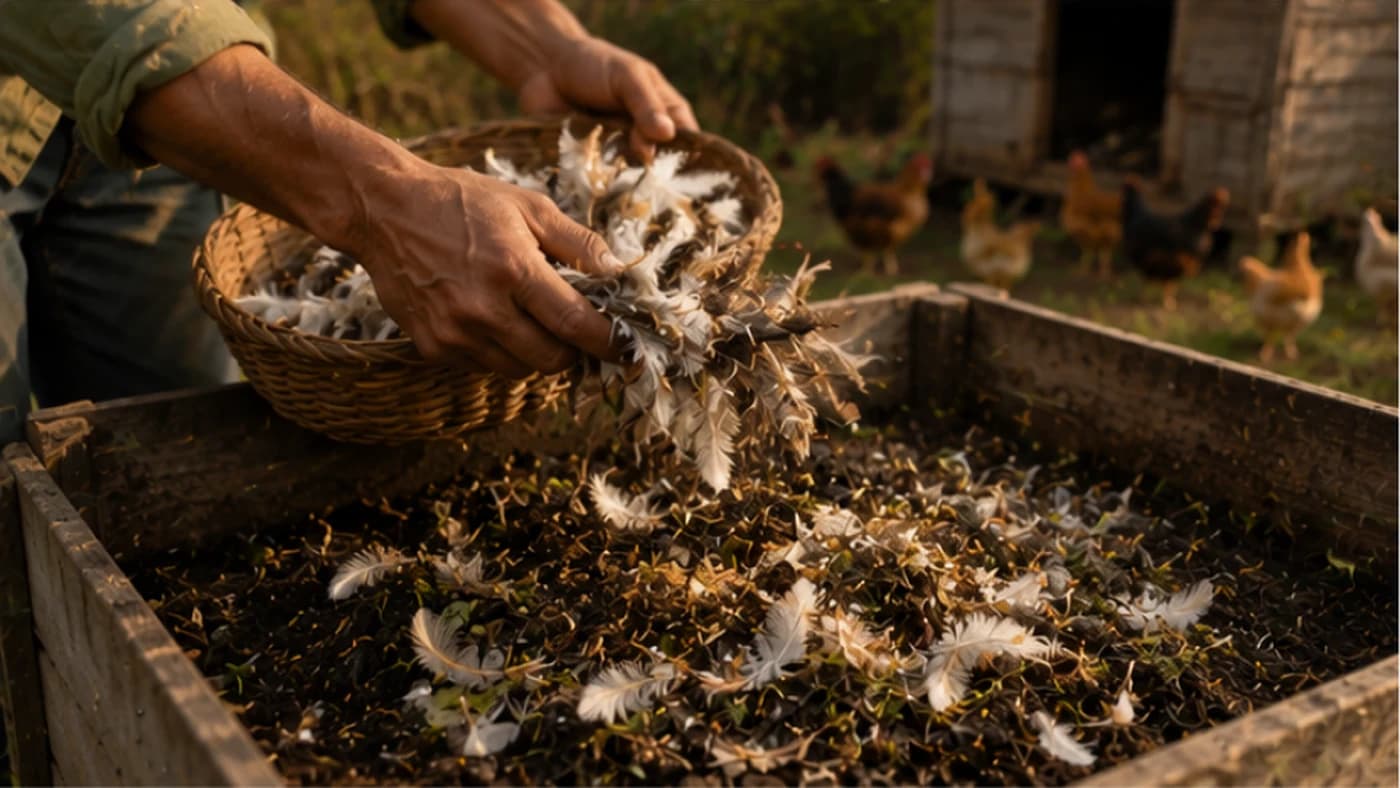
Every poultry keeper ends up with a coop full of feathers after a moult, and most of it gets raked up and thrown away or burned. That's a waste of one of the densest nitrogen sources on the farm — feathers are almost entirely keratin, a tough protein that resists normal composting bacteria, which is exactly why they can sit in soil for years without breaking down. Ferment them instead of composting them, and that same resistant protein becomes a fast-acting, high-nitrogen liquid feed for your crops, for the cost of a bucket and water.
Why feathers are worth fermenting
Feathers are roughly 90% keratin by weight, with a nitrogen concentration typically between 12% and 15% by dry weight — an NPK rating around 12-0-0, which is stronger than most store-bought organic liquid fertilisers manage without expensive additives. Fermentation breaks that locked-up protein down into amino acids and peptides plants can take up almost immediately, so it acts as both a nutrient source and a growth stimulant, especially useful for heavy nitrogen feeders like maize, cabbage family crops, and leafy greens. Feathers also carry a meaningful amount of sulphur (roughly 2–5%), a nutrient that's easy to overlook but matters a lot for the flavour and health of alliums and brassicas — onion, garlic and cabbage-family crops in particular.
How to ferment feathers
Ordinary composting bacteria can't easily break down keratin — they lack the specific enzyme (keratinase) needed — so you need to bring in the right microbes, and the easiest source is a handful of forest-floor leaf mould, which is rich in keratin-degrading fungi and bacteria.
Collect feathers, keeping them reasonably clean. Pack them into a sturdy bucket or drum until it's about two-thirds full. Dig up a handful or two of leaf mould from under trees where you can see white fungal threads and smell that rich, earthy scent, and add it as your inoculant. Fill the container with water — rainwater is best, since municipal tap water often carries chlorine that can kill the microbes you just added — and cover it to keep out mosquitoes and light.
In warm weather (25–30°C), feathers start losing their structure within two to three weeks, and a full breakdown, where the quills dissolve into a slurry, can take three to six months. When the liquid turns a dark amber colour and the feathers have broken down into slurry, your feather tea is ready.
What you get from it
Feather ferment gives a more complex nitrogen release than most liquid manure teas, which tend to leach out of the soil quickly — it combines fast-acting amino acids with slower-release organic nitrogen, so the feeding effect lasts longer. It's also essentially free: a single litre of comparable commercial liquid organic nitrogen fertiliser can cost a fair amount at a nursery or agri-input store, while a bucket of your own birds' shed feathers costs nothing beyond the container and water. Because you're introducing forest-derived microbes to start the process, it also brings a dose of diverse beneficial bacteria and fungi into your soil, helping it break down other organic matter and hold structure better over time.
Common mistakes
The smell is the first challenge — anaerobic fermentation of high-protein material releases strong, unpleasant gases as keratin and sulphur bonds break down, so keep your fermentation container well away from the house and downwind of neighbours. Using too many feathers relative to water is a common error too: if the mix is too thick, microbes can't move through it and the process stalls — aim for a soupy consistency, and if it smells rotten rather than just strongly earthy, add more leaf mould or finished compost to boost microbial diversity and airflow. Heavily manure-soiled feathers can also push fermentation toward more smell and fewer useful amino acids, so a quick rinse before fermenting helps. And treat the finished concentrate with basic hygiene sense — wear gloves when handling it, and don't apply it directly to leafy greens you plan to eat raw within the next few weeks.
When not to use it
Because it's so nitrogen-heavy, this feed is the wrong choice for plants that are already flowering or fruiting — drenching a tomato plant that has already set fruit will push out lush green growth at the expense of the fruit itself. Fermentation slows down sharply in cold weather, so in cooler regions or seasons, start your batch in the warmer months rather than expecting it to progress through winter. It also isn't instant — unlike a synthetic fertiliser that acts the moment it touches the soil, feather nitrogen takes a few days to activate soil biology, so if a plant shows severe, immediate nitrogen deficiency, a faster-acting option may be needed in the short term. And even though it's gentler than synthetic fertiliser, always dilute it properly and follow with a good watering, especially in dry, sandy soil.
Practical tips for best results
Shredding the feathers first — with an old blender or leaf shredder — increases the surface area available to bacteria and can cut fermentation time roughly in half. Keep the fermentation container somewhere warm but out of direct harsh sun; microbes work best in the mid-20s to low-30s Celsius, and temperatures above about 40°C can start killing off the beneficial bacteria doing the work. Always dilute the finished liquid before use — it's concentrated enough to burn roots — with a rough guide of 1:30 for a soil drench and a leaner 1:100 for a foliar spray. Strain it through a fine mesh before use so bits of undissolved quill don't clog a watering can or sprayer, and toss the strained solids into your regular compost heap rather than wasting them.
For more serious use
Introducing specific Bacillus strains from a good compost starter can speed degradation dramatically under ideal conditions. Aerating the mix with a simple aquarium air pump and stone reduces the smell noticeably and shifts the microbial balance, though it needs more regular attention. Keratinase enzymes work best in a slightly alkaline environment (pH 7.5–8.5), so if your water is quite acidic, a small amount of wood ash or agricultural lime can nudge the pH in the right direction. For a larger flock producing feathers year-round, running a rotation of a few containers — starting a new one every month during the main moulting season — keeps a continuous supply coming.
Using it in the field
For nitrogen-hungry crops like maize, a 1:20 dilution drenched into the soil about two weeks before sowing gives the soil biology time to process it, with a second, lighter application at 1:50 once the crop is knee-high. For brassicas like cabbage and cauliflower, which thrive on both nitrogen and sulphur, a soil drench every three weeks tends to produce noticeably darker, healthier leaves and better resistance to sap-sucking pests. Around fruit trees, a diluted drench near the drip line in early spring helps wake growth after winter, but stop applications by mid-season so the tree can harden its wood before the next dormant period. On soil that's been run down by years of heavy chemical use, feather tea's combination of nutrients and forest-derived microbial life makes it a genuinely useful restorative.
Terms explained in this guide
Frequently asked
Why don't feathers break down in a normal compost pile?+
Feathers are almost entirely keratin, a tough protein that ordinary composting bacteria can't easily digest because they lack the specific enzyme needed. That's why untreated feathers can sit in soil for years without disappearing.
How long does it take to ferment feathers into fertiliser?+
In warm weather (25–30°C), feathers start breaking down within two to three weeks, with a full breakdown into slurry taking three to six months depending on conditions.
How much should I dilute feather tea before using it?+
Roughly 1:30 with water for a soil drench, and a leaner 1:100 for a foliar spray. The concentrated liquid is strong enough to burn plant roots if used undiluted.
Can I use feather fertiliser on flowering or fruiting plants?+
It's best avoided — the high nitrogen content pushes leafy growth at the expense of flowers and fruit. Save it for leafy greens and plants still in their vegetative growth stage.
What causes feather fermentation to smell bad or fail?+
Too many feathers relative to water makes the mix too thick for microbes to work through, and heavily manure-soiled feathers push the process toward more smell and fewer useful amino acids. Rinse feathers first and keep the mix soupy.
Where to go next
Want this as daily tasks for your farm?
Khetiyaar turns guides like this into a day-by-day plan — in your language, free to start.

Related guides
Free High-Protein Duck Feed: Turn Garden Pests Into Eggs
Slugs, snails and beetles are richer in protein than soyabean meal. Learn how duck keepers turn garden pests into free, high-quality feed — and where this trick runs into its limits.
Crop Rotation: Which Crop After Which, and Which to Never Repeat
The cheapest pest control and the cheapest fertiliser on your farm are the same thing — deciding what follows what. The three rules, the crop families you must not repeat, and what your soil type allows.

Monsoon Farming Tips: Protect Your Crops in the Rainy Season
The same rain that grows the Kharif crop also brings waterlogging, disease and losses. A little preparation protects your season and your income.