

Grocery Store vs. Backyard Desi Eggs: What the Nutrition Research Actually Shows
A pale yellow yolk and a deep orange yolk aren't just a colour difference — they're a report card on what the hen actually ate. Here's what the research says about free-range and desi eggs versus standard commercial ones, and where the marketing gets ahead of the science.
Quick answer
The difference between a standard commercial egg and a genuinely pasture-raised or backyard desi egg is not marketing — it's a measurable difference in vitamin D, vitamin E, vitamin A, beta-carotene and the omega-6 to omega-3 ratio, all traceable to sunlight, diverse forage and insects in the hen's actual diet. Labels like 'cage-free', 'free-range' and even 'organic' don't guarantee this on their own, so the surest path is a hen you know had real access to grass, bugs and sky — your own small flock with diverse forage and rotational grazing, or a trusted local farmer. Judged by nutrients delivered rather than price per dozen, the better egg is very often also the smarter buy.
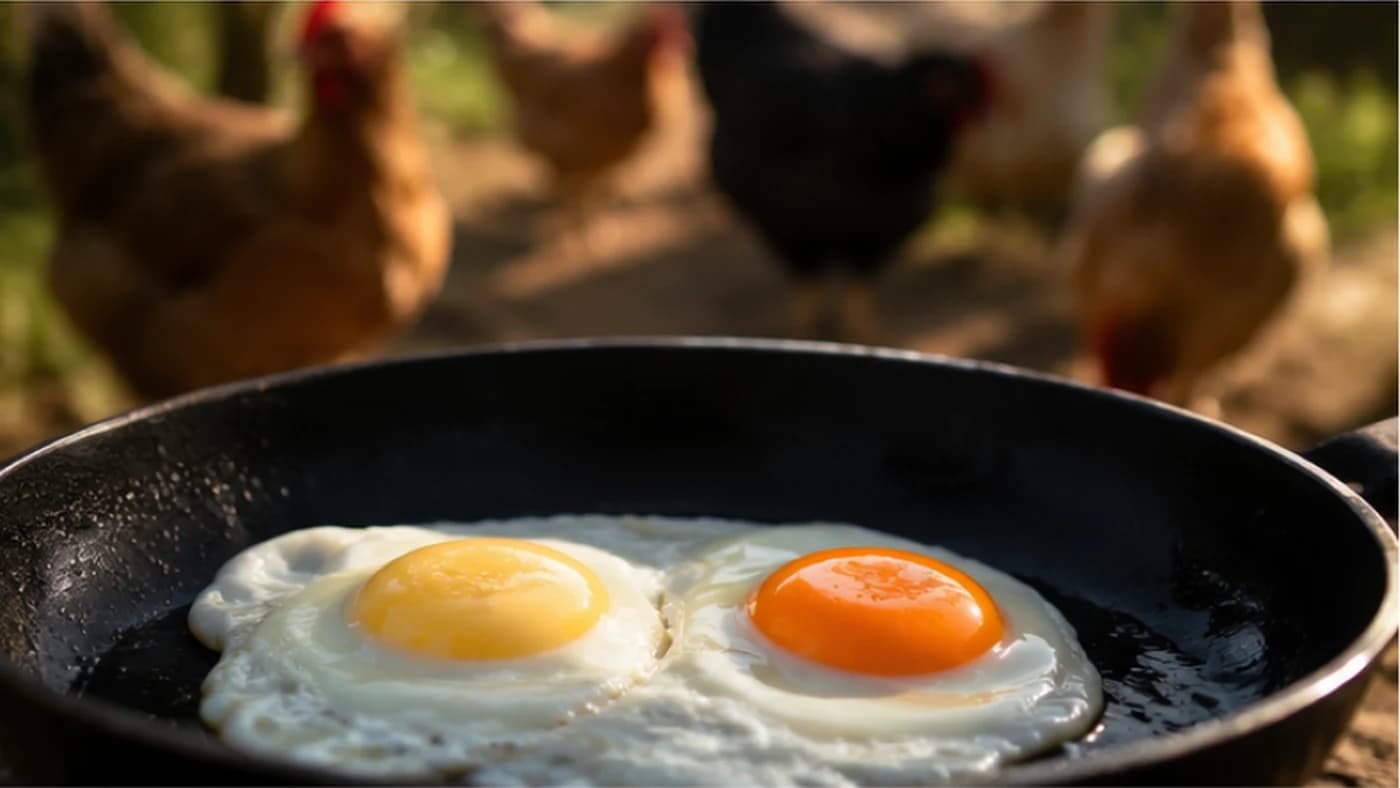
A hen that spends her day scratching in the dirt, chasing insects and sitting in the sun produces a very different egg from one that never leaves an indoor shed on a fixed grain diet. This isn't a matter of taste or marketing — it's basic biology. Everything a hen eats and is exposed to gets concentrated into the yolk she lays, a process called bio-accumulation. Research from institutions like Pennsylvania State University, along with independent testing reported by outlets such as Mother Earth News, has measured real, sometimes large, nutritional gaps between eggs from hens with genuine outdoor access and eggs from hens raised entirely indoors on a standard grain diet. In India, this is broadly the difference between a true free-range or backyard desi egg and a standard commercial layer-farm egg — and understanding it is worth more to your health, and your money, than reading a label at face value.
How a hen turns forage into nutrition
Sunlight is the main driver of vitamin D. When ultraviolet light hits a hen's skin and the oils on her feathers as she roams outdoors, her body synthesises vitamin D and deposits it in the fat of the yolk. Hens kept indoors — even under a 'cage-free' label — rarely get enough direct sunlight for this to happen effectively.
Green forage supplies the colour and the antioxidants. Plants like clover, lucerne (alfalfa) and dandelion-type greens are rich in lutein, zeaxanthin and beta-carotene — pigments that double as antioxidants. The hen's digestion concentrates these into the yolk, producing the deep orange colour of a genuinely foraging bird's egg. Insects supply the rest: a hen that eats grasshoppers, earthworms and beetles gets a concentrated dose of minerals like selenium and zinc, plus fats grain simply doesn't contain.
What the research actually measures
Findings reported from studies including work at Pennsylvania State University and testing by Mother Earth News found that eggs from hens on genuine pasture can carry 4 to 6 times more vitamin D, roughly 3 times more vitamin E, and around 1.5 to 2 times more vitamin A than standard indoor-raised eggs — with some comparisons putting vitamin A at roughly 60% higher and beta-carotene around 7 times higher. The fatty-acid profile shows a similar gap: standard eggs often carry an omega-6 to omega-3 ratio as skewed as 15:1, while pastured eggs can bring that down to a much healthier 1.5:1 to 2:1, with omega-3 content reported around 150-300mg per egg versus roughly 50mg in a standard egg.
These are the ranges reported in the specific studies and tests cited — actual numbers vary with season, breed, exact diet, and how much real pasture a bird has access to, so treat them as a directional gap rather than a fixed guarantee for every egg carrying a 'free-range' label.
Why the gap matters for your health
Most modern diets already run heavy on omega-6 fats relative to omega-3, a balance linked to chronic inflammation; eggs with a better ratio help correct that balance rather than add to the problem. The lutein and zeaxanthin concentrated in a deep-orange yolk are specifically linked to eye health, and because they arrive packaged with the egg's natural fats, the body absorbs them efficiently. Vitamin D is a genuinely useful addition for anyone with limited sun exposure, supporting bone density and immune function. Cooks and bakers also note that eggs from foraging hens tend to have firmer whites and creamier yolks, which hold their shape better in a pan and give a richer texture in custards and sauces.
Don't be fooled by the label
'Cage-free' only means the hens aren't in cages — they can still be packed into a large barn with thousands of other birds and never see the sun. 'Free-range' legally requires only 'access' to the outdoors, which in practice can be a small concrete porch the birds barely use. Yolk colour can be gamed too: some large producers add marigold extract or synthetic dyes to feed to fake the orange colour consumers associate with quality. Marigold itself is a natural ingredient, but it delivers colour without the full spectrum of nutrients a genuinely foraging hen's diet provides.
'Organic' is not the same as 'pastured' either — an organic egg simply comes from a hen fed organic grain, avoiding pesticide residue, but that hen can still live in a crowded indoor shed, which nutritionally puts the egg much closer to a standard egg than a truly pastured one. Freshness matters too: a standard commercial egg can be several weeks old by the time it reaches a shelf, while a home or local farm egg is usually eaten within days — the fat-soluble vitamins stay fairly stable with age, but overall egg quality still declines the longer it sits.
The real limits of pasture-raised eggs
Seasonality is a genuine constraint: hens naturally slow or stop laying as daylight hours shorten, so a truly pasture-based flock's egg output will fluctuate through the year unless supplemental lighting is used, which affects the birds' rest cycle. Land is the other real constraint — most pasture-raised certifications abroad require at least 108 square feet (about 10 square metres) per bird so the ground isn't stripped bare, which is more space than many small-scale or urban keepers have, pushing them toward mobile chicken tractors or rotational systems instead.
Birds outdoors also face real predation risk from hawks, jackals, feral dogs and other predators, which means more fencing, more supervision, and sometimes a guardian animal — costs that show up in the higher price of genuinely pasture-raised eggs. Egg size and shell strength also vary more in a foraging flock eating a wild, season-dependent diet, compared with the uniform look of commercially produced eggs.
How to get the most nutrient-dense eggs from your own flock
Plant diverse forage rather than relying on plain grass — clover, lucerne, kale and sunflower give the hens a wider range of plant compounds, which shows up as a richer nutrient profile in the egg. Rotate the flock across fresh ground every few days rather than leaving them on one patch, which prevents the area turning into a bare, manure-caked 'sacrifice lot' and keeps the birds finding fresh bugs and greens.
When pasture goes dormant in winter or the dry season, maintain quality with sprouted grains (fodder), fermented feed, or small amounts of flaxseed and kelp meal, which is particularly good for trace minerals a standard bagged feed often lacks. You can test quality at home with a simple 'height test': crack a store egg and a genuinely pasture-raised egg onto a flat plate side by side — a fresh, nutrient-dense egg holds a tall, rounded yolk with a thick, cloudy white gathered close around it, while a lower-quality egg spreads flat with a watery white.
For serious keepers: genetics and soil matter as much as feed
Heritage and dual-purpose breeds that retain a strong instinct to actively forage and hunt pull far more nutrition from a pasture than commercial layer breeds selected purely for egg output — if nutrient density rather than sheer volume is the goal, an active, hardy breed is one of the highest-leverage choices you can make. The soil underneath the pasture is the foundation that's easy to overlook: the vitamins and minerals in an egg ultimately trace back to the health of the ground the hens forage on, so building rich, living soil with diverse plants and a healthy insect population directly raises the ceiling on egg quality. Rotating hens behind larger grazing animals or integrating them into an orchard or garden rotation compounds these benefits over time, improving both the land and the eggs.
A worked example: is the pricier egg actually the better buy?
Consider two neighbours. One keeps a dozen hens on rotating pasture, where the birds get roughly 30% of their diet from clover, worms and beetles in spring, topped up with a local grain mix. The other simply buys the cheapest standard eggs at the shop. At first glance the shop eggs look like the money-saver. But based on the research ranges above, it can take nearly eight standard eggs to match the vitamin D and omega-3 that just two genuinely pasture-raised eggs deliver. Even though pasture-raised or backyard desi eggs commonly cost noticeably more per dozen than standard commercial eggs, once you measure value in nutrients delivered rather than eggs counted, the pricier egg can work out to be the more efficient buy, not the more expensive one — before even counting the long-term benefit of lower dietary inflammation and better nutrient absorption.
Frequently asked
Is a deep orange yolk always a sign of a healthier egg?+
Usually, but not always — genuine foraging on greens and insects produces a deep orange yolk naturally, but some producers add marigold extract or synthetic dyes to feed purely for colour, without the rest of the nutrient boost a truly pastured diet gives. Colour alone isn't proof.
Does 'free-range' or 'cage-free' on the label guarantee a pasture-raised egg?+
No. 'Cage-free' only means no cages — birds can still be packed into a crowded indoor shed. 'Free-range' legally requires only some outdoor 'access', which can be a small unused concrete area. Neither label guarantees genuine daily foraging on pasture.
Is an organic egg the same as a pasture-raised egg?+
No. Organic means the hen was fed organic grain, avoiding pesticide residues, but she can still be raised indoors in a crowded shed. Nutritionally, an organic indoor egg is often much closer to a standard egg than to a truly pastured one.
How much land does a genuinely pasture-raised hen need?+
Common pasture-raised certifications call for roughly 108 square feet (about 10 square metres) per bird so the ground isn't stripped bare — more space than many small or urban keepers have, which is why mobile coops and rotational grazing are popular workarounds.
How can I tell egg quality at home without a lab test?+
Crack the egg onto a flat plate. A fresh, nutrient-dense egg holds a tall, rounded yolk with a thick, cloudy white gathered close around it. A lower-quality or older egg spreads flat, with a watery white and a flatter yolk.
Where to go next
- AI farming chatbotAsk any farming question in Gujarati, Hindi or English and get an answer in seconds.
- Kheti app for Indian farmersCrop plans, disease diagnosis, weather and mandi rates in one app.
- Agri Bazar marketplaceBuy and sell animals, crops, equipment and dairy near you — and see what buyers want today.
Want this as daily tasks for your farm?
Khetiyaar turns guides like this into a day-by-day plan — in your language, free to start.

Related guides
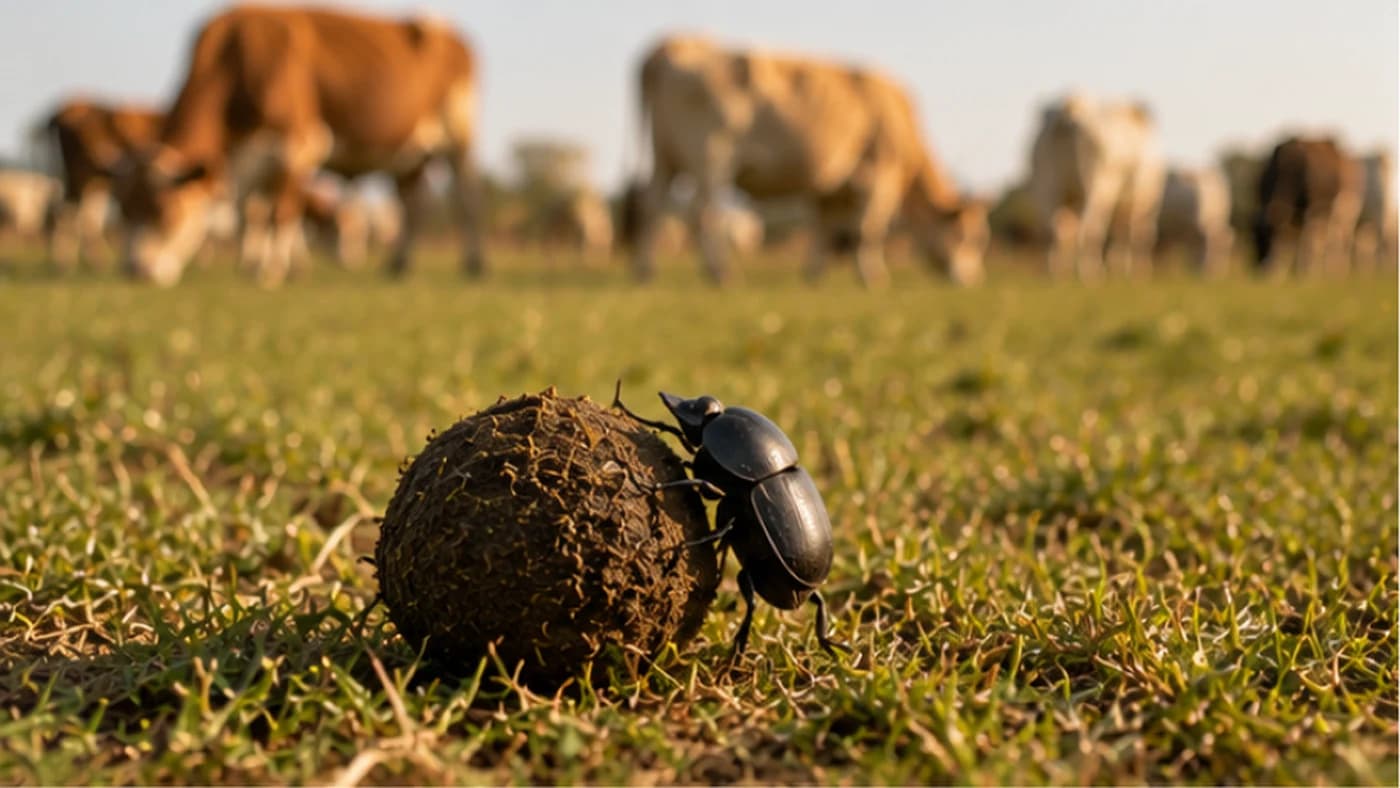
How to Attract Dung Beetles to Your Pasture (and Why Your Dewormer Might Be Killing Them)
Most farmers see a manure pat as a chore. The smart ones see a biological engine — dung beetles that bury parasites, aerate the soil, and cut fly populations, for free, if you stop poisoning them with routine deworming.
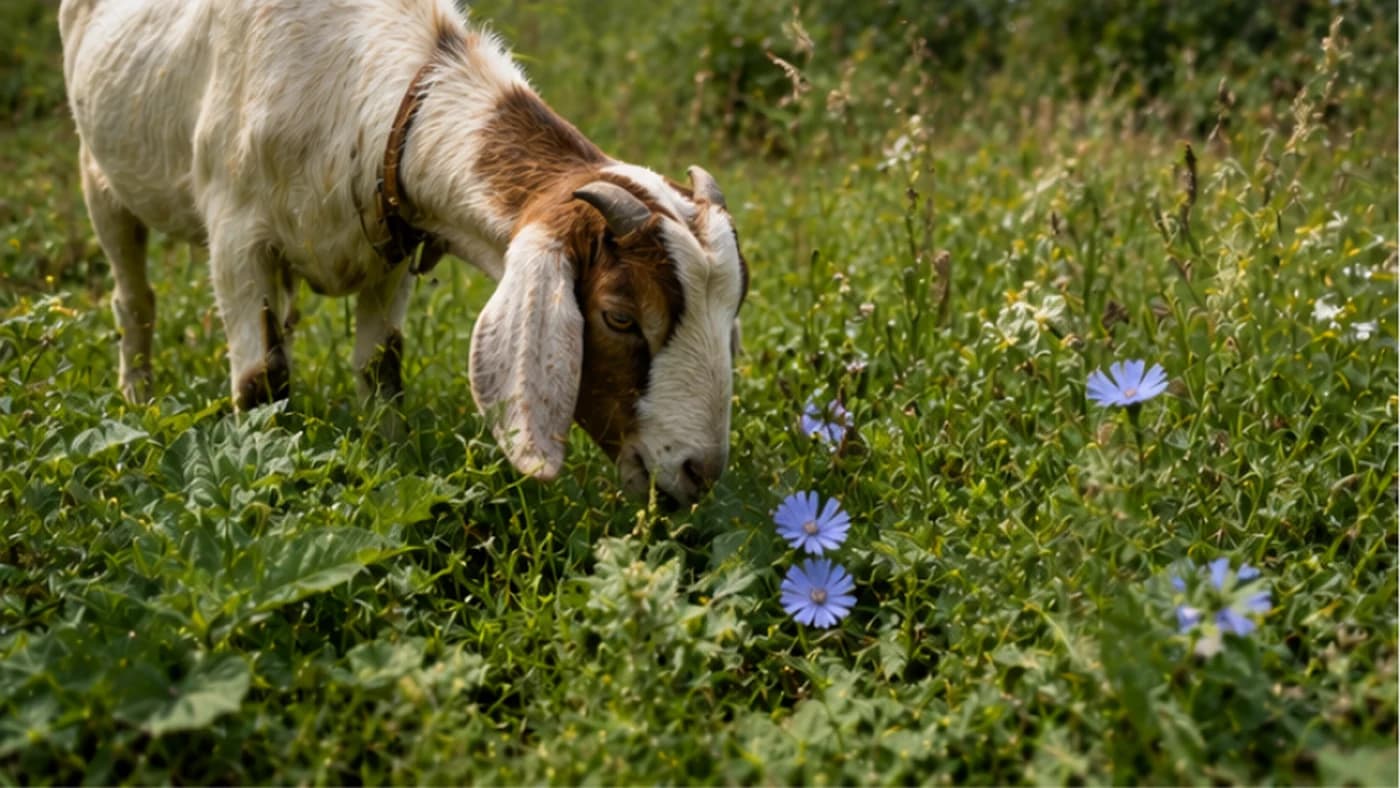
Medicinal Pasture Plants: Building a Living Pharmacy for Your Livestock
A pasture of grass alone is a 'green desert' — lush to look at, thin on the minerals and natural parasite-fighters your animals actually need. Diverse herbal leys with chicory, plantain and legumes let your herd self-medicate.
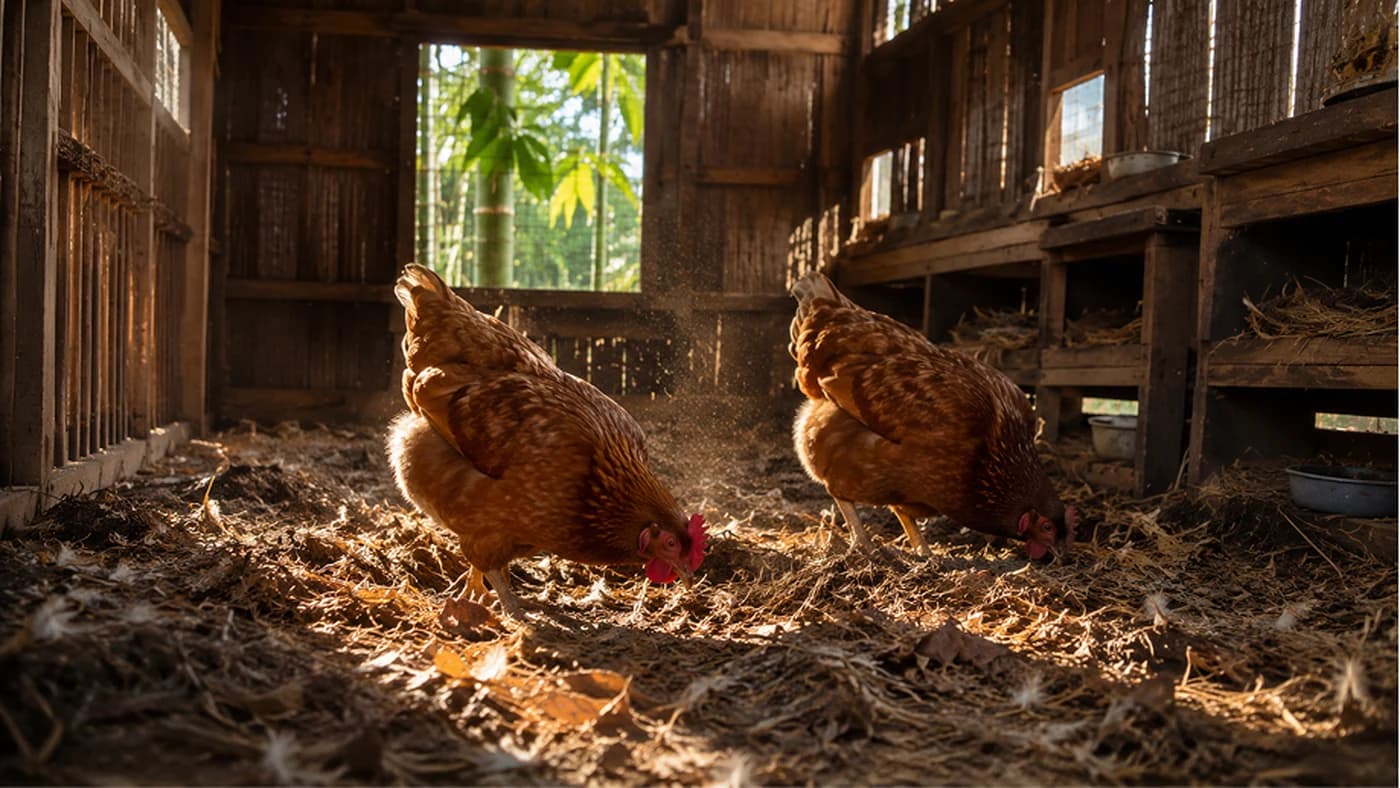
Deep Litter Method: Turn Your Chicken Coop Into a Living Compost System
A scrubbed, bare coop floor is a wasted opportunity. Let a thick carbon bed and billions of microbes do the composting for you — less labour, healthier birds, and free fertiliser for the field.