
e-NAM Explained: How to Sell Your Produce on the National Agriculture Market
Selling only to the nearest mandi means selling to whoever shows up that day. e-NAM opens your produce up to buyers across a much wider network — here's what it actually is, how to use it, and where it still falls short.
Quick answer
e-NAM's real value is in widening who can see and bid on your produce beyond the traders physically present at your mandi that day, and in making prices more visible across connected markets — but it works within the existing mandi system, not around it, and its actual online-trading activity varies significantly by mandi and commodity. Ask your local mandi staff directly whether it's e-NAM integrated and how actively your commodity trades through it, rather than assuming uniform functionality everywhere, and use the price transparency it provides to judge whether an offer is fair.
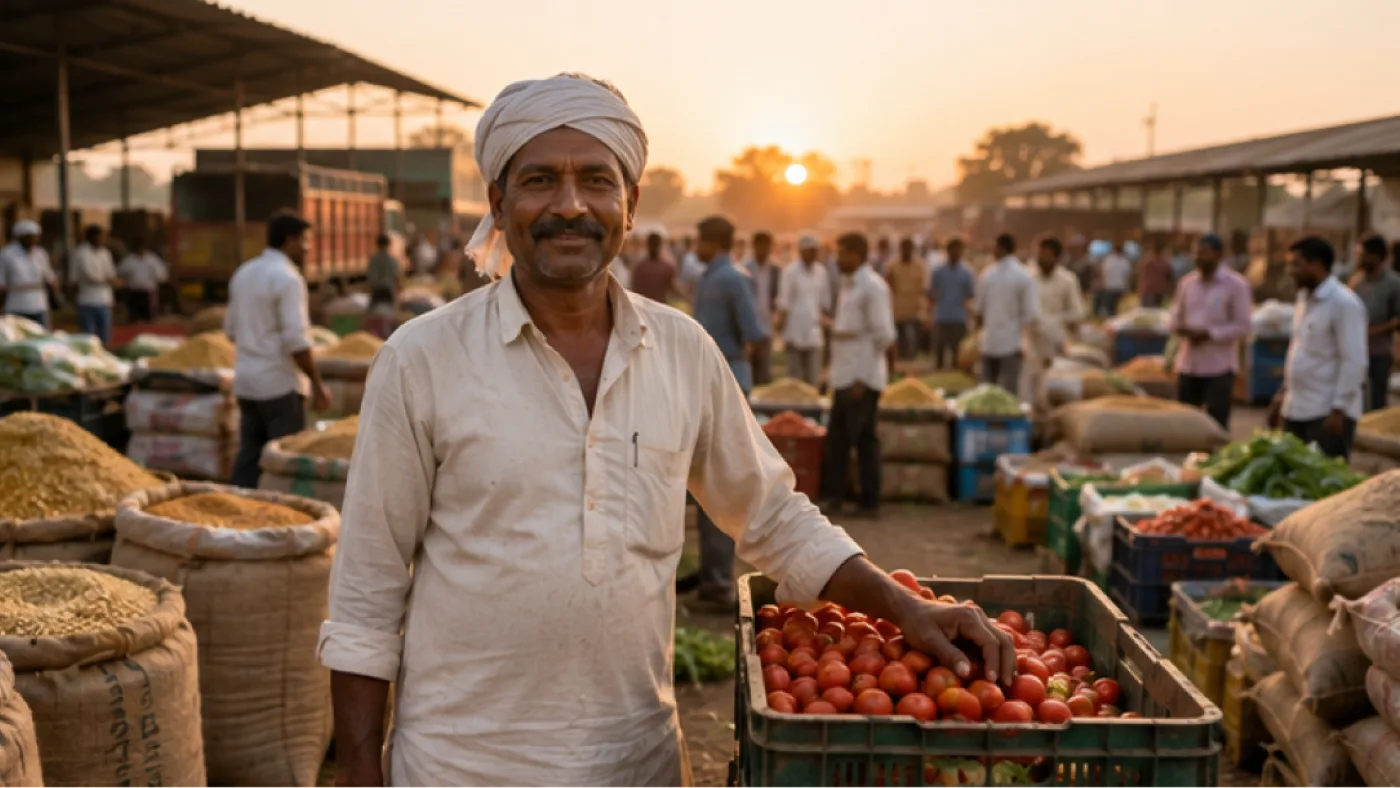
For generations, a farmer's selling price has depended heavily on which traders happened to be at the local mandi on market day. e-NAM — the National Agriculture Market — was built to loosen that constraint by connecting mandis electronically, so a farmer's produce can, in principle, be seen and bid on by buyers well beyond the traders physically present in the yard that morning. It isn't a replacement for the mandi system; it works through it. Understanding what it actually changes, and where its coverage still has real gaps, helps you use it as a genuine tool rather than expecting more than it currently delivers everywhere.
What e-NAM actually is
e-NAM is an electronic trading platform that networks existing APMC (Agricultural Produce Market Committee) mandis into a single online market, run under the Ministry of Agriculture with the Small Farmers' Agribusiness Consortium (SFAC) as the implementing agency. It doesn't abolish the physical mandi — produce still physically arrives at a mandi, is inspected and graded there — but it adds an online layer on top, so bidding for that lot isn't limited to the traders standing in front of it.
The core idea is to reduce the trading friction that comes from having thousands of physically separate, largely disconnected mandis: a buyer in one district traditionally had little visibility into produce sitting in a mandi several districts away, even if they'd have happily paid more for it.
What actually changes for a farmer
The most concrete benefit is wider buyer access — instead of your produce being seen only by traders physically present at your local mandi that day, it can be visible to registered buyers connected to that mandi through the e-NAM network, which can mean more competition for your lot and, potentially, a better price than a thin local market would offer on a quiet day.
Price transparency is the second real benefit: e-NAM publishes trade data, so farmers and traders alike get a clearer picture of prevailing prices for a commodity across connected mandis, rather than each mandi's price being effectively invisible to anyone not standing in it.
How the process actually works
You bring your produce to your nearest e-NAM-integrated mandi in the usual way — this part doesn't change. At the mandi, your produce goes through quality assaying (grading), which is what allows buyers bidding online to trust what they're bidding on without physically inspecting it themselves; the quality parameters recorded become part of the listing.
Once graded, the lot is uploaded to the e-NAM platform, and registered buyers — which can include traders connected to that mandi and, depending on the mandi and commodity, buyers from other connected locations — place bids electronically. The commission agent or mandi staff typically assist with this process; a farmer doesn't need to personally operate a computer or app to participate, though many mandis do also offer an app or portal where farmers can track their lot and the bidding.
How a farmer actually registers to sell on e-NAM
Registration for a farmer is a one-time, low-friction step, typically done either at the mandi itself — the commission agent or mandi staff can complete it on your behalf using basic identity and bank account details — or directly through the e-NAM portal or mobile app if you'd rather do it yourself. Once registered, you're issued an ID that's linked to your profile and bank details, so any lot you sell can be matched to you and payment routed to your account without repeating this step every time you bring produce to the mandi.
The exact registration screens, documents accepted, and whether it's handled at the mandi counter or needs the portal/app can differ from mandi to mandi and can change as the platform is updated — the simplest approach is to ask mandi staff directly whether you're already registered (many farmers are registered automatically the first time they sell through an integrated mandi) or what they need from you to register you now.
How payment works
Payment settlement is designed to be faster and more transparent than informal arrangements can sometimes be, with the goal of getting funds to the farmer's bank account promptly after the trade is finalized rather than leaving payment timing to informal negotiation. Exact settlement timelines can vary by mandi and by the buyer's own payment process, so it's worth asking mandi staff about the typical turnaround at your specific mandi.
Where e-NAM's coverage is genuinely limited — an honest look
Not every mandi in India is integrated with e-NAM, and among mandis that are technically integrated, actual trading volume and buyer participation through the online layer varies a great deal — some mandis see meaningful e-NAM-driven bidding activity for certain commodities, while others see relatively little in practice, with most trade still happening through traditional channels alongside it.
This isn't a reason to dismiss e-NAM, but it is a reason to check realistically with your own mandi rather than assuming full e-NAM functionality is available and heavily used everywhere. Ask mandi staff directly: is this mandi e-NAM integrated, is my commodity actively traded through it here, and what share of recent trade in this commodity actually went through the online bidding layer versus traditional trading.
Getting the most out of it
If your mandi is e-NAM integrated and your commodity sees real activity through it, the main things worth doing are: ensure your produce is well-graded and cleaned before arrival (a better quality assessment supports a better listing and price), ask the commission agent or mandi staff to confirm your lot has actually been listed online rather than assuming it happens automatically, and compare the price you receive against recent e-NAM price data for your commodity where it's published, so you have a realistic sense of whether you got a fair trade.
Frequently asked
What exactly is e-NAM?+
e-NAM (National Agriculture Market) is an electronic trading platform that networks existing APMC mandis together, run under the Ministry of Agriculture with SFAC as the implementing agency, so produce at one mandi can be bid on by buyers connected across the network rather than only those physically present.
Do I need to bring my produce somewhere different to sell through e-NAM?+
No — you still bring produce to your nearest e-NAM-integrated mandi as usual. The difference is what happens after quality assaying: the graded lot can be listed and bid on online, in addition to or instead of only traditional in-person trading.
How do I register to sell on e-NAM?+
Registration is a one-time step, usually done at the mandi itself (staff can complete it using your basic identity and bank details) or through the e-NAM portal/app if you prefer to do it yourself. You're issued an ID linked to your bank account so payment can be routed to you — ask mandi staff whether you're already registered, since exact steps can differ by mandi.
Is every mandi in India on e-NAM?+
No. Coverage and, more importantly, actual active online-trading volume vary a great deal by mandi and commodity. Check with your local mandi staff whether it is integrated and how actively your specific commodity trades through the platform there.
How does payment work with e-NAM?+
Settlement is designed to be prompt and transparent, with funds going to the farmer's bank account after the trade is finalized, though exact timelines can vary by mandi and buyer — ask mandi staff about the typical turnaround at your location.
Do I need a smartphone or app to sell through e-NAM?+
Not necessarily — the commission agent or mandi staff typically handle the online listing and bidding process, so you don't need to personally operate an app, though many mandis also offer one for farmers who want to track their lot directly.
Where to go next
- Today's mandi bhavOfficial AGMARKNET rates for your crop, nearby mandis compared, and the net price after travel.
- Farming cost & profit calculatorWork out cost per acre, break-even yield and expected profit before you sow.
- Agri Bazar marketplaceBuy and sell animals, crops, equipment and dairy near you — and see what buyers want today.
Want this as daily tasks for your farm?
Khetiyaar turns guides like this into a day-by-day plan — in your language, free to start.

Related guides
Best Free Farming Apps in India: What Is Actually Free
The word free is doing four different jobs in this market. Government apps are permanently free and almost nobody recommends them, because there is no commission on a free app.
PM-KISAN in 2026: Instalment Dates, e-KYC, Beneficiary Status and Why Payments Get Stuck
PM-KISAN has been extended to 2030-31 with a ₹3.15 lakh crore outlay. But every cycle, lakhs of farmers find the money has not arrived. Almost always it is one of four fixable problems. Here is how to check your status and fix each one.
PM-KISAN Explained: Eligibility, Installments and How to Check Your Status
PM-KISAN puts direct income support into the bank accounts of landholding farmer families across India, three installments a year. Here's exactly who qualifies, how the money reaches you, and what to check if a payment doesn't arrive.