

PMKSY Drip Irrigation Subsidy Guide: How the Micro-Irrigation Scheme Actually Works
Drip irrigation pays for itself over time, but the upfront cost of pipes, emitters and a filtration unit stops many smallholders before they start. This guide focuses on the subsidy and application side — the part that decides whether you can actually afford to install it.
Quick answer
The PMKSY micro-irrigation subsidy exists to make drip irrigation's upfront cost manageable for ordinary farmers, funded jointly by the central and state governments with the farmer covering the remaining share — but the exact percentages, eligibility rules and application steps are all set and revised at the state level, so treat any specific number you hear before confirming it with your state horticulture or agriculture department as a starting point, not a guarantee. Apply through an empanelled vendor, get the subsidy share and process timeline confirmed in writing, and keep your documents organized. Once you're ready to design the system itself and understand the water-savings and yield case for drip irrigation, our companion guide covers that technical side in depth.
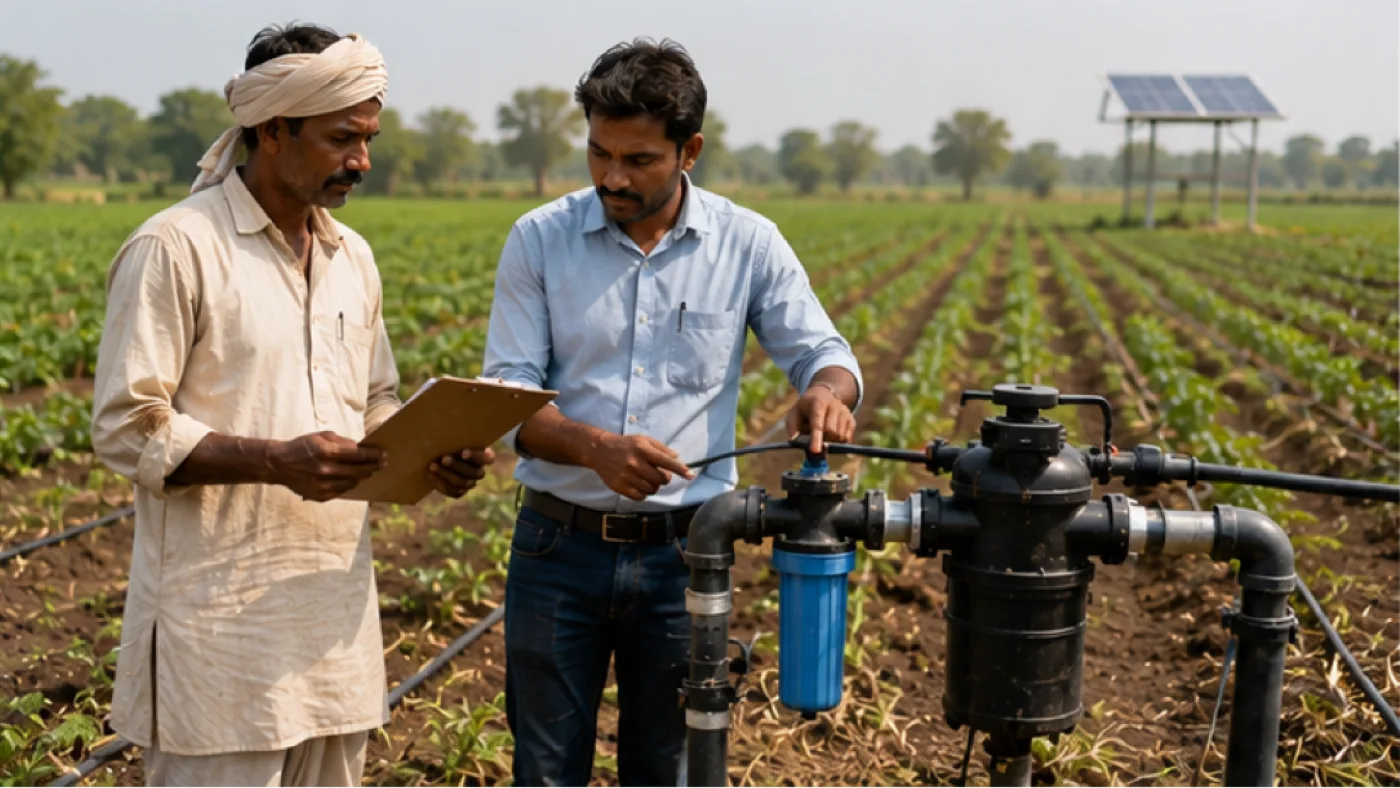
If you already know why drip irrigation saves water and improves yield, the harder question is usually how to actually pay for it — a decent-sized drip system is a real upfront investment, and that cost is exactly what the government's micro-irrigation subsidy under the Pradhan Mantri Krishi Sinchayee Yojana (PMKSY) exists to bring down. This guide focuses squarely on that subsidy and application process: what it covers, roughly how the funding is structured, who typically qualifies, and the steps to actually apply through your state's system. For the technical side — how much water drip irrigation saves, how it affects yield, and how to design a system for your field — see our dedicated guide on drip irrigation for water savings and yield.
What the PMKSY micro-irrigation component actually funds
PMKSY's micro-irrigation component is the government scheme specifically aimed at helping farmers adopt drip and sprinkler irrigation, on the logic that water-use efficiency at the farm level is one of the most cost-effective ways to stretch India's irrigation water further. Under this component, farmers who install an approved micro-irrigation system — drip or sprinkler, depending on the crop and field — can receive financial assistance that covers a meaningful share of the system's cost, reducing what would otherwise be a large out-of-pocket investment.
The scheme typically covers the core components of a certified drip system: the main and sub-main pipelines, drip laterals and emitters, and the filtration unit needed to keep emitters from clogging. Exact coverage details and any land-holding-size-based variations are set by your state's implementing department, so confirm the current specifics with them before finalizing your system design.
How the subsidy funding is structured
PMKSY's micro-irrigation subsidy is funded jointly by the central government and state governments, with the farmer covering the remaining share of the system's cost themselves (sometimes with additional top-up support from certain state governments on top of the central-plus-state share). We are intentionally not stating exact percentages here, because the central-state funding split, any state-specific top-ups, and the farmer's own contribution share all vary by state and are revised from time to time by government notification.
Before budgeting for a system, get the current subsidy percentage and any category-based variations (some states offer a higher subsidy share for small and marginal farmers, or for SC/ST farmers) directly from your state horticulture or agriculture department, or from the PMKSY portal — treat any percentage you hear from a dealer or a neighbour as a starting point to verify, not a number to plan your finances around.
Who is typically eligible
Eligibility is generally open to farmers with valid land records (ownership or, in many states, documented tenancy/leasing arrangements are also considered — check your state's specific rules) who are installing the system on land suited to the crop being irrigated. Some states prioritize small and marginal farmers, and there may be limits on how much subsidized area a single farmer can claim in a given period.
Because these eligibility details — land documentation requirements, tenant-farmer provisions, area caps — are set and periodically revised at the state level, the most reliable way to confirm you qualify is to ask directly at your state horticulture or agriculture department office, or through your local Krishi Vigyan Kendra.
How to apply: the general process
Most states route PMKSY micro-irrigation applications through the state horticulture or agriculture department, often via an online portal specific to that state (sometimes bundled with the department's broader farmer-scheme portal), or through the PMKSY national portal which links out to the relevant state system. You will typically need your land records, Aadhaar, and bank account details for the subsidy transfer, along with a system design/quotation from an empanelled micro-irrigation company, since many states require the installer to be a government-approved or 'empanelled' vendor for the subsidy to apply.
A typical sequence is: confirm eligibility and current subsidy percentage at your local department office → get a field survey and system design/quotation from an empanelled vendor → submit the application with supporting documents through the state portal or department office → the department verifies the application and, in many states, inspects the installed system before releasing the subsidy amount, which is usually transferred directly to the farmer's bank account or adjusted against the vendor's invoice, depending on the state's process. Ask your department office for the exact current sequence and required documents in your state, since procedures are periodically updated.
Practical things to check before you commit
Confirm the vendor is on your state's approved/empanelled list before signing any agreement — installing through a non-empanelled vendor can disqualify you from the subsidy even if the system itself works fine. Get the subsidy percentage, farmer's own contribution amount, and expected disbursement timeline in writing or clearly stated by the department office, since verbal estimates from dealers can be optimistic.
Ask whether your intended crop and field size qualify under the current scheme rules in your state — some states have minimum or maximum area conditions, and crop-specific rules can differ. Finally, keep copies of your land records, application receipt, vendor quotation and any inspection report — these are exactly what you'll need if there's a delay or dispute in subsidy disbursement.
Terms explained in this guide
Frequently asked
What percentage of drip irrigation cost does PMKSY subsidize?+
It varies by state and farmer category, and is revised periodically by government notification, so we don't state a fixed number here. Confirm the current percentage for your state and category directly with your state horticulture or agriculture department before budgeting for a system.
Can I install a drip system myself and still get the subsidy?+
In most states, no — the subsidy typically requires installation through a government-approved or 'empanelled' micro-irrigation vendor. Confirm your vendor's empanelment status before signing any agreement, since this is a common reason applications get rejected.
Do tenant farmers qualify for the PMKSY micro-irrigation subsidy?+
Many states do consider documented tenancy or leasing arrangements, but the specific rules vary by state. Check with your state horticulture or agriculture department for the exact documentation required in your case.
How is the subsidy amount actually paid out?+
This depends on the state's process — commonly, the subsidy is transferred directly to the farmer's bank account after installation is verified, or adjusted against the vendor's invoice. Ask your department office for the exact process and expected timeline in your state.
Where can I learn about the water-saving and yield benefits of drip irrigation itself?+
See our dedicated guide on drip irrigation for water savings and increased yield, which covers the technical and agronomic side — this guide focuses specifically on the subsidy and application process.
Where to go next
Want this as daily tasks for your farm?
Khetiyaar turns guides like this into a day-by-day plan — in your language, free to start.

Related guides
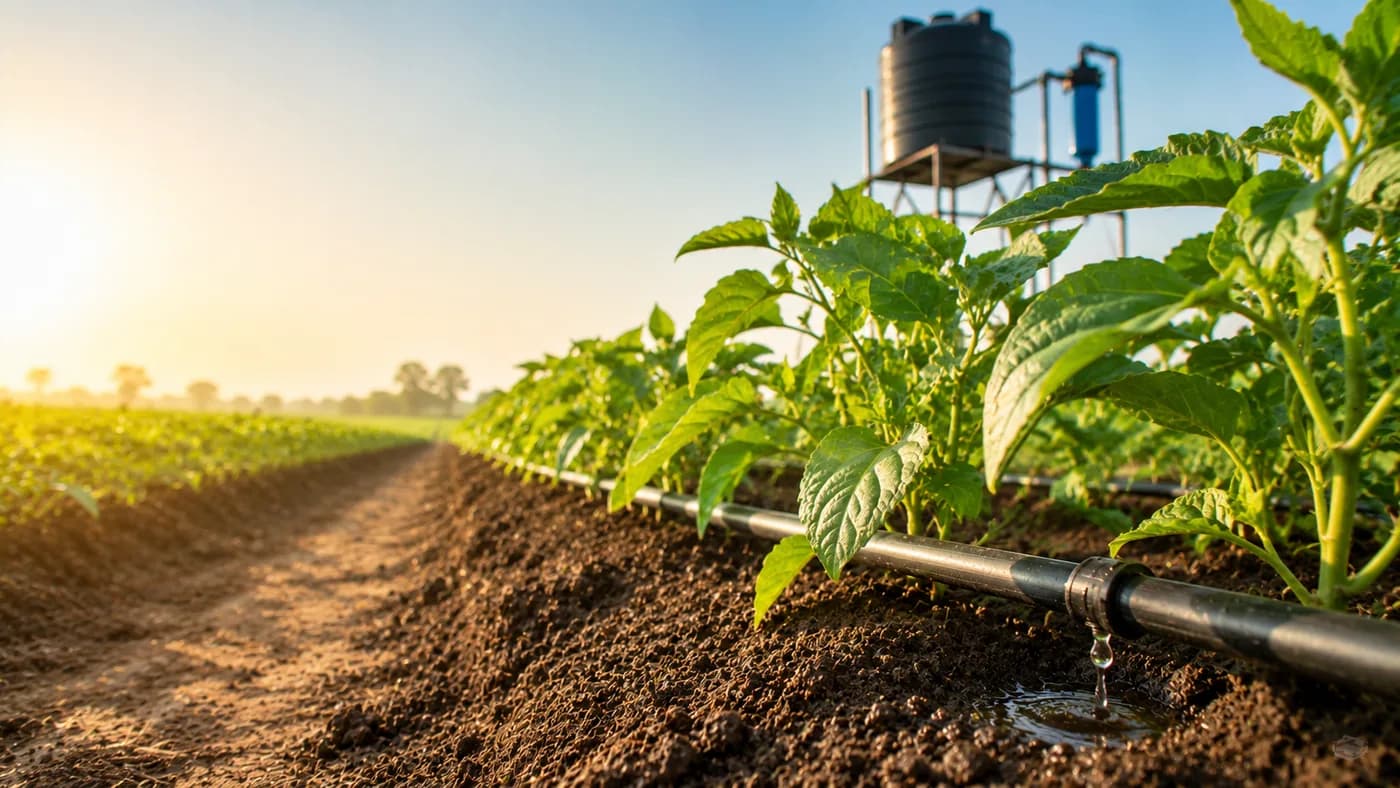
Drip Irrigation: Save Water and Increase Yield
Drip delivers water directly to the roots, drop by drop — saving a large share of your water while lifting yield and cutting weeds.
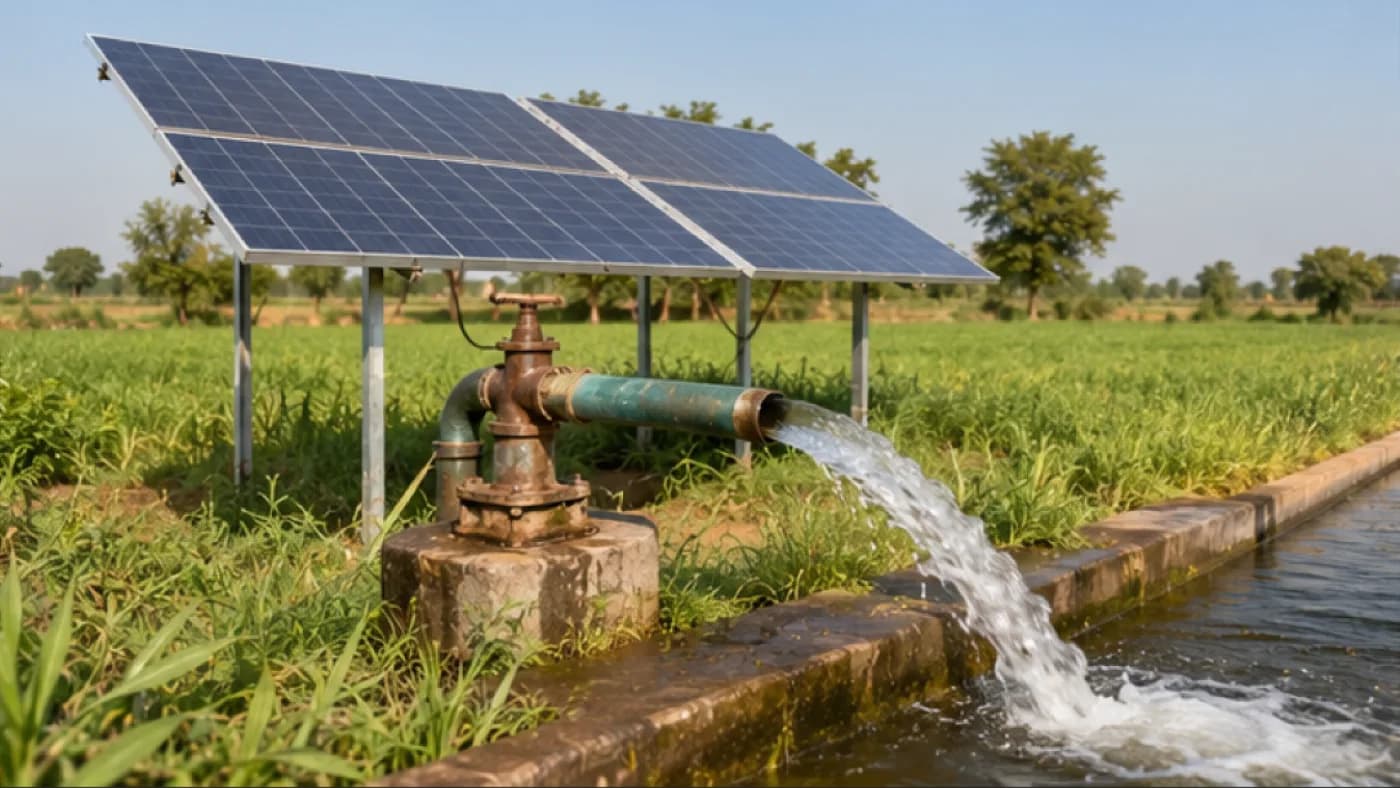
PM-KUSUM Solar Pump Subsidy: The Three Components Explained
Diesel pumps are expensive to run and getting more expensive every season. PM-KUSUM subsidizes solar irrigation in three different ways depending on your situation — here's which component applies to you and how to apply.

Drip vs Sprinkler vs Flood Irrigation: Which One Actually Fits Your Field?
Every farmer already irrigates somehow. The real question is whether the method you inherited is the one your crop, your soil and your water source actually call for — and what you gain or give up by switching.