

DIY Mobile Animal Housing: Build a Shelter That Moves With Your Livestock
A fixed shed turns the ground around it into a barren, muddy patch within a season. A mobile arch shelter — moved every few days — protects your animals, spreads their manure evenly, and even helps clear overgrown land.
Quick answer
A mobile shelter trades a bit of upfront carpentry for years of healthier animals, richer soil, and far less mud around your homestead — the core discipline is simple: keep it sturdy enough to survive wind and weight, and move it often enough that no patch of ground ever bears the full brunt of your animals for long. Start with one arch, watch how the land responds, and you'll likely never want to go back to a single fixed shed.
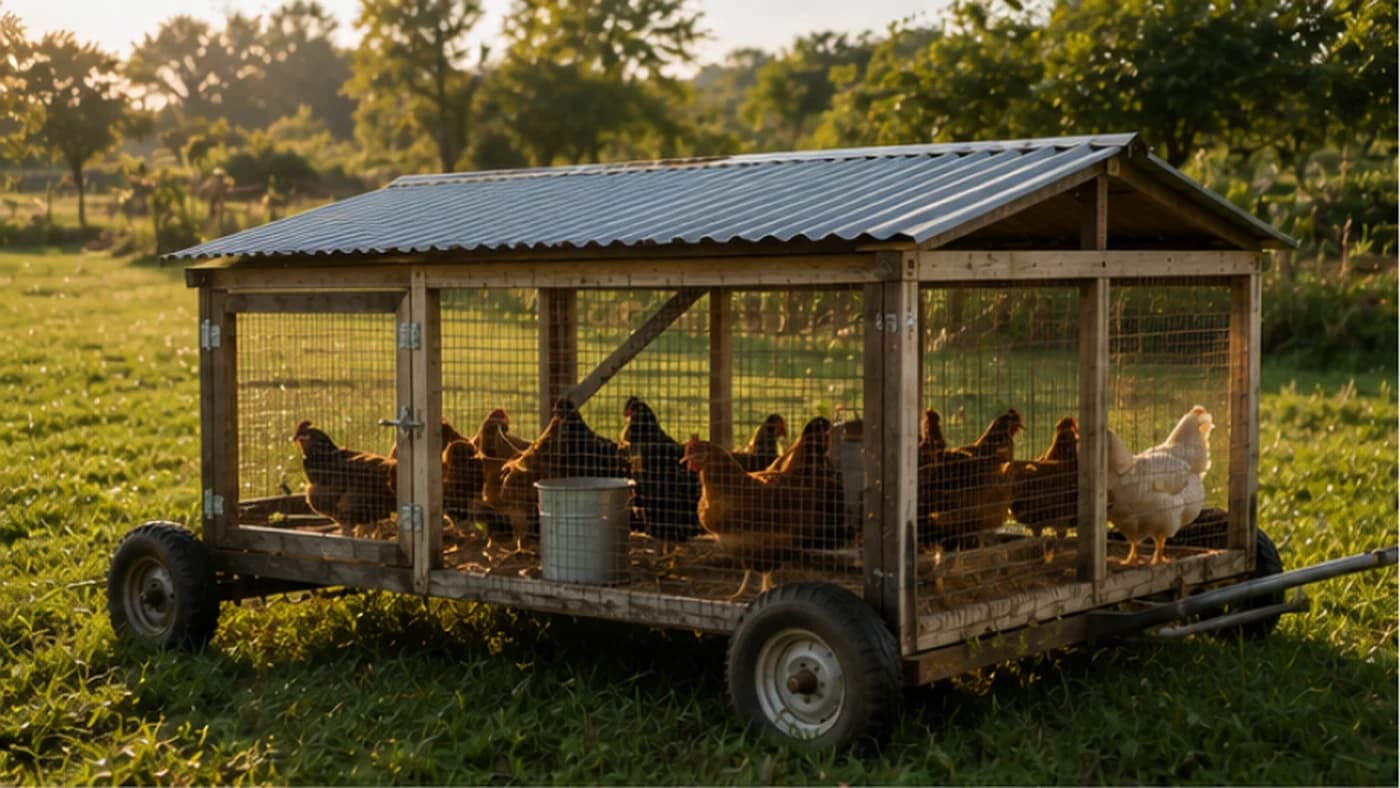
Every farmer eventually hits the same problem: build a sturdy, permanent shed, and the ground around it turns into a bare, muddy patch within a single season, breeding parasites and disease. A mobile shelter solves this by design — a lightweight but sturdy frame on skids or wheels that you relocate every few days, so no single patch of ground ever carries the full weight of your animals' waste and traffic for long. It works as a shelter, a feeder, and — with pigs especially — a land-clearing tool, all in one.
What a mobile shelter actually does
A mobile shelter is a lightweight, relocatable frame that shields animals from sun, wind and rain without becoming a permanent fixture. It's the backbone of rotational grazing: whichever animal you're raising — heritage chickens, goats, or pigs — the shelter lets you decide exactly where manure lands and where grazing or rooting pressure falls, then move that impact zone before the ground gives out.
Think of it as a tool rather than a building: it needs no foundation and, in most areas, no permit, and it can be built from materials available at any local hardware or agricultural supply shop.
Building the frame, step by step
Start with two treated wooden skids about 2.4 metres long, with the leading ends cut at an angle so the shelter rides over bumps instead of digging in. Connect the skids with two or three cross-members roughly 1.8 metres apart, using galvanised bolts, and check the frame is square before going further.
For the arch itself, bend a length of galvanised welded-wire mesh or a cattle panel over the frame to form a semi-cylinder about 1.8-2.1 metres tall — where cattle panels aren't easily available, strong bent bamboo poles lashed securely to the skids make a genuinely good, low-cost Indian alternative and have been used this way in parts of the country for generations. Add diagonal 2x4 bracing on the rear wall for rigidity, and for larger animals, a horizontal rub rail about 45 cm off the ground.
Cover the arch with a heavy-duty tarpaulin (tirpal) secured with zip ties or bungee cords, leaving a little give for temperature-driven expansion. Finish with mobility features: heavy eyebolts at the nose of each skid for a tow rope or chain, and, optionally, a pair of solid (never-flat) wheels at the rear for easier towing.
Why moving the shelter is the whole point
Most internal parasites depend on a cycle where eggs drop in manure, hatch into larvae, and migrate onto grass to be eaten again — moving the shelter every few days means animals return to a spot only after 30-60 days, by which time sun exposure and lack of a host have killed off most of the larvae. In a fixed shed, manure builds up in one place and can reach toxic concentrations with heavy runoff; a mobile shelter spreads it evenly across the field instead, doing the work of a manure spreader for free.
Animals also eat better this way, since they always have access to fresh forage rather than standing in trampled, fouled ground, which shows up as steadier weight gain and lower supplementary feed costs. And because the shelter sits in a different spot every night, predators — creatures of habit that scout a fixed target over days or weeks — find it much harder to plan an attack.
Mistakes that shorten a mobile shelter's life
A thin, cheap tarp rarely survives one full season of sun and wind — invest in a genuinely heavy-duty, UV-stabilised agricultural tarpaulin, since a flaking, brittle tarp can also be ingested by animals. These structures are lightweight with a large surface area, so in windy areas anchor the frame with ground screws and a ratchet strap over the top, or a strong monsoon gust can flip it. Where the wire mesh or bamboo meets the wooden frame, reinforce with metal strapping or clips every 30 cm or so — otherwise repeated movement wears through the joint and the covering starts to sag or tear loose.
Where a mobile shelter isn't the right fit
In genuinely cold conditions for extended periods, a simple tarp-covered arch may not hold enough warmth even with end caps and heavy bedding — this matters most in the colder hill states, where a well-insulated fixed shed is the safer winter choice. Steep terrain is also unsuitable: a heavy arch can run away downhill or become impossible to pull uphill, so this design works best on flat or gently sloping ground. And there's a practical size limit — an arch bigger than about 3x3.6 metres becomes too heavy to move by hand, so large herds need either several smaller arches or mechanised towing.
Practical tips for daily use
Orient the open end of the arch away from your region's prevailing cold-season wind — in most of north and central India that means facing away from the north or northwest during winter. Choose solid rubber or foam-filled wheels rather than air-filled tyres, since nothing is more frustrating than a flat tyre on a shelter full of animals. Move the shelter every 24-48 hours if possible; wait more than three days and the grass underneath starts yellowing from lack of light, taking twice as long to recover. If you keep more than one type of animal, the same arch can serve different species across the year — sheep or goats in one season, poultry in another — which maximises the return on the materials.
Scaling up: solar, water and tandem arches
A small solar panel mounted on the roof can run a basic gate, a predator-deterrent light, or an electric fence energiser without hauling batteries back and forth. A simple gutter along one edge can funnel rainwater into a small trough — not enough for cattle, but a genuine help for a small flock or a few goats. And if you need more capacity without a heavier single unit, two arches can be linked with a flexible coupling and towed together, keeping the manoeuvrability of two separate structures.
A real-world example: clearing overgrown land with pigs
Consider a roughly 0.4-hectare plot overrun with thorny scrub and weeds, where a fixed shed at the edge would do nothing to help clear it. Placed with two or three pigs in the densest patch of brush, the arch becomes the pigs' entire world — shelter, shade and water all in one spot — so they focus all their rooting energy on the immediate area. Within about a week they've flattened the brush and rooted up weed seeds across a roughly 6x6 metre patch; move the arch a few metres, and the pigs follow. Over a single season, that pair or trio can clear the whole plot, and by the time they reach the far end, the first patch is already sprouting fresh grass fed by the manure they left behind — land cleared, animals fed, and soil improved without a drop of herbicide or diesel.
Frequently asked
What can I use instead of steel cattle panels for the arch?+
Strong bent bamboo poles lashed securely to the wooden skids work well and are widely available and inexpensive across India — welded-wire mesh panels from a hardware supplier are another option.
How often should I move a mobile animal shelter?+
Every 24-48 hours if possible. Waiting more than three days lets the grass underneath start yellowing from lack of light, which then takes twice as long to recover.
Does moving the shelter really control parasites?+
Yes — most internal parasites need manure to hatch and grass to be re-eaten from; moving the shelter means animals don't return to the same spot for 30-60 days, by which time sun exposure has killed most of the larvae.
Is a mobile shelter suitable for cold hill regions in winter?+
Not on its own for extended cold — a simple tarp-covered arch lacks enough thermal mass, so a well-insulated fixed shed is the safer choice through genuinely cold winters.
What's the biggest mistake people make building one?+
Using a cheap, thin tarp. It rarely survives a full season of sun and wind, so invest in a genuinely heavy-duty, UV-stabilised agricultural tarpaulin from the start.
Where to go next
- AI farming chatbotAsk any farming question in Gujarati, Hindi or English and get an answer in seconds.
- Kheti app for Indian farmersCrop plans, disease diagnosis, weather and mandi rates in one app.
- Agri Bazar marketplaceBuy and sell animals, crops, equipment and dairy near you — and see what buyers want today.
Want this as daily tasks for your farm?
Khetiyaar turns guides like this into a day-by-day plan — in your language, free to start.

Related guides
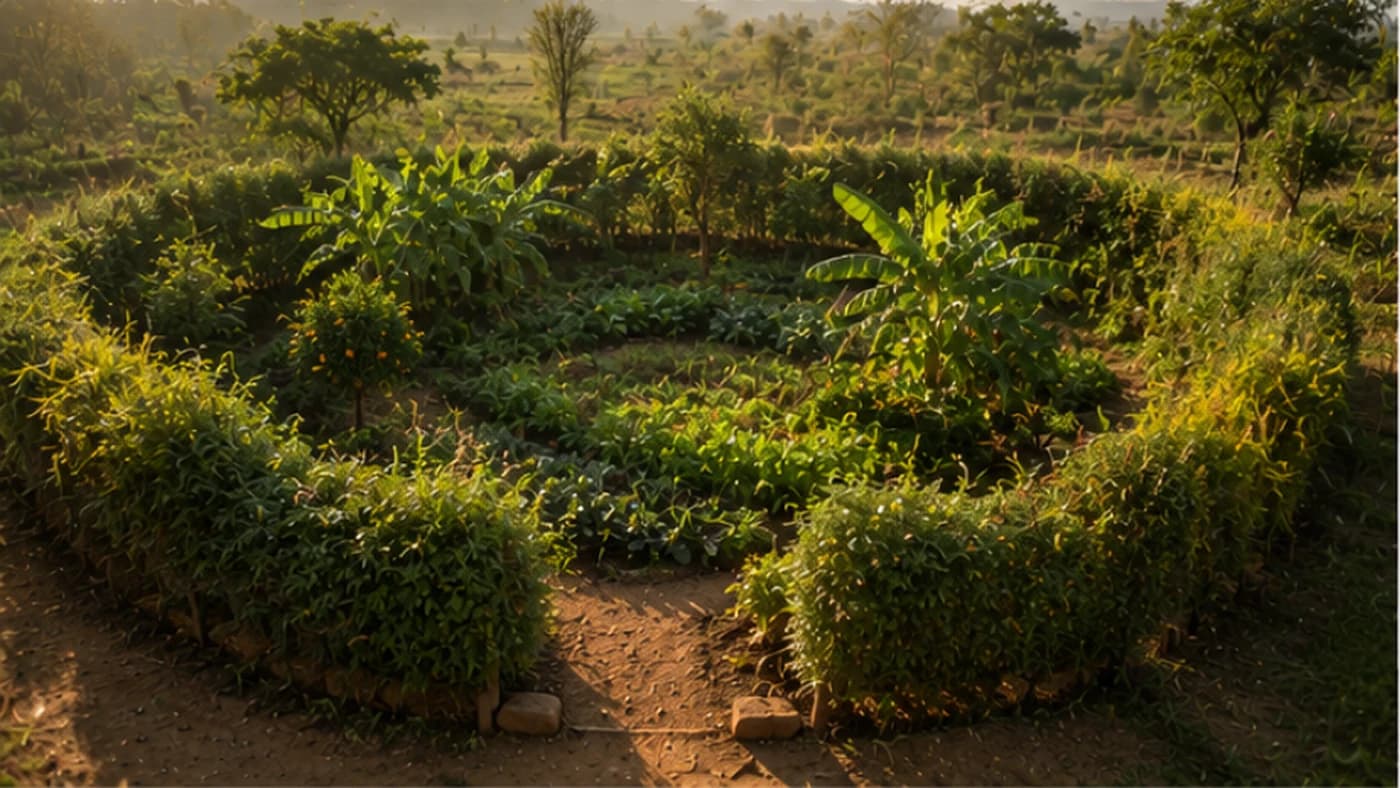
How to Build a Sun Trap: Grow Warm-Season Crops Through a Cold Snap
A U-shaped wall of stone, brick or hedge can make a patch of ground 5-10°C warmer than the open field beside it — enough to grow chillies, tomatoes and marigolds weeks earlier in the hills, or push a crop safely past an unseasonal cold spell.
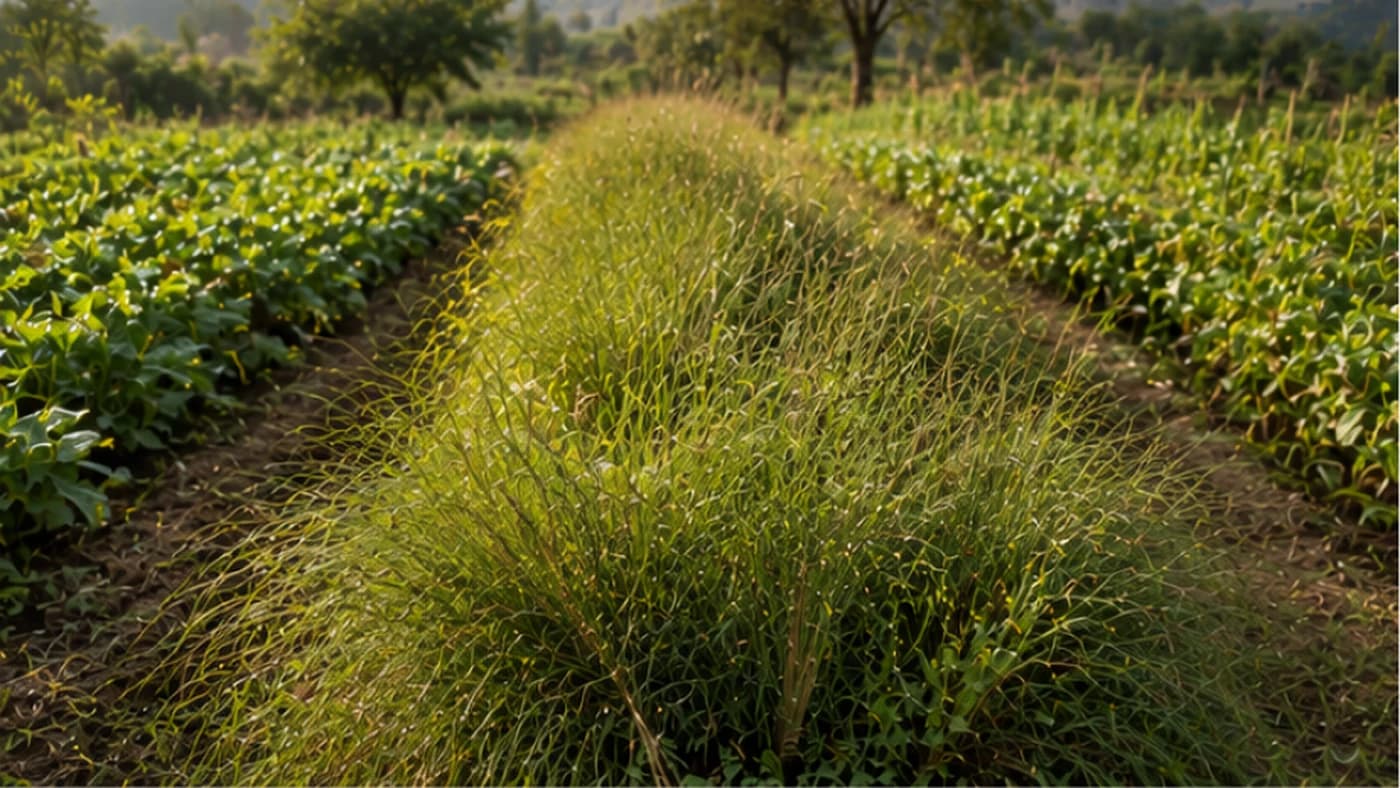
How to Build a Beetle Bank: A Permanent Home for Your Farm's Pest Hunters
A clean, closely-mown field edge looks tidy but offers no shelter for the predatory insects that eat aphids and slugs for you. A beetle bank — a raised, permanently unmown grass ridge — gives them a place to survive winter and hunt your pests all season.
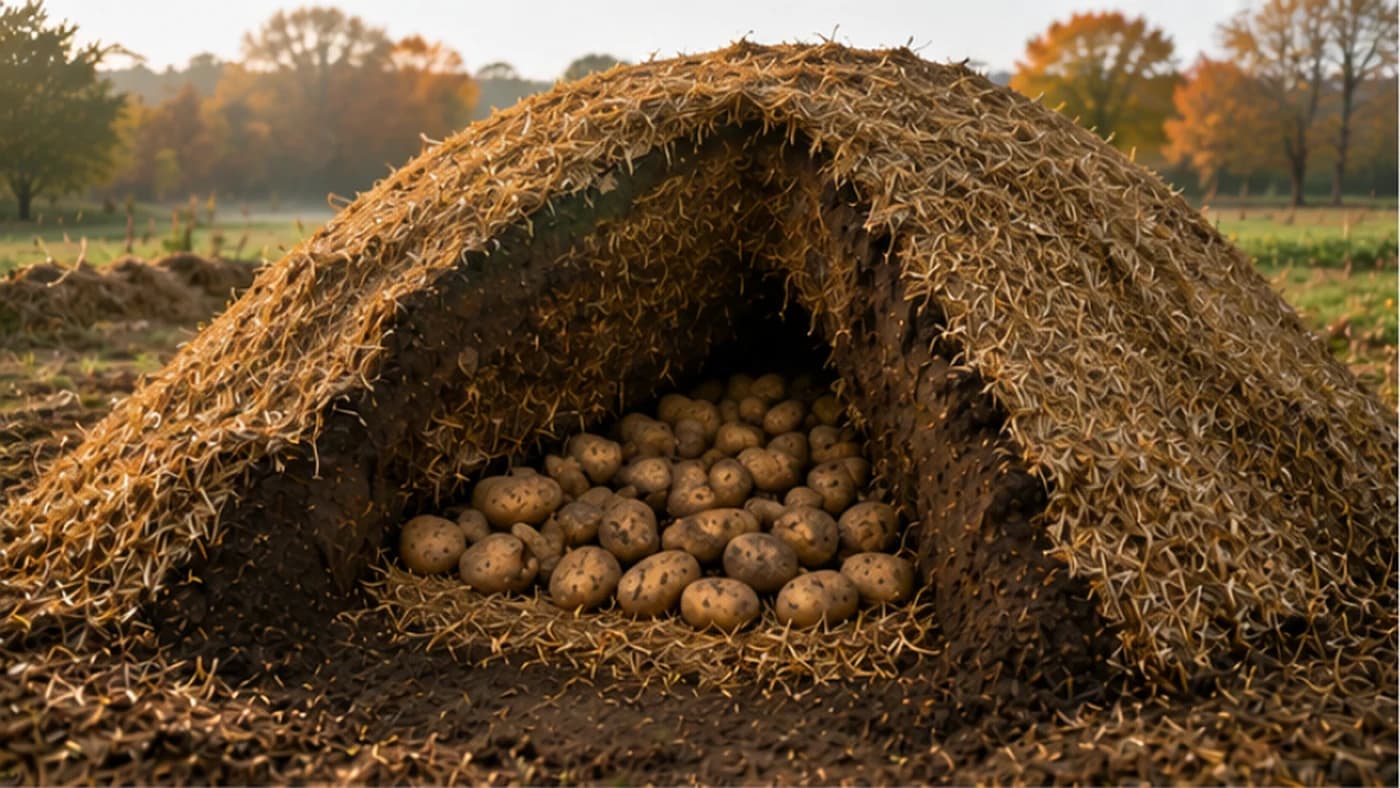
How to Store Potatoes Without Electricity: The Traditional Pit Clamp Method
You don't need a cold store to keep a potato surplus through the season. A simple mound of straw and earth — the same principle behind the pit storage many potato belts in India already use — keeps tubers fresh for months at zero running cost.