
AI Se Kheti Kaise Kare: A Practical 2026 Guide for Indian Farmers
Artificial intelligence has quietly moved from the news into the field. Here is exactly how an ordinary Indian farmer with an ordinary Android phone can use AI for crop planning, disease diagnosis, irrigation timing and selling — step by step, in 2026.
Quick answer
Start with one crop and one AI-generated season plan: enter the crop, area, district and sowing date, then edit the irrigation dates to match your real water source. Planning delivers more than diagnosis for most farmers, because most yield loss comes from a fortnight of drift rather than a dramatic disease outbreak.
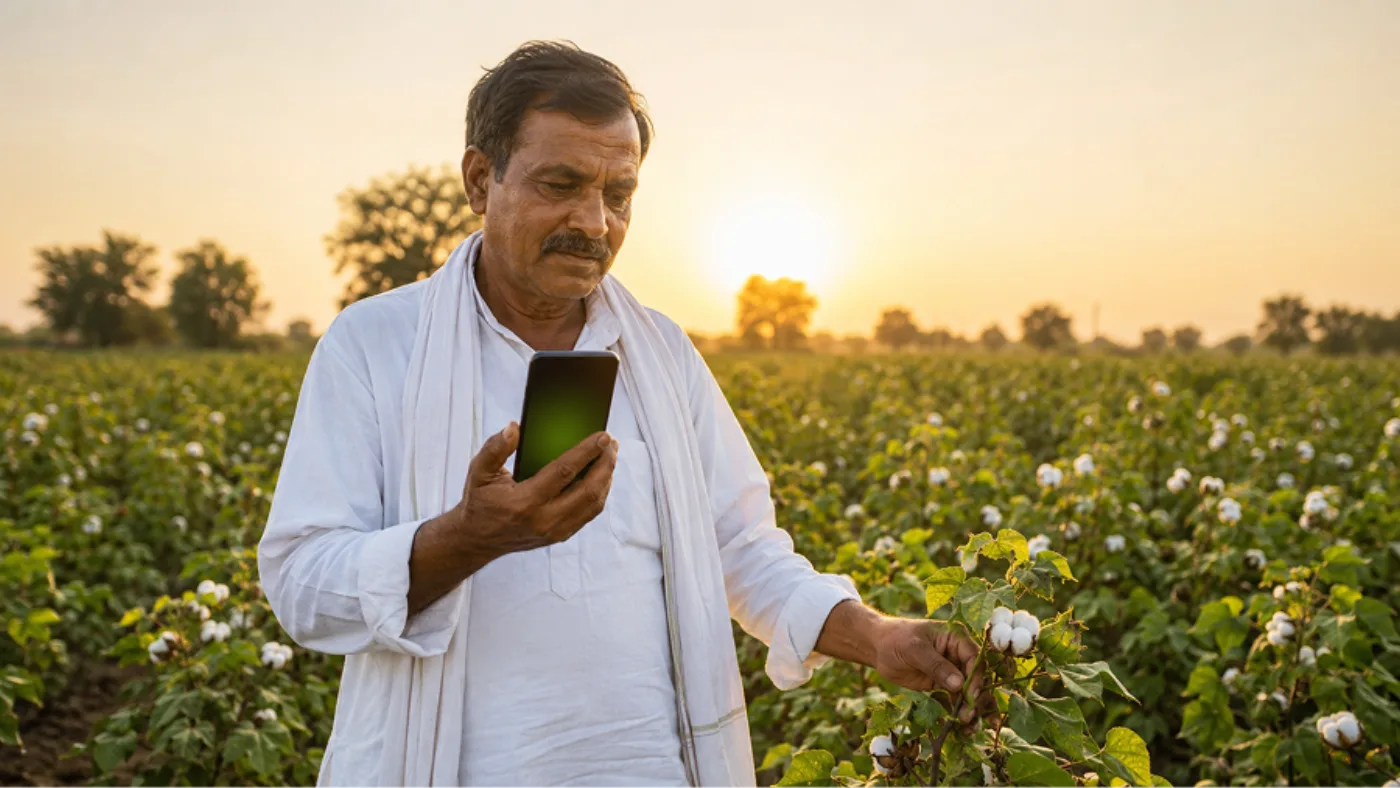
Two years ago, "AI in farming" meant a conference slide. In 2026 it means something much smaller and much more useful: a farmer standing in a field, photographing a yellowing leaf, and getting an answer before he walks back to the bund. This guide skips the hype and shows you the four places AI actually earns its keep on an Indian farm — and the places where it still cannot help you.
What AI can and cannot do on a real farm
Start with an honest boundary, because a lot of money is wasted by farmers who expect the wrong thing. AI is very good at pattern recognition — recognising a disease from thousands of leaf photographs, spotting that your sowing window is drifting late compared to the last ten seasons, or reading a weather model and telling you which of the next five days is safe for spraying. It is good at remembering things you would otherwise forget, and at turning a vague worry into a specific next step.
What AI cannot do is see your field. It does not know that the north corner floods, that your borewell yields less after March, or that the dealer in your village stocks only two brands. It cannot test your soil, and it cannot guarantee a price. Treat it the way you would treat a well-read advisor who has never visited your farm: extremely useful for narrowing options, never a substitute for your own eyes. Every recommendation in this guide assumes you check the output against what you can see.
Step 1 — Let AI build the season plan, then edit it
The single highest-value use of AI in Indian farming is not diagnosis; it is planning. Most yield loss is not dramatic — it is a fortnight of drift. Sowing eight days late, top-dressing after the rain instead of before, missing the narrow window when a pest is still controllable. A plan fixes drift because it converts intentions into dated tasks.
The workflow is simple. Enter your crop, your land size, your district and your intended sowing date. The AI returns a day-by-day schedule for the whole season: land preparation, seed rate, basal dose, irrigation intervals, scouting checkpoints, top-dressing dates and expected harvest window. Then — and this is the part farmers skip — edit it. Move the irrigation dates to match your canal rotation. Delete the recommendation you know is wrong for your soil. The plan is a first draft written by something that has read a great deal and seen nothing.
If you want to try this without paying for anything, the crop planning app inside Khetiyaar generates the schedule free for your first crop, and you can adjust every task by hand. Pair it with the farming cost and profit calculator before you commit — a plan you cannot afford is not a plan.
- Enter crop, area, district and sowing date — not just the crop name.
- Ask for the plan in the language you think in; translated agronomy loses precision.
- Edit irrigation dates to your actual water source before saving.
- Re-check the plan after any unusual weather event — a plan is a living document.
Step 2 — Diagnose diseases from a photo, correctly
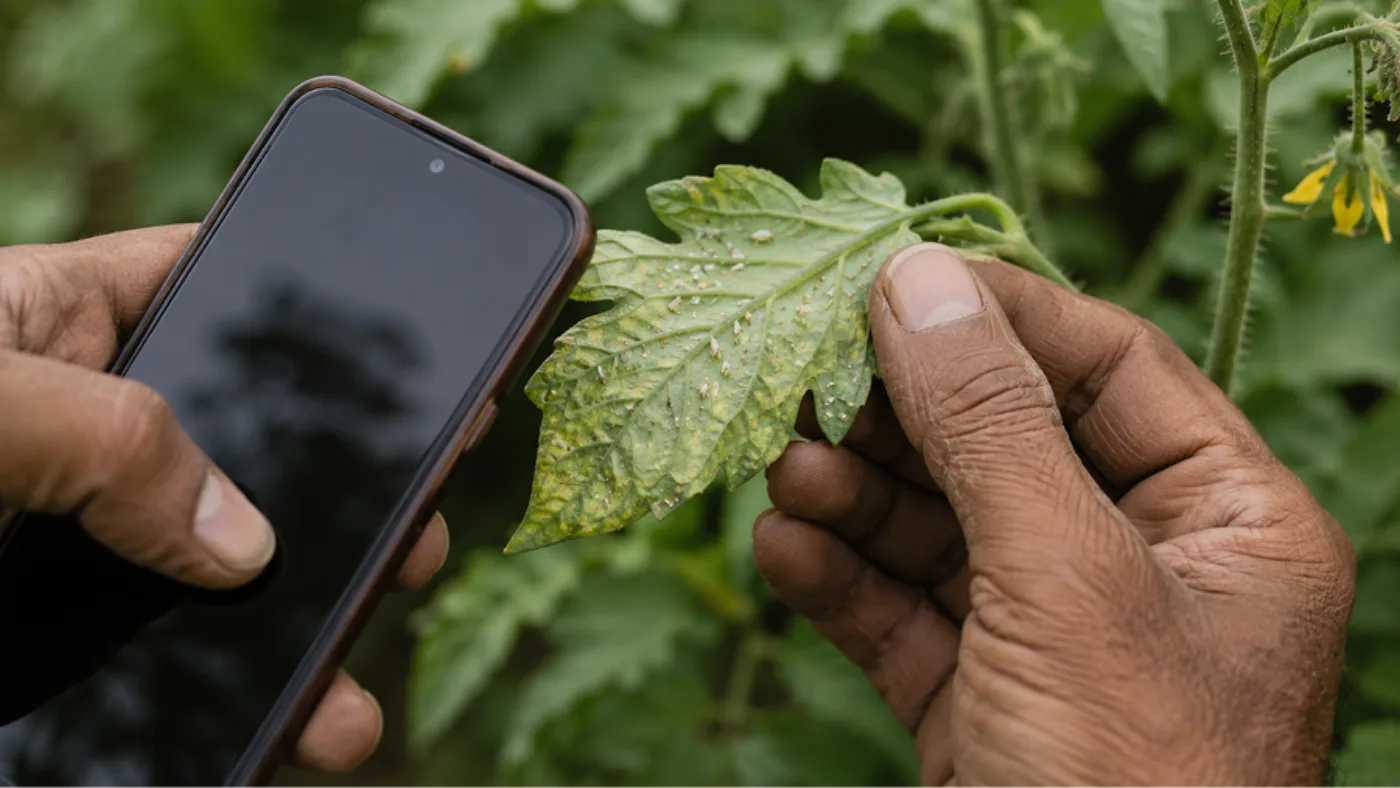
Photo-based diagnosis is the AI feature farmers adopt fastest, and also the one they use worst. The model is reading pixels, so the quality of your photo determines the quality of your answer more than the cleverness of the AI does. A blurry photograph of a whole plant in harsh noon light will produce a confident, wrong answer.
Photograph a single affected leaf, filling most of the frame, in shade or soft morning light, with the damage clearly in focus. Take a second photo of the underside — a very large share of sucking pests and early fungal infections show there first and nowhere else. Take a third of the whole plant so the system can see whether the damage is at the top, the bottom, or scattered, which is often what separates a nutrient deficiency from an infection.
Then apply judgement. If the AI says leaf curl virus and you can see whitefly on the underside, the vector matters as much as the diagnosis. If it names a chemical, cross-check the dose against the label on the packet, not the app — label rates are the legal and agronomic authority. Our guide to identifying good and bad insects and common plant diseases is worth reading once, slowly, so you can sanity-check what any app tells you.
Step 3 — Use weather AI for timing, not for prophecy
Ordinary weather apps tell you it will rain. Agricultural weather AI tells you what to do about it, and that difference is worth real money. The useful questions are narrow: is there a four-hour dry window today for spraying? Will there be enough rain in the next 72 hours that I should skip this irrigation? Is a heat spike coming that will scorch flowering?
Forecast accuracy falls off sharply after about three days, so use the AI for the decisions in front of you and ignore the ten-day outlook for anything irreversible. A spray applied two hours before unforecast rain is money washed into the drain; a spray timed into a confirmed dry window is money that works. Over a season, spray timing alone often saves more than any other single AI feature.
Step 4 — Ask questions in your own language
The quietest revolution of the last two years is that a farmer can now ask a full, messy, real question — "my cotton is 45 days old, leaves are turning red at the edges, I gave DAP at sowing, what should I do" — and get a structured answer in Gujarati or Hindi in seconds. That was simply not possible before. It replaces a lot of guesswork and a lot of waiting.
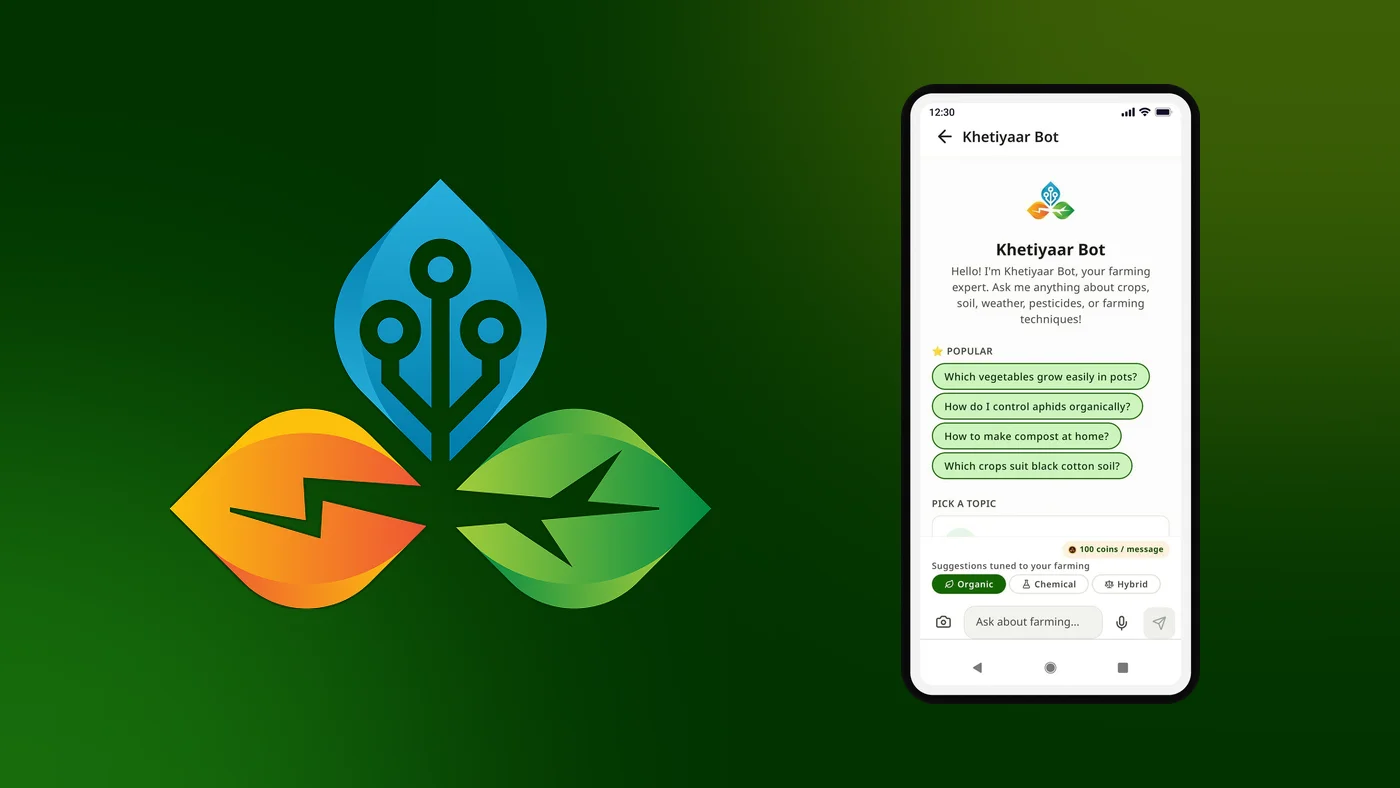
Ask better questions and you get dramatically better answers. Include the crop, the age in days, what you have already applied, what you can see, and your district. Vague questions get textbook replies; specific questions get usable ones. The AI farming chatbot in Khetiyaar is built for exactly this kind of back-and-forth and answers in Gujarati, Hindi and English.
- Bad question: "cotton mein kya dalu?"
- Good question: "BT cotton, 45 days, black soil, Rajkot, leaves reddening at margins, applied DAP at sowing, no irrigation for 12 days — what is likely and what should I check first?"
Step 5 — Bring AI to the selling side, where farmers lose most
Indian farmers are routinely better at growing than at selling, and the gap is where income disappears. AI helps in two unglamorous ways. First, it tracks mandi rates across nearby markets so you can see whether the difference between two mandis exceeds your transport cost — often it does, and often nobody checks. Second, it does the arithmetic you avoid: cost per acre, break-even yield, and what price you actually need rather than the price you hope for.
Know your break-even number before harvest and you negotiate differently. Our guide on selling farm produce at a better price covers grading, timing and mandi choice in detail, and the MSP and mandi bhav guide for 2026-27 explains how the announced rates translate into what you are actually offered at the gate.
What you need to start (it is less than you think)
You do not need a new phone, a subscription, or a data plan that costs more than your seed. An ordinary Android phone with a working camera and intermittent internet is enough for everything described above. Download one app rather than five — juggling a diagnosis app, a weather app, a mandi app and a marketplace is exactly how farmers quietly stop using all of them by week three.
Start with one crop and one season. Use the plan, log what you actually did against what was suggested, and at harvest compare the two. That comparison — not the app's promises — is what tells you whether AI is earning its place on your farm. If you want the whole set in one place, Khetiyaar's kheti app covers planning, diagnosis, chat, weather and an Agri Bazar of verified local dealers, free to start with pay-as-you-go coins for the AI features.
Frequently asked
AI se kheti kaise kare — where should a beginner actually start?+
Start with one crop and one AI-generated season plan. Enter your crop, land size, district and sowing date, get the day-by-day schedule, then edit the irrigation dates to match your real water source. Planning delivers more value than diagnosis for most farmers, because most yield loss comes from a fortnight of drift rather than a dramatic disease outbreak.
Is AI farming useful for small and marginal farmers, or only large farms?+
It is arguably more useful for small farms, because AI advice costs almost nothing per acre while an agronomist visit does not. A farmer with two acres gets the same crop plan, disease diagnosis and weather timing as one with fifty. The main requirement is an ordinary Android phone, not scale.
How accurate is photo-based crop disease detection?+
Accuracy depends heavily on your photo. A sharp, close, well-lit image of a single affected leaf — plus one of the underside — gives a far more reliable result than a distant shot of a whole plant in harsh noon sun. Treat the diagnosis as a strong first opinion, confirm it against what you can see, and always follow the dose printed on the product label rather than the app.
Do I need internet all the time to use an AI farming app?+
No. You need connectivity when you generate a plan, submit a photo for diagnosis or refresh the weather. Once a season plan is generated it can be read without a live connection, which matters on patchy village networks. Choose an app built for light pages and ordinary Android phones rather than a heavy, city-designed one.
Are AI farming apps free in India?+
It varies. Government apps like Kisan Suvidha are fully free but basic. Some private apps are free because they earn from selling inputs, and others charge a monthly subscription. Khetiyaar is free to start and uses pay-as-you-go coins, so you spend only on the AI features you actually use. Compare honestly in our guide to the best AI farming apps in India.
Where to go next
Want this as daily tasks for your farm?
Khetiyaar turns guides like this into a day-by-day plan — in your language, free to start.

Related guides
Best AI Farming Apps in India (2026): An Honest Comparison
From photo-based disease diagnosis to AI chatbots and agri bazar marketplaces, farming apps have come a long way. We compare Khetiyaar, Plantix, AgroStar, DeHaat, Kisan Suvidha and BharatAgri — honestly, feature by feature.
Kharif vs Rabi Crops: What to Grow in Each Season
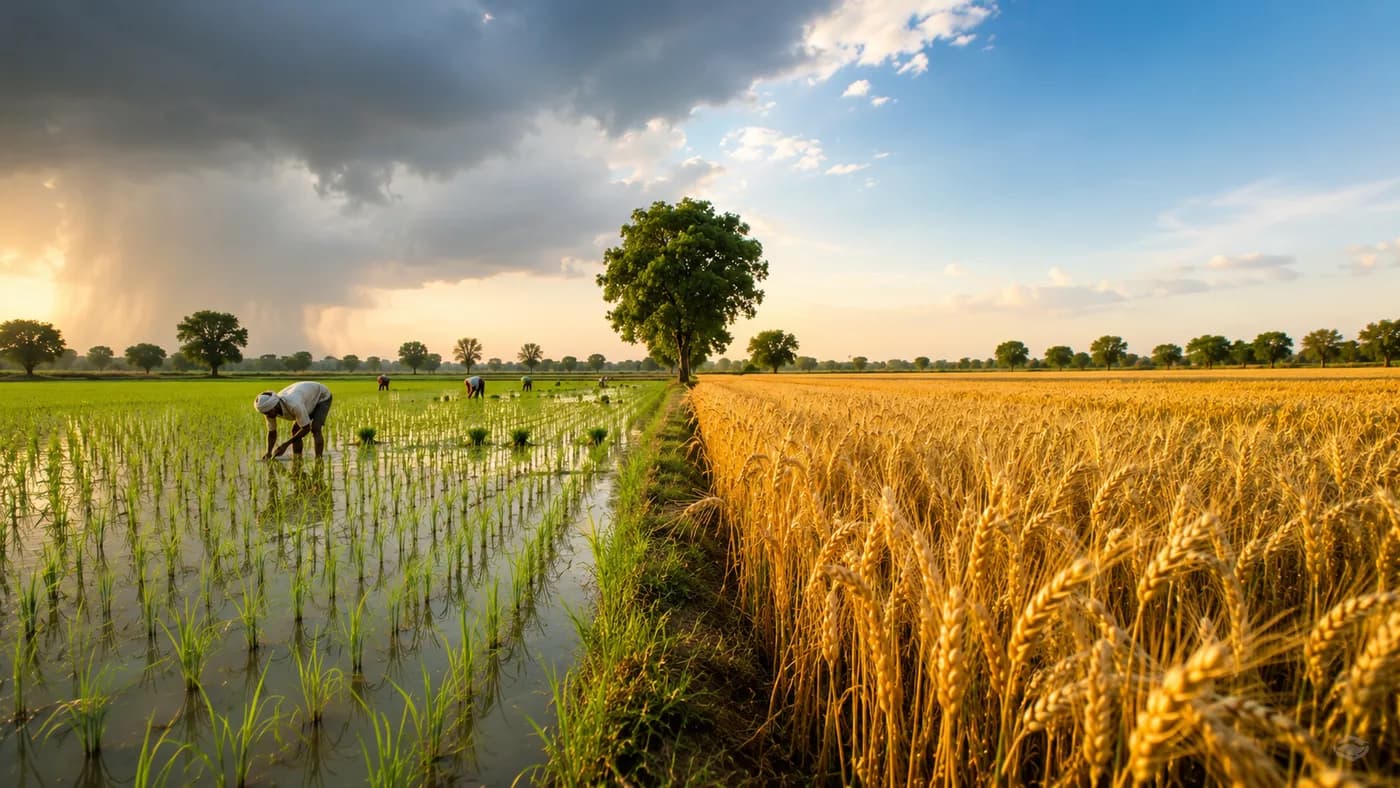
India's cropping calendar is built around Kharif, Rabi and Zaid. Match your crop to your season and water, and the year starts right before you even sow.
Crop Disease Detection Apps in 2026: How to Photograph, Read and Trust the Diagnosis
A plant disease app can identify a problem in seconds — or confidently give you the wrong answer and cost you a spray. The difference is almost entirely in how you photograph the plant and how you read the result.