

MSP 2026-27 and Mandi Bhav: What the Announced Rate Really Means at the Gate
Groundnut MSP for 2026-27 is ₹7,517 a quintal and long-staple cotton ₹8,667. Very few farmers actually receive those numbers. This guide explains the gap between the announced MSP and your gate price — and the four levers that close it.
Quick answer
MSP is a procurement price under conditions, not a guaranteed floor for every sale. For 2026-27 groundnut is ₹7,517 a quintal and long-staple cotton ₹8,667. To actually reach it: register for procurement before the window, get moisture inside specification, avoid selling the whole lot in harvest week, and compare mandis.
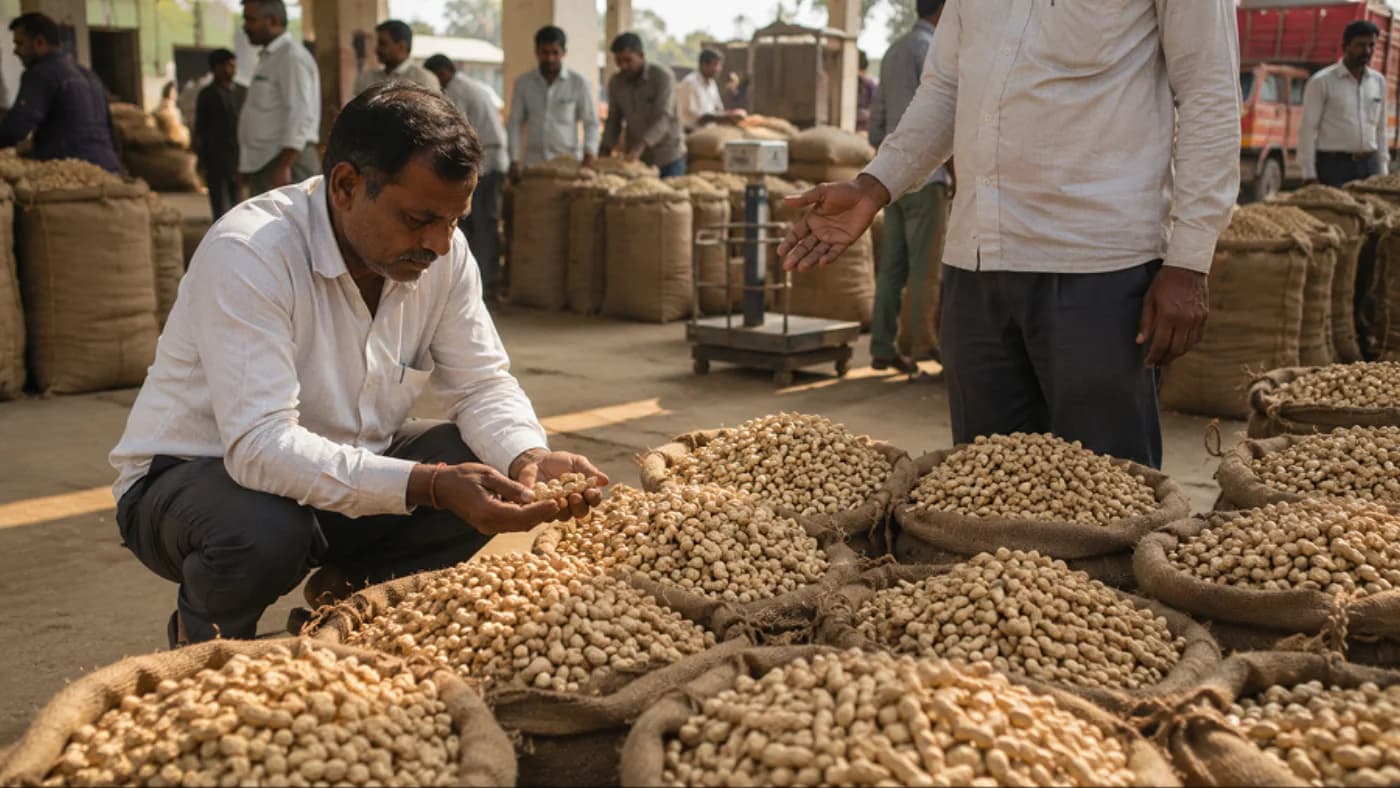
Every year the MSP announcement arrives, every year the number sounds encouraging, and every year a large share of farmers sell below it. That is not a conspiracy — it is the predictable result of how procurement, grading and timing actually work. Understanding the mechanism is what lets you capture more of the announced price rather than complaining about it after the sale.
What MSP is, and what it is not
Minimum Support Price is announced annually for 22 mandated crops. Since 2018-19 the government's stated policy has been to fix MSP at least 50 per cent above the cost of production. For 2026-27, groundnut MSP was fixed at ₹7,517 per quintal, an increase of ₹254 over the previous year, and long-staple cotton at ₹8,667 per quintal, up from ₹8,110.
Here is the part that matters and that gets glossed over: MSP is a price at which government agencies will procure, under specific conditions, at specific centres, during specific windows, for produce meeting specific quality norms. It is not a legally guaranteed floor for every private transaction. A trader in your local mandi is under no obligation to pay it. If procurement is not operating for your crop in your area, or you cannot meet the quality specification, or you sell outside the window, the MSP is a reference number rather than your price.
Why your mandi bhav is lower than the announced MSP
Notice how many of those are within your control. Moisture is a drying decision. Timing is a storage decision. Registration is a calendar decision. Only the last two rows of the list are structural.
- Moisture. This is the biggest and most common deduction. Produce above the specified moisture limit is either rejected or bought at a cut.
- Foreign matter, shrivelled or broken grain, and admixture — each carries its own deduction under the Fair Average Quality norms.
- You sold outside the procurement window, or at a mandi with no active procurement centre for your crop.
- You sold immediately at harvest, when arrivals peak and every farmer in the taluka is selling the same thing on the same week.
- You had already committed the crop against a loan from a trader, which removes your ability to negotiate at all.
- You did not register for procurement in time, where registration is required.
Lever 1 — Register for procurement before the window
Procurement under PM-AASHA (Pradhan Mantri Annadata Aay SanraksHan Abhiyan) generally requires prior registration, and the registration window is usually short and announced with limited notice. In Gujarat, for instance, farmers register to sell groundnut, moong, urad and soybean at MSP through the state's e-Samruddhi portal, with registration windows that have historically opened in early September for the kharif marketing season.
Farmers who miss registration have no route to MSP procurement regardless of quality, so this is the single highest-return administrative task in the selling calendar. Ask your APMC or village extension officer in advance which portal and which dates apply to your crop this year, and set a reminder rather than relying on hearing about it.
Lever 2 — Fix moisture before you fix anything else
Moisture deductions quietly cost Indian farmers more than almost any other single factor at the mandi gate. Produce brought in a few percentage points above specification either gets rejected outright at a procurement centre or gets bought by a private trader at a discount that far exceeds the cost of drying it properly.
Dry on a clean surface rather than bare soil, turn the heap so drying is even rather than only at the surface, and — this is the step most farmers skip — check moisture with a meter before loading rather than judging it by hand. Many APMCs and FPOs have a meter you can use. Two extra days of drying frequently pays more per quintal than a week of negotiating.
Lever 3 — Do not sell everything in harvest week
Prices are lowest when arrivals are highest, and arrivals are highest in the two weeks after harvest because everyone in the district harvests at roughly the same time. Selling the entire crop into that trough is the most expensive habit in Indian farming, and it persists because farmers need cash immediately.
The answer is usually not to hold everything, which requires storage and nerve, but to split the lot. Sell enough at harvest to cover immediate obligations, and hold the rest for a few weeks if you have safe storage. Where cash pressure is the binding constraint, a Kisan Credit Card at a subsidised rate is almost always cheaper than an implicit trader loan repaid through a depressed price — the interest you avoid is invisible, but it is real.
Lever 4 — Compare mandis, and know your break-even
Rates differ meaningfully between nearby mandis, and the difference regularly exceeds the transport cost — but only if someone checks. Compare at least two or three markets before loading, and account honestly for transport, labour and the value of your own day. eNAM has made cross-mandi price discovery far easier than it used to be, and daily mandi bhav is published for most major markets — Khetiyaar's Mandi Bhav pulls the same official AGMARKNET reports and shows the net price after travel, with the report date on every figure.
More importantly, know your break-even before you enter the negotiation. A farmer who knows his cost per quintal negotiates from a position of fact; a farmer who does not simply accepts whatever is offered. Our farming cost and profit calculator produces that number in a few minutes, and selling farm produce at a better price covers grading, lot presentation and mandi selection in more depth.
Where 2026-27 is heading
Two trends are worth planning around. First, procurement is becoming more digital and more registration-dependent, which rewards farmers who track deadlines and penalises those who turn up on the day. Second, quality-linked pricing is strengthening — the gap between well-graded and poorly-graded produce is widening, which means post-harvest handling is becoming a bigger share of realised income than it used to be.
Both trends favour the same behaviours: register early, dry properly, grade honestly, and check prices across markets before you load. If you would rather not track windows and rates by memory, Khetiyaar's kheti app keeps market rates, your season plan and scheme information in one place in Gujarati, Hindi and English, and the Agri Bazar connects you to verified local dealers on the input side too.
Frequently asked
What is the MSP for groundnut and cotton in 2026-27?+
Groundnut MSP for 2026-27 was fixed at ₹7,517 per quintal, an increase of ₹254 over the previous year. Long-staple cotton was fixed at ₹8,667 per quintal, up from ₹8,110. MSP is announced annually for 22 mandated crops.
Is MSP legally guaranteed for every sale?+
No. MSP is the price at which government agencies procure under specific conditions — at designated centres, during defined windows, for produce meeting Fair Average Quality norms, usually after registration. Private traders in a mandi are not obliged to pay it. If procurement is not operating for your crop in your area, MSP is a reference rate rather than your realised price.
How is MSP calculated?+
MSP is announced annually for 22 mandated crops, and since 2018-19 the stated policy has been to fix it at least 50 per cent above the cost of production. The recommendation process considers cost of production alongside demand, supply, price trends and inter-crop price parity.
How do I register to sell at MSP?+
Procurement under PM-AASHA generally requires prior registration through the designated state portal, within a short announced window. In Gujarat, farmers have registered for MSP sale of groundnut, moong, urad and soybean through the state's e-Samruddhi portal, with windows historically opening in early September for kharif. Confirm the current portal and dates with your APMC, because missing registration closes off MSP procurement entirely.
Why is my mandi bhav lower than the MSP?+
Usually moisture above specification, foreign matter or admixture deductions, selling outside the procurement window or at a mandi without an active procurement centre, selling everything in the harvest-week price trough, or having already committed the crop against a trader loan. Most of these are within your control.
Where to go next
- Today's mandi bhavOfficial AGMARKNET rates for your crop, nearby mandis compared, and the net price after travel.
- Farming cost & profit calculatorWork out cost per acre, break-even yield and expected profit before you sow.
- Agri Bazar marketplaceBuy and sell animals, crops, equipment and dairy near you — and see what buyers want today.
Want this as daily tasks for your farm?
Khetiyaar turns guides like this into a day-by-day plan — in your language, free to start.

Related guides
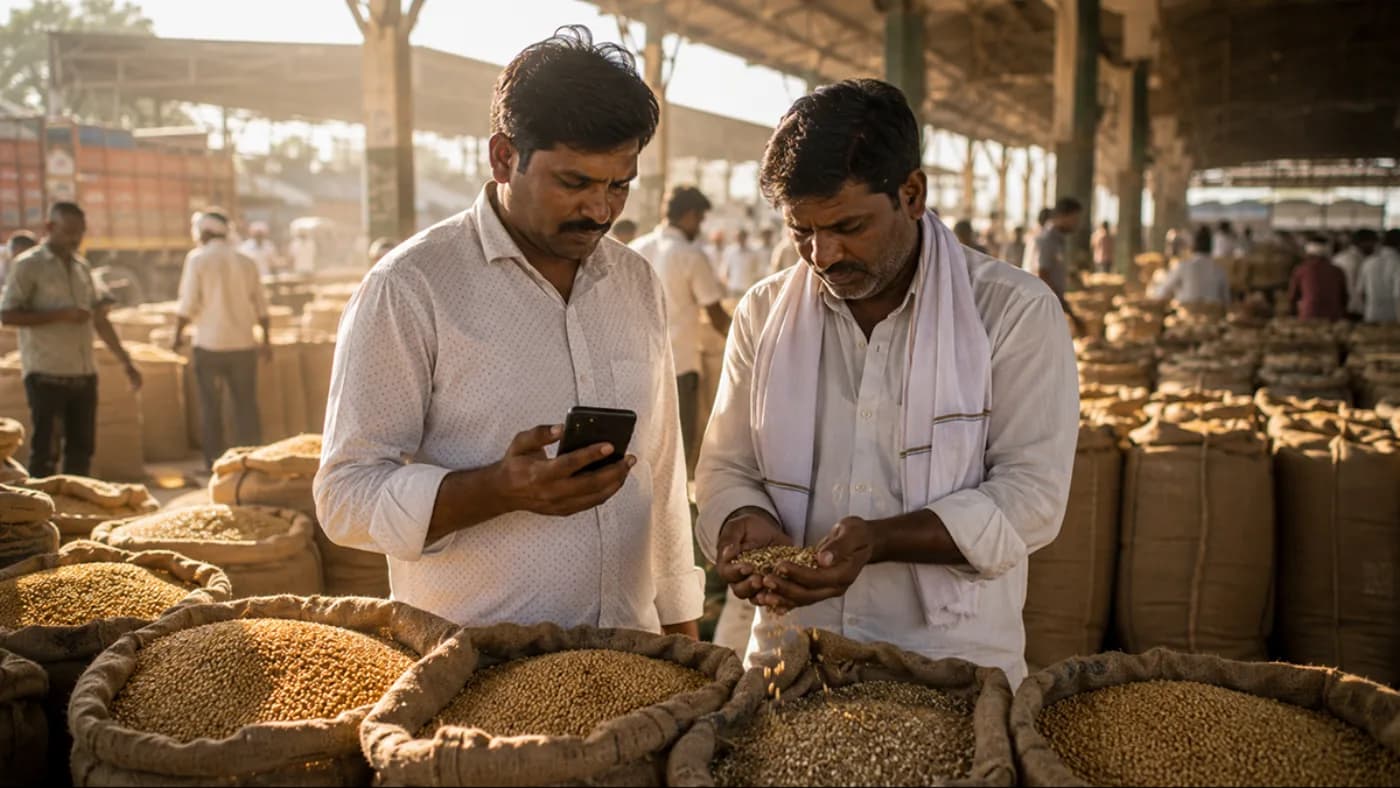
How to Check Mandi Bhav Online: The AGMARKNET Guide (and How to Read the Numbers)
Official mandi prices are free and public, published daily from APMC markets across India. Most farmers either never look, or look at the wrong number. Here is where the data comes from, how to read min, max and modal price, and why the highest figure is usually a trap.
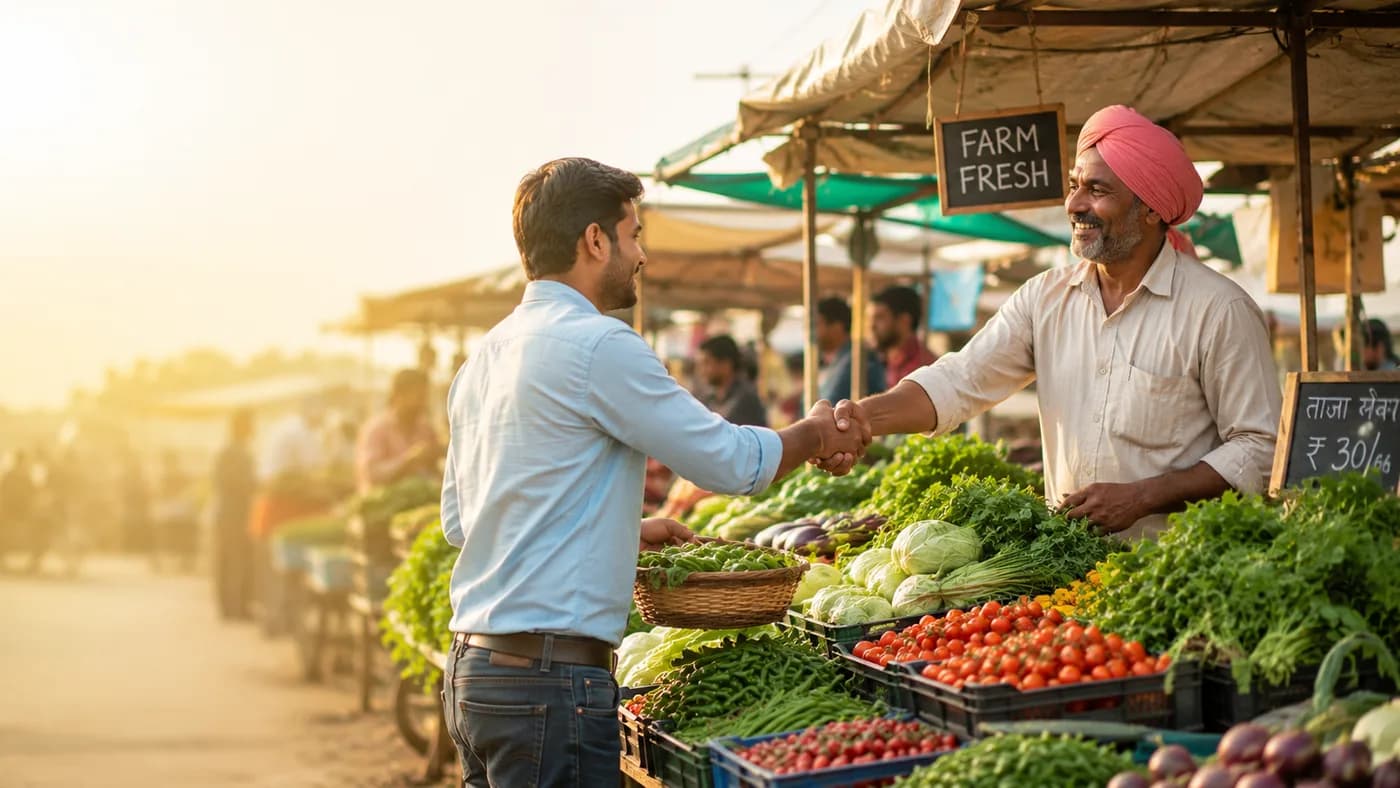
How to Sell Your Farm Produce and Get a Better Price
The difference between a good year and a poor one is often not how much you grow, but the price you get. Selling smarter adds more than any input.
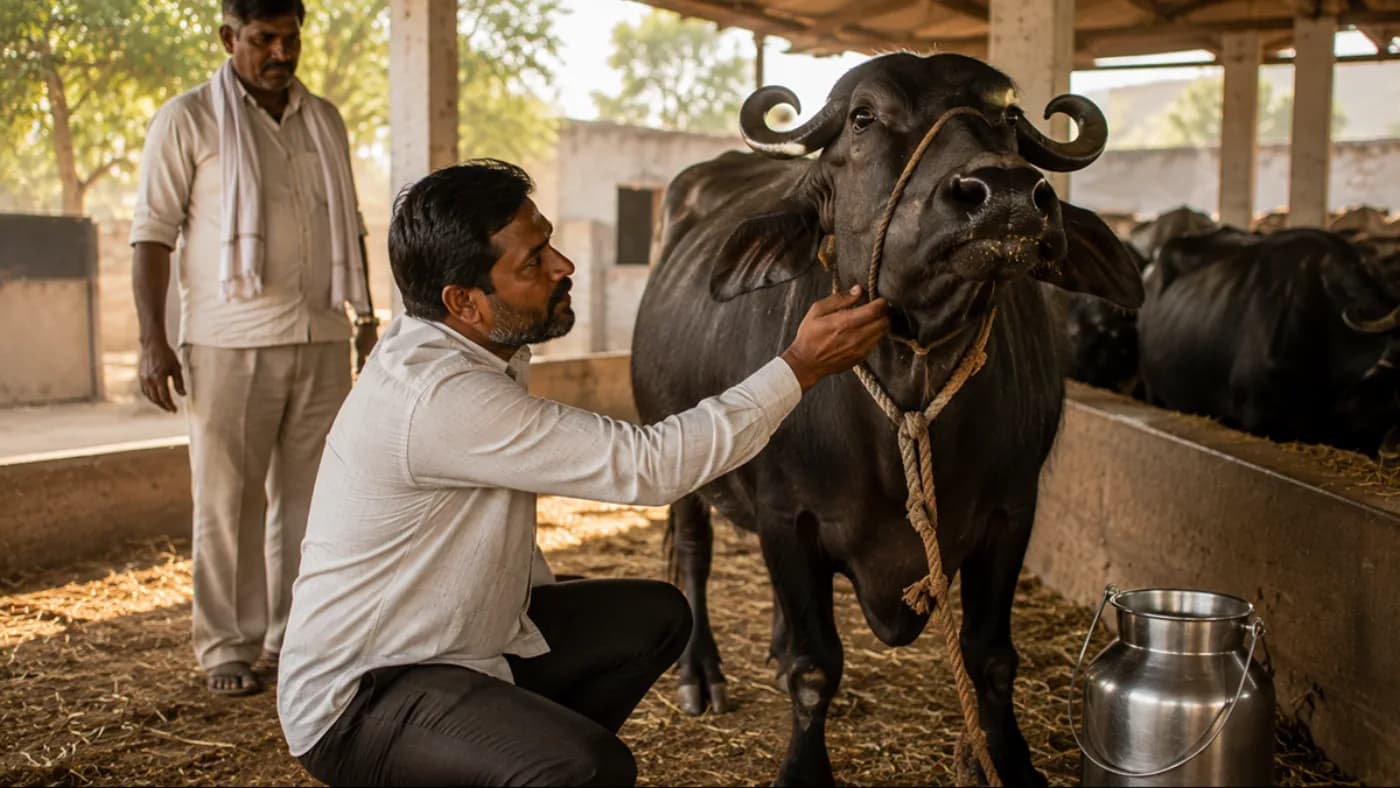
Buying and Selling Cattle Online: What to Check Before You Pay
A milch animal is often the largest single purchase a small farm makes, and the easiest to be cheated on. Listings make discovery far easier — they do not make verification optional. Here is exactly what to check, in what order, and the red flags that should end a deal.