

Rabi Season Sowing Calendar by State: When to Sow Wheat, Mustard, Gram and Peas
The right rabi sowing window isn't the same in Punjab as it is in Gujarat or Madhya Pradesh — sow too early or too late in your specific region and germination, flowering and grain fill all suffer. Here's how the timing actually varies by state.
Quick answer
Rabi crops — wheat, mustard, gram and peas — all depend on a cool growing period, which is exactly why the sowing window shifts by state: northern states like Punjab and Haryana have a longer, earlier-arriving winter and generally sow a bit earlier, while Gujarat and much of Madhya Pradesh have a shorter, later-arriving winter and generally sow a bit later, with real district-level variation inside each state. Sowing too early risks poor germination from lingering warmth; sowing too late pushes flowering and grain fill into a warmer spring and cuts yield. There is no single all-India sowing date that works — confirm your state or district's current-year recommended window with your local Krishi Vigyan Kendra or state agriculture department advisory before you sow.
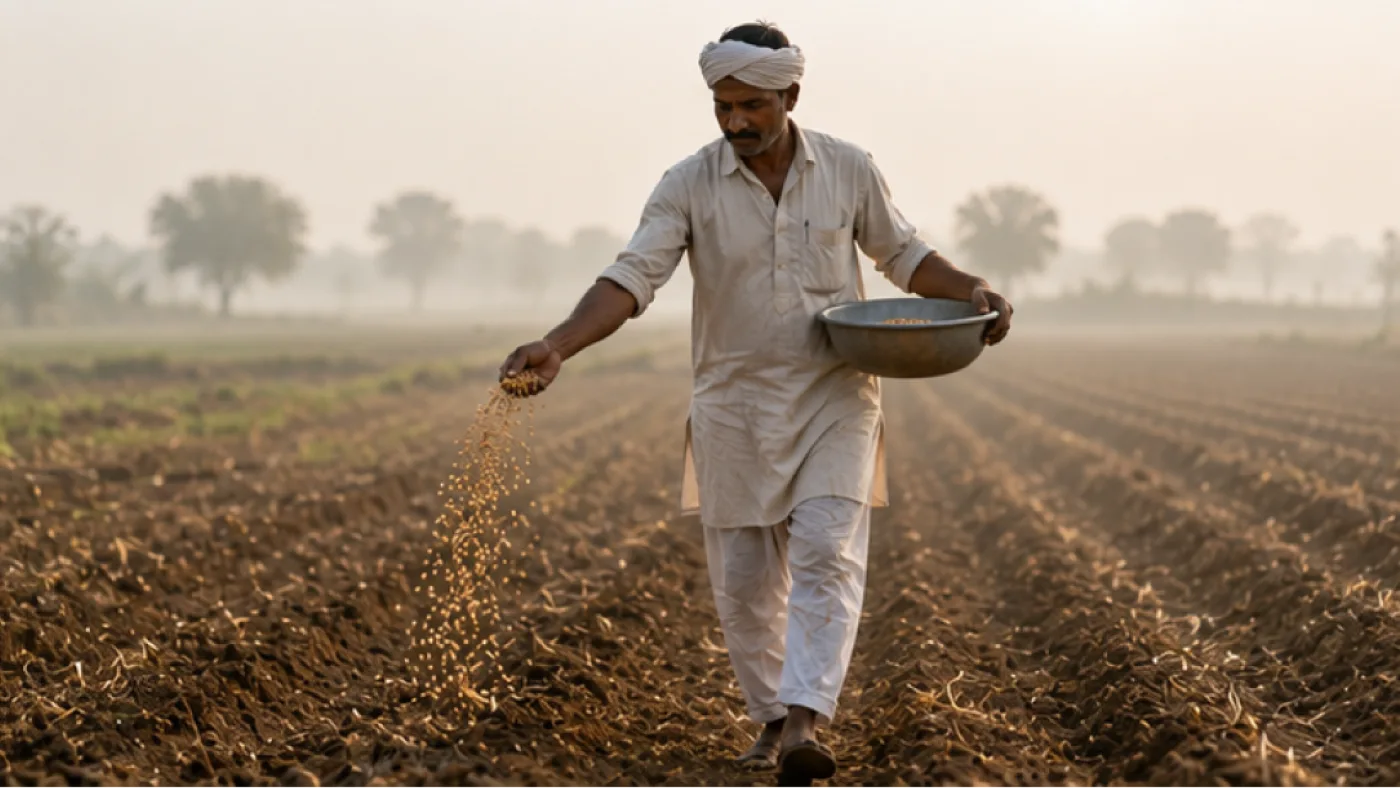
Rabi crops are sown after the monsoon retreats and harvested in spring, which sounds like a single simple season until you notice that the actual sowing window shifts by several weeks from one state to another. A wheat sowing date that's perfectly timed in Punjab can be too early or too late for the same crop in Gujarat, because temperature at sowing, the length of the cool winter period, and the timing of any residual monsoon withdrawal all vary by region. This guide covers the major rabi crops, why the sowing window is so temperature-sensitive, and how the timing generally shifts across India's key rabi-growing states.
The main rabi crops and why they're grown in this season
Wheat is India's dominant rabi crop by area, followed by mustard (sarson) as the leading rabi oilseed, and gram (chana) and peas (matar) as major rabi pulses. All of these crops share a common requirement: they need a cool growing period, particularly during their vegetative and flowering stages, and they are sown specifically because the winter season provides that cool window, unlike the hot kharif months.
Because these crops depend on cool temperatures at specific growth stages — especially germination and flowering — the sowing date is not just a scheduling convenience, it directly determines whether the crop experiences the right temperature at the right growth stage.
Why sowing timing matters so much for rabi crops
Sow too early, while soil and air temperatures are still warm from the tail end of the monsoon season, and germination can be poor or uneven, and early growth can be pushed into stress before winter cooling arrives. Sow too late, and the crop's flowering and grain-filling stages — the periods most sensitive to heat — can get pushed into the warmer temperatures of early spring, which shrinks grain size and cuts yield, a problem commonly seen when wheat sowing is delayed well past the recommended window.
This is why the 'right' sowing window is really a balance: early enough that the crop completes its cool-season-dependent growth stages while temperatures are still favourable, but late enough that early growth isn't damaged by lingering warmth or, in some regions, residual monsoon moisture.
Why the sowing window shifts by state
The main driver of regional variation is simply climate: northern states like Punjab and Haryana have a longer, colder winter that arrives earlier in the calendar, which lets sowing begin earlier there, while western and central states like Gujarat and parts of Madhya Pradesh have a shorter, milder winter that arrives later and takes longer to cool the soil down enough for safe germination. This means the ideal sowing window in Punjab and Haryana generally falls earlier than in Gujarat, which typically has to wait longer — often well into November or even early December — for temperatures to drop enough.
Monsoon withdrawal timing is a second factor — in some regions, fields are only workable for rabi sowing once monsoon-season soil moisture has drained enough to prepare a proper seedbed, which can shift the practical sowing date independent of temperature alone. This is exactly why a single all-India sowing date for any rabi crop is not useful advice — the window has to be read against your specific state and even district-level agromet advisory.
General sowing window guidance by region
In Punjab and Haryana, timely wheat sowing generally falls in the latter half of October through November, taking advantage of the region's cooler and more prolonged winter; sowing significantly later than this window is one of the most common reasons for yield loss in this belt specifically because it pushes grain-filling into warmer spring temperatures.
In Madhya Pradesh, sowing windows for wheat and gram are generally similar to or slightly later than Punjab and Haryana's timely window in many districts, though this varies meaningfully by specific district and local advisory — always confirm with your local Krishi Vigyan Kendra rather than assuming a single state-wide date.
In Gujarat, the shorter and milder winter generally means sowing windows for rabi crops fall a little later in the calendar compared to the northern wheat belt — commonly stretching from mid-November into early or mid-December for wheat — because the region has to wait longer for temperatures to cool enough, and the practical window can also be shaped by residual monsoon-season field moisture in some districts. Mustard, gram and peas sowing timing follows a similar regional logic to wheat, adjusted for each crop's own specific temperature and day-length sensitivity.
These are general regional patterns, not a substitute for your specific state agriculture department's or Krishi Vigyan Kendra's current sowing advisory, which factors in the actual season's temperature and monsoon-withdrawal pattern — always confirm the current-year recommended window before finalizing your own sowing date.
A simple way to think about your own state's window
If you're unsure where your state or district falls, the reliable approach is: check your state agriculture department's current rabi sowing advisory (often published as a specific recommended window each year, adjusted for that season's conditions), ask your local Krishi Vigyan Kendra which has district-specific data, and pay attention to the actual temperature and soil-moisture conditions in your own field rather than a fixed calendar date alone, since even within one state, sowing windows can shift slightly year to year depending on how the monsoon and early winter behave.
As a rule of thumb across all rabi crops and all regions: sowing significantly earlier than your local recommended window risks poor germination from lingering warmth, and sowing significantly later risks pushing flowering and grain fill into a warmer spring — both directions cost yield, which is why the 'right' window is worth confirming rather than guessing.
Frequently asked
Why doesn't one sowing date work for wheat across all of India?+
Because the length and timing of the cool winter period that wheat depends on varies by region — northern states like Punjab and Haryana have a longer winter arriving earlier, while Gujarat and parts of Madhya Pradesh have a shorter, milder winter that arrives later. Sowing dates shift with this regional climate difference.
What happens if rabi crops are sown too late?+
Flowering and grain-filling — the stages most sensitive to heat — get pushed into the warmer temperatures of early spring, which shrinks grain size and reduces yield. This is one of the most common causes of yield loss in delayed wheat sowing.
What happens if rabi crops are sown too early?+
Germination can be poor or uneven if soil and air temperatures are still warm from the tail end of the monsoon, and early growth can face stress before the winter cooling these crops depend on arrives.
Where can I find the exact recommended sowing date for my district?+
Your state agriculture department publishes a current-year rabi sowing advisory, and your local Krishi Vigyan Kendra has district-specific recommendations. These are more reliable than a general regional guideline, since exact windows shift slightly year to year with actual weather conditions.
Does mustard follow the same sowing timing as wheat?+
It follows a broadly similar regional pattern — cool-season dependent, with northern states generally sowing a bit earlier than western/central states — but mustard's specific temperature and day-length sensitivity differs from wheat's, so confirm the crop-specific window with your local advisory rather than assuming they're identical.
Where to go next
Want this as daily tasks for your farm?
Khetiyaar turns guides like this into a day-by-day plan — in your language, free to start.

Related guides
Wheat Farming Guide: Sowing to Harvest for Higher Yield
Wheat rewards timing more than anything else — sow in the right window, never skip the crown-root irrigation, and control weeds in the first month.
Kharif vs Rabi Crops: What to Grow in Each Season
India's cropping calendar is built around Kharif, Rabi and Zaid. Match your crop to your season and water, and the year starts right before you even sow.
Cumin Farming: Growing Jeera When the Weather Decides Everything
Cumin is among the highest-value crops a Gujarat farmer can grow and among the easiest to lose. Two cloudy weeks at flowering can take the whole field. Here is how to give it the best odds.