

Natural vs Chemical Pesticide: Which to Use, When, and What Each One Costs You
One kills fast and takes your beneficial insects with it. The other works slowly but keeps working season after season. Here is an honest comparison of natural vs chemical pesticide — and the framework for deciding which belongs in your sprayer this week.
Quick answer
Natural and chemical pesticides are not rival answers to one question — they are tools with different speeds and different long-term prices. Chemicals buy you hours when a crop is genuinely at risk, and cost you beneficial insects and resistance if they become your default. Neem and microbial products work over days rather than hours, protect the natural enemies that do most of your pest control for free, and carry far lower resistance risk — but they are preventive and early-stage strengths, they are not automatically harmless, and microbials are living products that must be bought fresh and stored cool. Identify the pest before you spray anything, act on economic threshold rather than on sight, work outward from the least disruptive option, follow the label dose and waiting period without exception, buy only from a licensed dealer with a bill, and rotate modes of action so that the chemicals you keep in reserve are still working when you actually need them.

Ask ten farmers about natural vs chemical pesticide and you will get two camps: one that says nothing but chemicals actually stops a real outbreak, and one that says chemicals ruined their soil, their bees and their spraying budget. Both camps are describing something true — they are just describing different situations. A chemical pesticide and a neem or microbial biopesticide are not two competing answers to the same question; they are two different tools with different speeds, different costs, different effects on the insects you actually want in your field, and very different consequences five seasons from now. This guide compares them honestly on each of those points, so that the next time you see damage in your crop you are choosing a tool on purpose instead of reaching for whatever the dealer pushed hardest.
Before you compare sprays, know what you are spraying at
No comparison in this guide will help you if the pest is misidentified, and misidentification is far more common than most farmers assume. A large share of wasted sprays in Indian fields are aimed at the wrong thing entirely: a nutrient deficiency mistaken for a viral disease, a fungal leaf spot treated with an insecticide, or — the most expensive mistake of all — a beneficial predator killed off because it happened to be the insect the farmer noticed on the leaf. Spraying anything, natural or chemical, at a problem you have not correctly named is money burned at best and damage done at worst.
So treat identification as a separate skill from spraying, and settle it first. For photographs and detailed descriptions of the insects and diseases you will actually meet — including which ones are on your side — see our full identification guide, Good Insects vs Bad Insects in Your Farm and Garden — Plus How to Identify Common Crop Diseases. This guide will not repeat that work. Its job starts at the moment you already know what the pest is and are deciding what to do about it.
How a chemical pesticide actually works
Synthetic chemical pesticides are manufactured compounds designed to interfere with a specific biological process in the pest — most commonly its nervous system, but also its growth and moulting, or its ability to produce energy. Because that interference is direct and the dose delivered is high relative to the insect's body weight, the effect is fast: with many products you see dead or paralysed insects within hours, and knockdown is essentially complete within a day. That speed is the single genuine advantage of chemicals, and in a real, fast-moving outbreak it is not a small one.
Two distinctions matter more than the brand name on the bottle. The first is contact versus systemic. A contact product kills the insect it physically touches and then degrades on the leaf surface, which means coverage is everything — miss the undersides of leaves where most sucking pests sit and you have missed the pest. A systemic product is absorbed into the plant's sap and moves within it, so an insect feeding anywhere on the treated plant gets a dose whether your spray reached that spot or not. Systemics are far more effective against hidden and sap-sucking pests, but by the same logic they are present inside the plant tissue you eventually harvest, which is exactly why waiting periods exist.
The second distinction is broad-spectrum versus selective. A broad-spectrum product kills a wide range of insects because the biological process it attacks is common to most of them. A selective product targets a narrower group. Older chemical classes — organophosphates and carbamates, for example — tend to be broadly toxic; some newer classes, including certain insect growth regulators, are considerably more selective. Broad-spectrum is often marketed as an advantage, and to a farmer facing several pests at once it sounds like one, but as the next two sections explain it is usually the most expensive property a pesticide can have.
How natural and biopesticides actually work
Natural pest control products fall into three broad families, and they work in genuinely different ways from each other, not just from chemicals. Botanical products, of which neem is far and away the most important in India, are extracts of plants. Neem's main active compound, azadirachtin, is not primarily a poison at all — it works as an antifeedant (treated leaves stop tasting acceptable, so the insect eats less), a repellent, an egg-laying deterrent, and above all a growth regulator that disrupts moulting, so larvae fail to become adults and populations collapse over a generation rather than over an afternoon. Neem products are sold at different azadirachtin strengths, usually stated on the label in ppm, and the strength matters as much as the volume you mix.
Microbial biopesticides are living organisms or their toxins: bacteria such as Bacillus thuringiensis (Bt), whose protein crystals are lethal only to insects with the right gut chemistry to activate them; entomopathogenic fungi such as Beauveria and Metarhizium species, whose spores germinate on the insect's body and grow into it; and virus-based NPV products, which are extraordinarily host-specific — a given NPV product targets essentially one caterpillar species and does nothing to anything else. That specificity is the whole point and the whole catch: a microbial product only works if the pest you have is the pest named on its label, and matching product to pest is not optional guesswork.
The third family is the farm-made preparations many Indian farmers already use — neem seed kernel extract soaked and strained at home, cow-urine and botanical ferments, garlic-chilli extracts, and similar mixtures. These cost almost nothing but the labour, and for low to moderate pest pressure they often do the job. Their honest weakness is inconsistency: strength varies with the raw material, the soaking time and the batch, so results vary too, and you cannot rely on a farm-made preparation to rescue a severe infestation the way a labelled product can.
What all of these share is speed — or the lack of it. Where a chemical shows results in hours, natural products typically take two to five days to show a visible drop in pest numbers, and with neem you may not see dead insects at all; you see damage stop spreading and the next generation fail to appear. Farmers who judge a biopesticide by walking the field the morning after spraying almost always conclude it did not work, when in fact they simply checked too early.
Natural vs chemical pesticide, side by side
- Speed of action: chemicals act within hours, with near-complete knockdown in about a day. Natural and microbial products usually take two to five days, and neem often shows up as damage stopping rather than as dead insects.
- Effect on beneficial insects: broad-spectrum chemicals kill predators and parasitoids along with the pest. Most neem and microbial products are considerably softer on beneficials — though not entirely harmless to them, and not harmless to bees if sprayed onto open flowers during foraging hours.
- Resistance risk: repeated use of the same chemical mode of action builds resistance quickly and can render a product useless on your farm within a few seasons. Biopesticides with multiple modes of action, such as neem, carry a much lower resistance risk, and biologicals make excellent rotation partners for chemicals.
- Reliability under heavy pressure: a labelled chemical is the more dependable option once an infestation is already severe and the crop is at real risk. Natural products are strongest as preventive and early-stage tools.
- Consistency: a registered product of either kind is consistent batch to batch, because its concentration is stated and regulated. Farm-made botanical preparations vary considerably with raw material and method.
- Cash cost: chemicals are a recurring purchase every season. Farm-made neem and botanical preparations cost mainly labour; commercially formulated biopesticides are a purchase too, and are not automatically cheaper than chemicals per spray.
- Shelf life and storage: most chemical formulations store reasonably for a season or more in a cool, dark, locked place. Microbial products contain living organisms and lose viability with heat and age — an expired or heat-damaged microbial product is not weak, it is simply dead and will do nothing.
- Residue and waiting period: chemicals leave residues and carry a mandatory pre-harvest waiting period printed on the label. Neem and microbial products generally break down faster, but they still have label instructions and waiting periods that must be followed, and residue rules apply to whatever you sell.
- Availability: chemical products are stocked by virtually every licensed dealer. Quality biopesticides — especially microbials that need proper storage — are patchier in supply, and a poorly stored microbial on a hot shelf is worse value than no purchase at all.
Resistance: the tradeoff that decides your next five seasons, not this week
Resistance is the most important thing in this comparison and the easiest to ignore, because its cost arrives long after the decision that caused it. Every insect population contains a few individuals that happen to survive a given chemical. Spray that chemical, and you kill the susceptible majority and leave those few to breed — with far less competition than before. Do it again the next generation with the same chemical, and you have concentrated their offspring further. Repeat this for a handful of seasons and you have bred a local population that your usual spray no longer touches, at which point farmers typically respond by increasing the dose or the frequency, which accelerates exactly the problem they are trying to solve.
This is why the concept that matters is not the brand but the mode of action — the specific biological mechanism the product attacks. Two differently branded, differently priced bottles can share a single mode of action, and alternating between them provides no protection whatsoever; the pest experiences one continuous selection pressure. A widely used rule of thumb is to avoid applying the same mode-of-action group against successive generations of the same pest, and to plan a season's sprays as a rotation across genuinely different mechanisms rather than deciding each spray on the spot. Your product label and your local Krishi Vigyan Kendra or state agriculture university can tell you which group a given product belongs to — this is worth asking about before you buy, not after.
Biopesticides sit differently in this picture. Neem's effect comes from several compounds acting through several mechanisms at once — antifeedant, repellent, growth-regulating — which is a far harder combination for a pest population to evolve around than a single-site chemical target, and neem has been used for a very long time without the dramatic resistance collapses seen with some chemical classes. Microbials are not immune to resistance, and Bt resistance is well documented where Bt has been used relentlessly, but under normal farm rotation biologicals are the low-resistance-risk option. Practically, this makes them valuable not only as a first line of defence but as rotation partners that break up chemical selection pressure and extend the useful life of the chemicals you do rely on.
Beneficial insects — and why 'natural' does not automatically mean 'harmless'
Your field already contains a free pest-control workforce: ladybird beetles and their larvae eating aphids, lacewings, predatory mites, spiders, and parasitoid wasps whose larvae develop inside caterpillars and aphids and kill them from within. On an undisturbed farm these natural enemies suppress a large share of pest pressure without you doing or paying for anything. A broad-spectrum chemical spray does not distinguish between them and the pest, and because predators are usually fewer in number and slower to reproduce than the pests they eat, they recover more slowly after a spray than the pest does.
That difference in recovery speed produces the two failures that puzzle farmers most. Pest resurgence is when the target pest bounces back within weeks at higher numbers than before spraying, because its natural enemies are gone and nothing is holding it in check. Secondary pest outbreak is when a species that was never a problem on your farm suddenly becomes one — mites are the classic example — because the predators that had been quietly controlling it were killed by a spray aimed at something else. In both cases the spray genuinely worked on the day and genuinely made the season worse.
But do not read this as 'natural products are safe'. They are not automatically safe, and treating them as though they were causes real harm. Several botanical extracts are toxic to fish and should never be allowed to run into a pond, tank or canal. Neem formulations, though relatively soft on many beneficials, can still harm bees on direct contact with wet spray, so neem should be applied in the early morning or the evening when pollinators are not foraging and flowers are not being worked — and any spray, of any kind, onto a crop in full flower deserves that timing discipline. Some concentrated botanical preparations irritate skin and eyes badly. 'Natural' describes the origin of a substance, not its safety profile, and the label on a biopesticide is there for the same reason as the label on a chemical.
Cost, availability and shelf life — the practical differences
The cost comparison is not the simple one most farmers expect, and it is not really about the price per bottle. A chemical pesticide is a recurring cash purchase every season, and the cost that hurts most is not the first spray but the escalating pattern that follows resistance and pest resurgence: more sprays per season, higher doses, and eventually a switch to a costlier product because the cheap one stopped working. Counted over five seasons rather than one, a spray programme that destroys your natural enemies and breeds resistance is expensive even when each individual purchase looks cheap.
Farm-made neem and botanical preparations sit at the other extreme: the cash cost is close to zero if you have neem trees within reach, and the real cost is labour and planning — collecting and drying seed at the right time of year, and the hours of soaking, straining and mixing before each spray. For a smallholder with family labour and low to moderate pest pressure, that trade is often clearly worth making. For a farmer with a large area, a tight labour window and a serious infestation, it is often not, and pretending otherwise does nobody any favours.
Commercially formulated biopesticides are a middle path and need honest handling. They are a cash purchase like chemicals, and per spray they are not reliably cheaper. More importantly, microbial products contain living organisms with a genuine shelf life — commonly a matter of months rather than years — and they lose viability in heat. A microbial product that has sat in a hot dealer's cupboard past its date is not a weakened product; it is a dead one, and it will do nothing at all while you conclude that biopesticides do not work. Buy microbials fresh, check the manufacture and expiry dates before paying, store them cool and dark, and use them within the window the label gives.
Availability follows the same logic. Chemical products are stocked everywhere; quality biopesticides are far patchier by block and district, and the ones most sensitive to storage are exactly the ones most likely to be sitting in the wrong conditions. Ask your Krishi Vigyan Kendra which biopesticide suppliers in your area actually store their stock properly, and ask which biological inputs are currently being distributed or supported through state agriculture or horticulture department programmes. Where such support exists, the products covered, the extent of assistance and the eligibility rules are set at the state level and revised from time to time, so treat any figure or rule you hear as a starting point and confirm the current position with your state department or KVK rather than assuming last year's arrangement still applies.
Safety and legality: the parts that are not optional
Whatever you spray, the label is the instruction manual and it is also the law. Use only the dose, the dilution and the crop-pest combination printed on the product's label. Label rates are approved per product and per crop after testing, and off-label use — a higher dose, a crop not listed, or a pest not listed — is both illegal and one of the fastest routes to resistance and to residue problems in what you sell. This is the single reason this guide states no per-acre or per-hectare dose for any product: the correct dose is the one on the bottle in your hand, not a number from an article, and no general figure can account for the concentration of your specific formulation.
The waiting period, or pre-harvest interval, is the minimum number of days that must pass between your last spray and harvest, and it is printed on the label for every registered product. It varies enormously — from a few days for some products to several weeks for others — and it exists so that residues fall below safe limits before the produce is eaten. Ignoring it endangers whoever eats your crop, and increasingly it also endangers your market: rejected consignments and residue-failed lots are a real commercial risk, not a theoretical one. Plan sprays backwards from your intended harvest date, especially in vegetables where harvest is continuous and the temptation to spray between picks is strongest.
Protective equipment is not optional and not a formality. Cover your body, wear gloves and eye protection, use a mask suited to the product, spray with the wind at your back rather than into your face, and never spray in the heat of the middle of the day when you are sweating and your skin absorbs more. Do not eat, drink or smoke while spraying, wash thoroughly and change clothes immediately afterwards, and wash the spray clothes separately from the family's. Never re-use a pesticide container for anything, never store product in a drink bottle, and keep everything locked away from children and livestock. Triple-rinse the sprayer and dispose of rinsate away from any water source, pond or canal.
Finally, buy only from a licensed dealer and insist on a proper bill. The bill is your only evidence if a product turns out to be spurious or fails, and spurious pesticide is a genuine problem in Indian markets. Check that the container is sealed, that the label is intact and legible, and that the manufacture and expiry dates are printed and current. India's list of approved, restricted and banned pesticides is set by regulation and is revised from time to time, and some products still circulating in the market are no longer permitted for use, or are permitted only on certain crops — so confirm the current status of anything you are unsure about with your Krishi Vigyan Kendra or state agriculture department rather than trusting a dealer's recommendation alone.
The honest answer: neither pole, but IPM
Framed as natural versus chemical, this question has no good answer, because the two poles fail in mirror-image ways. Refusing chemicals absolutely means occasionally watching a crop you needed take real damage from an outbreak that a single well-chosen, label-compliant spray would have stopped. Reaching for chemicals by default means killing your free pest-control workforce, breeding resistance, and paying more every season for worse control. Integrated Pest Management is not a compromise between these positions; it is the sequence that makes both tools useful.
In practice, that sequence is: prevent first, with resistant varieties where available, proper spacing and airflow, field sanitation, crop rotation and balanced nutrition, since excess nitrogen produces exactly the soft, lush growth that sucking pests thrive on. Then monitor deliberately — walk the crop weekly, look at leaf undersides, and use pheromone or sticky traps so you learn that a pest has arrived before the damage tells you. Then act on threshold rather than on sight: a few insects on a few plants is not an infestation, and the economic threshold — the pest level at which the cost of controlling is less than the damage you would otherwise suffer — is crop- and pest-specific and available from your state agricultural university or KVK. Ask for the figures relevant to your crop; they are the difference between spraying because it is needed and spraying because you saw something.
When the threshold is crossed, work outward from the least disruptive option: mechanical and cultural measures such as hand-picking egg masses or removing infested plants; then biological and natural options — neem, the right microbial for the identified pest, or the release of biological control agents where they are available; and only then a targeted chemical, chosen for selectivity where a selective option exists, applied at label dose, rotated by mode of action, and timed to protect pollinators and respect the waiting period. Used that way, a chemical is a precision instrument rather than a habit, and it keeps working for years because you are not wearing it out.
This guide is deliberately a comparison framework rather than a spray schedule. For the full IPM approach applied to Indian conditions, see our guide Integrated Pest Management (IPM) for Indian Farms; for the natural side in practical detail, particularly on vegetables, see Organic Pest Control Methods for Vegetables; and for identifying what you are actually dealing with before you spray anything at all, start with Good Insects vs Bad Insects in Your Farm and Garden — Plus How to Identify Common Crop Diseases.
Terms explained in this guide
Frequently asked
Which is better, natural or chemical pesticide?+
Neither is better in the abstract — they suit different moments. Natural and microbial products are the better choice for prevention, low to moderate pest pressure, and as rotation partners that slow resistance, and they spare the predators and parasitoids doing free pest control in your field. A registered chemical is the more dependable choice once an infestation is already severe and the crop is at real risk. The approach that actually works is IPM: identify the pest, act only past the economic threshold, start with the least disruptive option, and keep chemicals as a targeted, label-compliant last resort.
How much natural or chemical pesticide should I use per acre?+
Use the dose printed on your product's label and nothing else. Dose depends on the specific formulation's concentration, the crop and the pest, and those combinations are approved and printed per product — which is why no article can give you a safe per-acre figure. Off-label dosing is illegal in India and is a fast route to both resistance and residue problems. If the label is missing, damaged or unreadable, do not use the product; and if you need help interpreting it, your Krishi Vigyan Kendra or state agriculture department will read it with you.
Why did my neem spray not seem to work?+
Most often because it was checked too early or used too late. Neem works mainly as an antifeedant, repellent and growth regulator rather than as a fast poison, so you should expect to see damage stop spreading and the next generation fail to appear over roughly two to five days — not dead insects the next morning. Neem is also strongest against young larvae and early infestations, and much weaker once a population is large and established. Two other common causes: an old or poorly stored product that has lost potency, and incomplete coverage of leaf undersides where sucking pests actually sit.
Are natural pesticides safe for bees and for my family?+
Safer in general, but not automatically safe, and they should be handled with the same discipline as chemicals. Neem can harm bees on direct contact with wet spray, so apply it in the early morning or evening when pollinators are not foraging, and be especially careful with any crop in full flower. Several botanical extracts are toxic to fish and must never run into a pond, tank or canal, and some concentrated preparations irritate skin and eyes. Wear protective clothing, gloves and eye protection for natural products too, follow the label's instructions and waiting period, and keep all preparations locked away from children and livestock.
What is pesticide resistance and how do I avoid it?+
Resistance develops when the same mode of action is used repeatedly against a pest: the few naturally surviving individuals breed with less competition, and after a handful of seasons your usual spray no longer works. Avoiding it means thinking in modes of action rather than brands, because two differently branded products can share one mechanism and alternating between them protects nothing. Rotate across genuinely different mechanisms, avoid hitting successive generations of the same pest with the same group, use biologicals such as neem and microbials as rotation partners to break up chemical selection pressure, and spray only past the economic threshold — fewer, better-timed sprays are the single strongest resistance-management measure available to you. Your label and your KVK can confirm which group a product belongs to.
Where to go next
- Kheti app for Indian farmersCrop plans, disease diagnosis, weather and mandi rates in one app.
- AI farming chatbotAsk any farming question in Gujarati, Hindi or English and get an answer in seconds.
- Agri Bazar marketplaceBuy and sell animals, crops, equipment and dairy near you — and see what buyers want today.
Want this as daily tasks for your farm?
Khetiyaar turns guides like this into a day-by-day plan — in your language, free to start.

Related guides
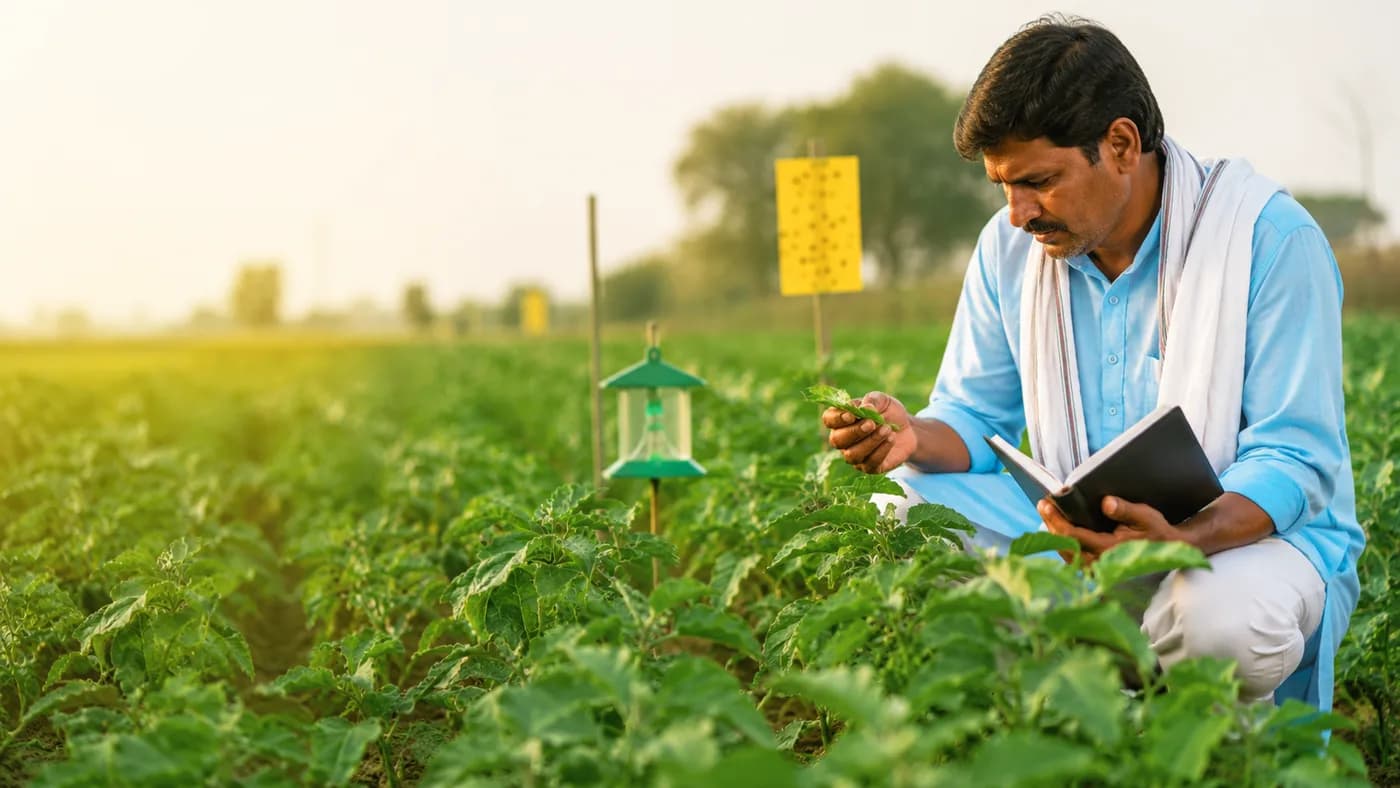
Integrated Pest Management (IPM) for Indian Farms
IPM doesn't mean 'no chemicals' — it means 'chemicals last'. Done well, it cuts spraying costs and stops pests becoming resistant to your sprays.
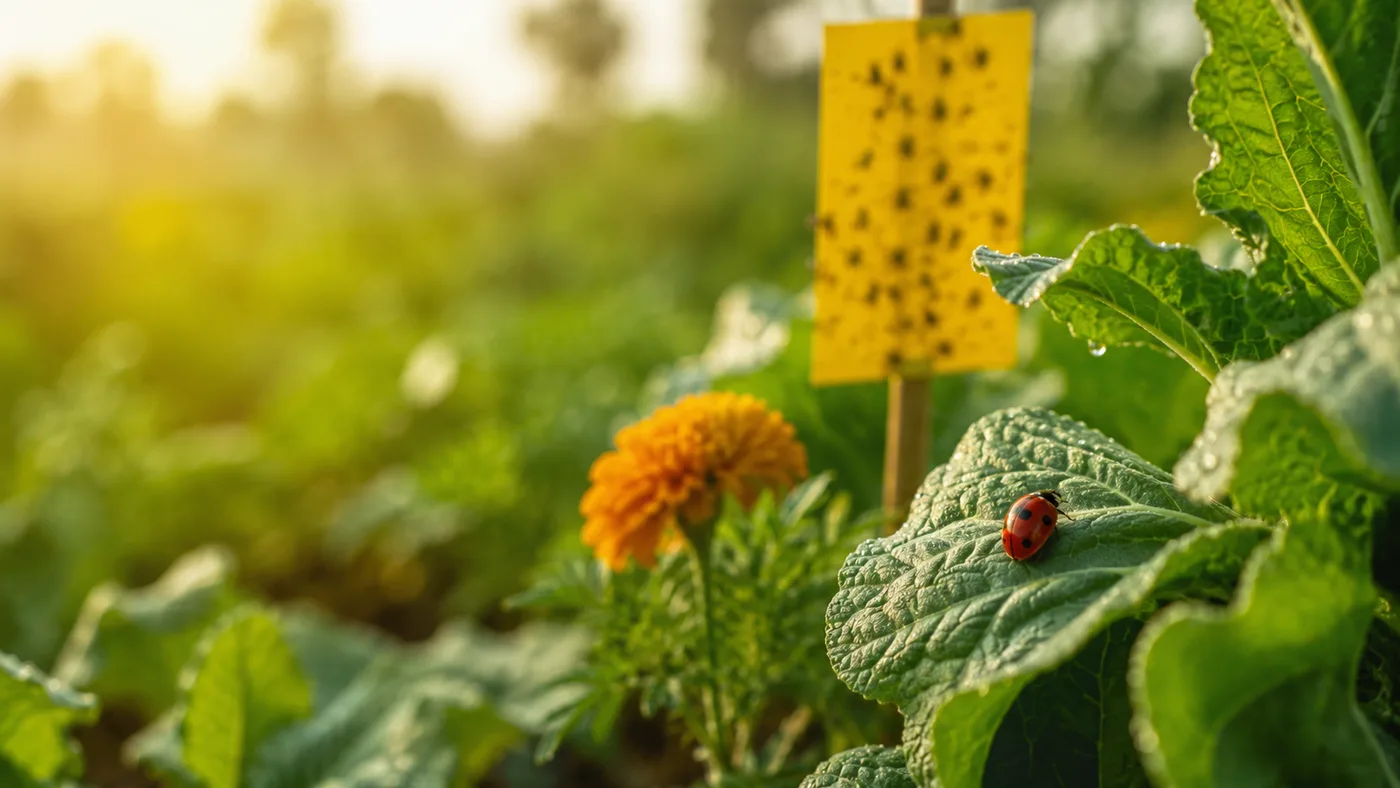
Organic Pest Control Methods for Vegetables
For food you and your customers will eat, natural pest control protects your health, your soil and your wallet while keeping pests in check.
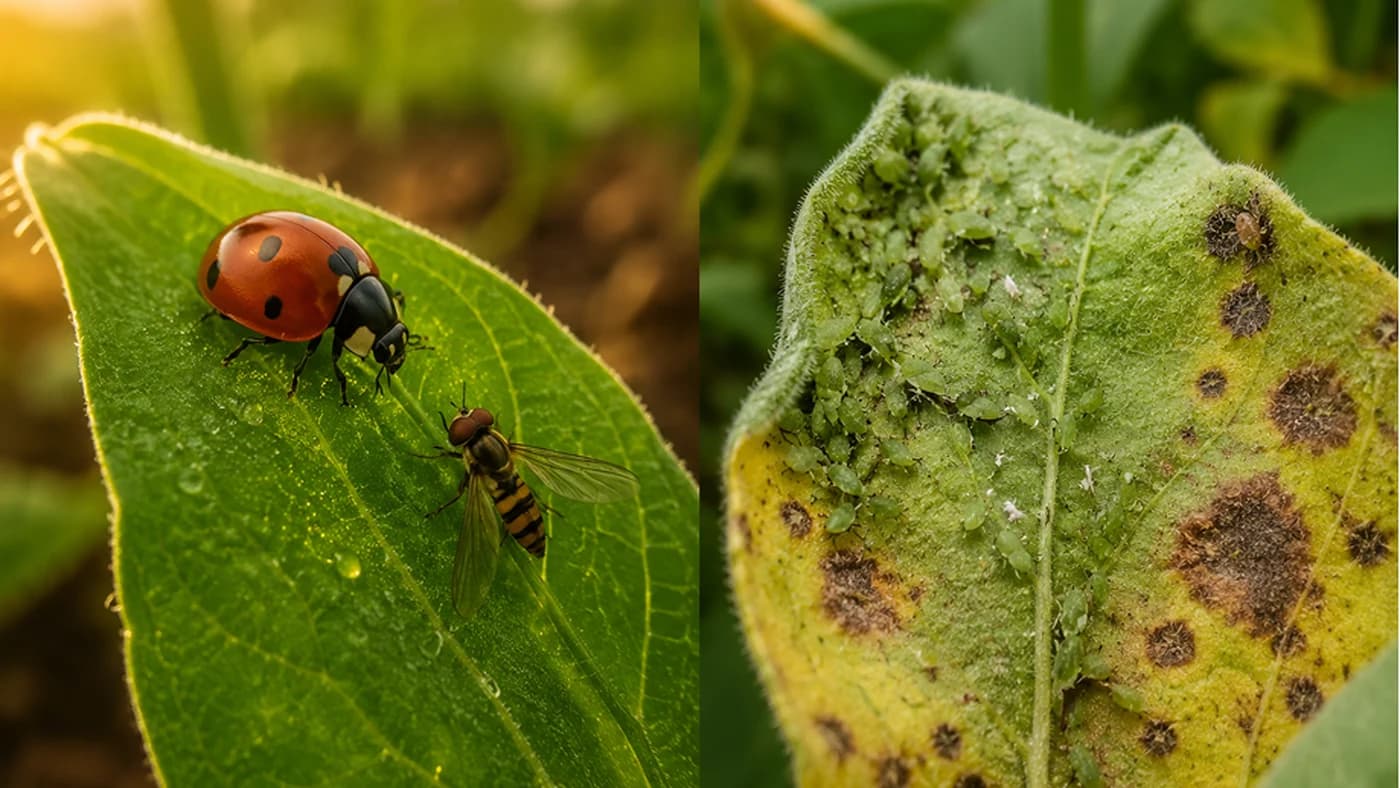
Good Insects vs Bad Insects in Your Farm and Garden — Plus How to Identify Common Crop Diseases
Not every insect in your field is an enemy — most are neutral, and some are your best free workers. A full visual guide to the beneficial insects worth protecting, the pest insects worth acting on, and the diseases behind common crop symptoms.