

Common Crop Diseases in India and How to Identify Them
A problem spotted on day one is cheap to control; a week later it can take the whole field. Learn the tell-tale signs of blights, rusts, wilts and viruses.
Quick answer
The common crop diseases each have recognisable signs, and the pattern of symptoms points to the cause. Scout often, learn the signs, and act on day one. Early identification turns a potential disaster into a minor, manageable setback.
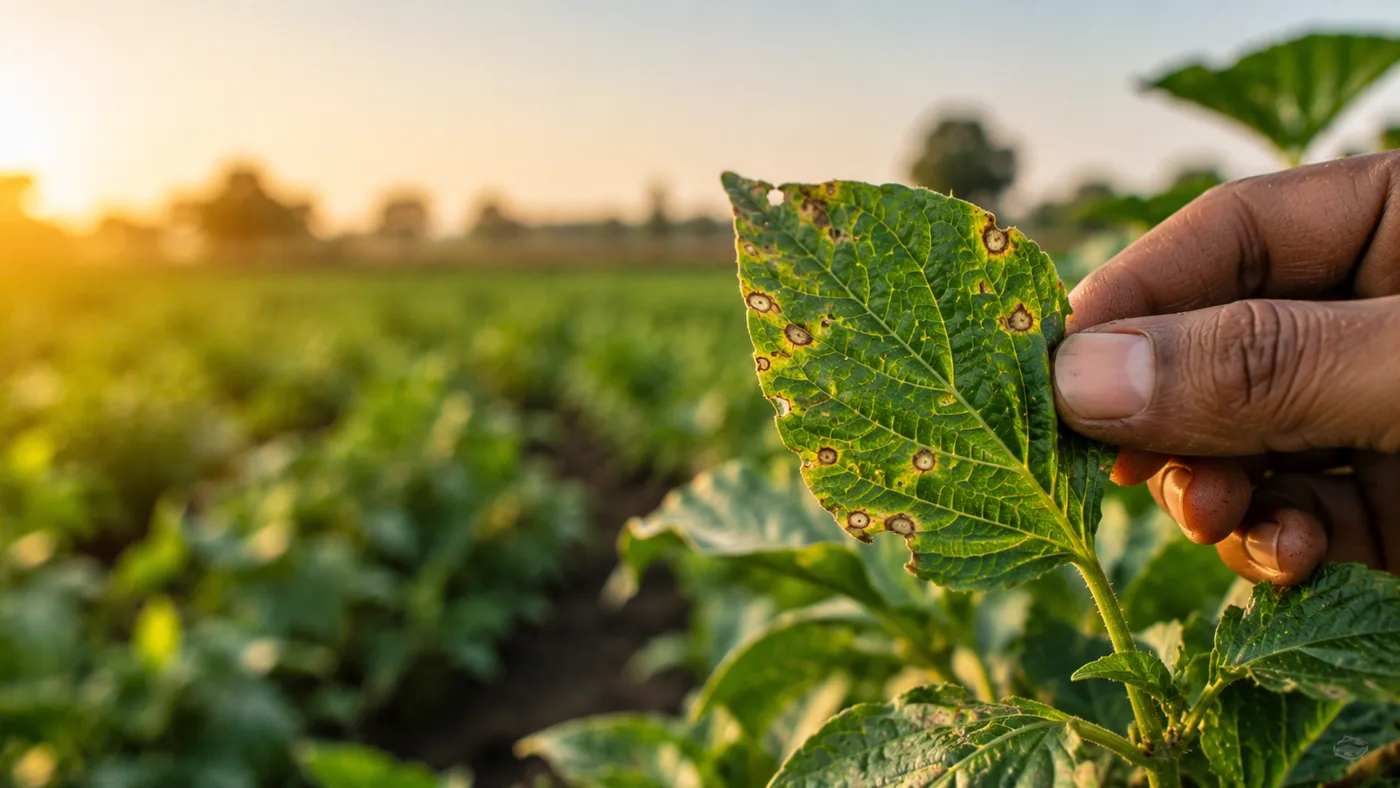
Catching a crop disease early is everything. A problem spotted on the first day is cheap and simple to control; the same disease left for a week or two can spread across the whole field and destroy it. Learning to recognise the common diseases and their tell-tale signs is one of the most valuable skills a farmer can have.
Blights
Blights, including early and late blight, show up as brown or black spots on the leaves that spread quickly, especially in humid weather. They are common in tomato and potato. Late blight in particular can devastate a crop in just a few days, so it demands immediate action.
Rusts
Rusts appear as orange, brown or yellow powdery pustules on the leaves. Yellow rust in wheat is a well-known example. Rusts are favoured by cool, moist conditions and can spread rapidly across a field, so regular scouting and resistant varieties are key.
Wilts
A wilt makes plants droop and die even though the soil is moist — a sign the problem is in the roots or stem, not the water supply. Wilts are soil-borne fungal or bacterial diseases common in tomato, brinjal, cotton and pulses. Crop rotation and resistant varieties are the main defences.
Leaf curl and other viruses
Viral diseases like leaf curl show as curled, crinkled, yellowing leaves and stunted plants, common in chilli and tomato. Viruses are spread by insects such as whitefly and thrips, so controlling the insect is the way to control the disease — there is no cure once a plant is infected.
Mildews and fruit rots
Powdery mildew appears as a white powdery coating on the leaf surface, while downy mildew shows yellow patches on top with fuzzy growth underneath; both are common in cucurbits. Fruit rots such as anthracnose cause sunken dark spots on the fruit in humid weather.
How to identify and act
Look closely at leaf tops and undersides, stems and fruit. Note the pattern: spreading spots suggest fungal blight or rust, curling leaves suggest a virus, and sudden wilting despite moist soil suggests a soil-borne disease. Act early by removing infected parts, improving airflow and drainage, and treating at the first symptom. When you are unsure, a clear photo compared against known symptoms — or a diagnosis app — can confirm the problem quickly.
Terms explained in this guide
Frequently asked
How do I identify a crop disease?+
Look at the pattern — spreading spots suggest fungal disease, curling leaves suggest a virus, and sudden wilting suggests a soil-borne problem.
What is the difference between powdery and downy mildew?+
Powdery mildew is a white powder on the leaf surface; downy mildew shows yellow patches on top with fuzzy growth underneath.
How do I stop leaf curl disease?+
It is viral and spread by whitefly and thrips, so control those insects early and remove badly affected plants.
Where to go next
- Kheti app for Indian farmersCrop plans, disease diagnosis, weather and mandi rates in one app.
- AI farming chatbotAsk any farming question in Gujarati, Hindi or English and get an answer in seconds.
- Agri Bazar marketplaceBuy and sell animals, crops, equipment and dairy near you — and see what buyers want today.
Want this as daily tasks for your farm?
Khetiyaar turns guides like this into a day-by-day plan — in your language, free to start.

Related guides

Tomato Farming: A Complete Guide for Indian Farmers
Tomato is high-value but demanding. Strong seedlings, steady water, staking and early disease action separate the farmers who earn well from those who lose the crop.
Wheat Farming Guide: Sowing to Harvest for Higher Yield
Wheat rewards timing more than anything else — sow in the right window, never skip the crown-root irrigation, and control weeds in the first month.
Chilli Farming Guide: Higher Yield and Disease Control
Chilli is profitable but disease-prone. Winning the daily battle against thrips, leaf curl and fruit rot is the theme of good chilli farming.